


Apply through Clearing


Our Clearing hotline is open for support, Monday - Thursday 9.00-16.45 and Friday 9.00-15.45. You can apply online at any time.


Sign up for updates
Interested in studying at the University of Hertfordshire and want to sign up to our mailing list to learn more about our facilities, living in the UK and student life? Use the form below and our team will also keep you informed of key updates such as events near you, applications opening and more!
BA (Hons) Interior Architecture and Design
Key information
-

Typical offer:
Entry requirements -

Fees: See below
Full details -

UCAS code: W251
-

Institute code: H36
-

Study abroad option
-
Work placement option
Find out more
-
Professional accreditations
We are a member of the Interior Educators Group and are ranked 10th in the country in the design and crafts section of the Guardian's 2017 University League Tables.

Why choose this course?
- Ranked 9th in the UK for art (Daily Mail University Guide, 2025)
- 90% satisfaction for learning resources (NSS, 2026)*
- Gain real world experience on live industry projects
- The programme’s vision is Design For Happiness. If you have a passion for design and want to make a positive impact on the world, our BA Interior Architecture and Design programme is the perfect fit for you! With a focus on Design for Happiness, our curriculum is designed to help you create spaces that enhance people's lives and promote wellbeing
- From the focus on the social and cultural impacts of our practice to the cutting-edge technology like the metaverse and XR, we'll teach you the skills you need to become a design innovator. Our graduates are equipped to make a positive impact on the world, shaping the future of design and creating spaces that make a difference. Join our programme and become part of a community of designers who are committed to creating a world that's not only beautiful but also functional, efficient and joyful
- Interior Architecture and Design students have participated in live projects with a number of commercial partners including Letchworth Garden City urban regeneration, Jamie Oliver’s Fifteen, Smirnoff Nightlife Exchange, The Forum Hertfordshire, Welwyn Hatfield Borough Council and St Albans Museums
- The degree focuses on working with existing buildings and spaces and exploring different possibilities for habitation
- Graduates from the course are eligible for associate membership to professional institutions such as: The British Interior Design Association, The Society of British Interior Design and The Chartered Society of Designer.
Read our blog to find out more.
*based on the average of Q19-22
What's the course about?
This course specialises in the design and production of immersive, innovative and surprising interior spaces. You will have the opportunity to design and think between the digital and the physical worlds. Virtual and augmented reality are mixed with physical making and prototyping skills, which enables you to think about design with an open mind and challenge you to communicate your ideas in the most exciting ways. There’s great emphasis on the understanding and use of materials as you explore surface design and detailing.
Throughout the course you’ll work with existing buildings and conditions, producing refit, refurbishment, retrofit, re-use and place-making designs. As you progress, you’ll develop an expertise in producing impressive drawings, images and models, as you not only design functional, contemporary and innovative interiors, but – above all else – create immersive atmospheres.
Your main campus is College Lane
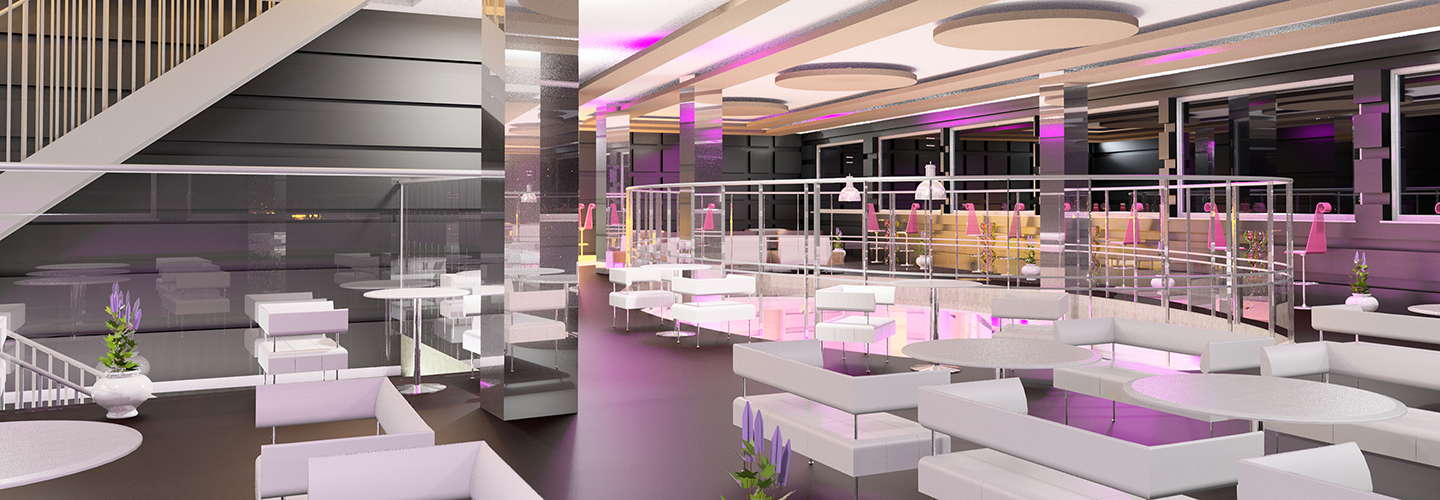
This is where the creative arts, science and health-related subjects are based. This means you’ll share the campus with future nurses, scientists, artists and more. You can use the common rooms to relax with friends, work out in the 24-hour gym or have a drink in our on-campus pub or cafes. We also have restaurants for you to eat in or grab something on the go. Our Learning Resources Centres are open 24/7, which means you can study whenever suits you best. Want to pop over to the other campus? You can take the free shuttle bus or walk there in just 15 minutes.
What will I study?
Lectures, Workshops, Seminars, Field Trips, Group and Individual Tutorials, Critiques, Live Pitches with Clients/ Industry Panels.
The Interior Architecture and Design degree will develop your knowledge, skills and techniques of Interior Architecture and Design, to broaden and deepen your understanding of and competency in Interior Architecture and Design. Students are encouraged to engage with some key contemporary issues and learn to develop their design exploration and experimentation, to be more self-directed in their design processes and to produce coherent and more complex design resolutions.
This degree will introduce students to thinking about the "interior" as a space of intersecting environments within an urban realm. Interior Architecture is explored as the engagement with and adaptation and transformation of the existing built fabric across both inside and outside spaces, generating ideas from a critical engagement with occupation, material form, site context and culture.
You will develop proficiency in a wide range of communication and technical skills from hand drawings, physical model making, CAD drawings and knowledge of structure, construction, materials and detailing. Learn how to observe, analyse, represent and communicate the qualities of existing spaces, adapt and improve existing building fabrics. In addition, a Critical and Cultural Studies modules offer the opportunity for students to acquire the theoretic and historic knowledge of the discipline while exploring a particular contemporary issues in depth.
Check out our student blogs
Student Blogs
Neofytos - My week at a glance
My week at a glance.
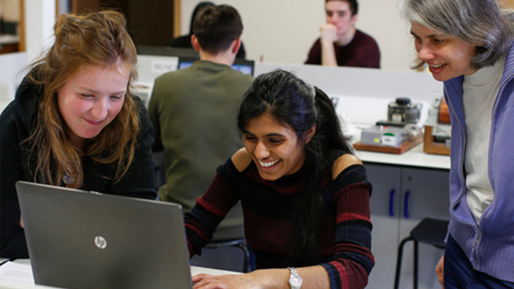
My week starts by attending to my studio space, which it is a corner made up of three big whiteboards, a locker to secure my belongings and a table to work on. I personally love that space! It always makes me feel good! Having this area to work and do research for projects that I have been given, make me feel focused and productive.
On Tuesdays I have a lecture which is about two or two and a half hours, depending on how much we need to cover. In our lecture, we talk about theories that could be beneficial to our artistic perspective, but we also use this time to talk about anything that involves group assignments and projects.
Wednesdays for me only consist of an hour of optional art talks. During these talks, we have the chance to attend a seminar where artists are presenting their work to us! That's an amazing way to be provided with an insight into how the industry works and be prepared for our working lives after graduation.
Lastly, we have our optional life drawing sessions which run every Thursday's afternoon is a great chance to have a little break from spending most of your time in your studio space working on your projects. Going to the life drawing session I have the great chance to see the human figure, as well as being given the fantastic opportunity to draw models.
As for Friday, I have nothing booked on, so I can spend most of my time in my studio space working on my projects without getting distracted!
I love my routine at university, it gives me both the time to work on my projects thus attend and organise sessions and group works.
Student Blogs
Neofytos - Why I love my Course
What I love most about my course.
For years I have been drawing, painting and sculpting - prompting me to study Fine Art BA(Hons). And as a result, I have expanded my knowledge and learned more about fine art in greater depth about what I love.
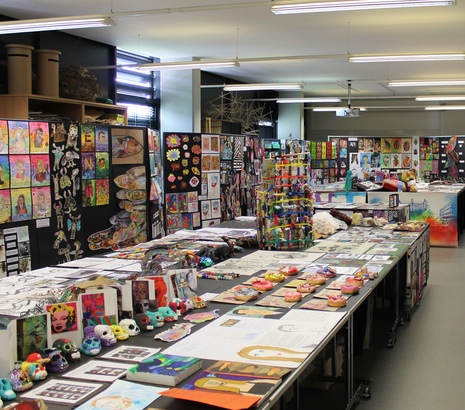
The facilities at the Art and Design building are just amazing! That is what I love the most about my course. As a Fine Art student at this university, I have the great chance to take part and work in different workshops such as printmaking, ceramics, textile, welding, life drawing and so many more. For me, that is the most beneficial factor, because in this way the University allows me to explore and learn more about my artistic direction by trying different mediums and methods. Therefore, by having the freedom to attend to different workshops, I have the great chance to meet people from different courses, make new friends with similar interests and even more have the chance to collaborate with some of them!
As I said I love my course because it allows me and supporting me to try expanding horizons and find my artistic voice in an extremely healthy way.
Student Blogs
Neofytos - Why I chose Herts
Why I chose Herts.
I am an international student studying at the University of Hertfordshire, which has been a blessing!
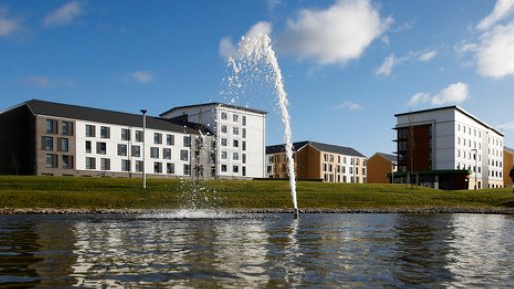
I chose Herts because the University itself is such a wonderful place to study! The facilities and the two beautifully designed campuses that the University has made my studies here amazing! For instance, there are two huge Learning Resource Centres (LRCs) on both campuses at the university where it really helps the students with their assignments. Moreover, all the buildings where we have classes at are very new and that proves that the university cares about its appearance and invest a lot of money for the students to have a great environment to study within.
However, except for the excellent facilities that the university has, the University has a great spot for socialising. Cafes, restaurants, common rooms, gyms, and a big University club are factors that make Herts a great place to be. All of them are found near to each other which is very convenient for us as students to socialise easily.
Speaking of location, the University is not far from London which is an amazing thing since London is such a beautiful and diverse city!
All these were the factors that made me choose Herts and I have never regretted my choice!


Alumni Stories
James J Igbafe
Meet James. James completed a bachelor’s and master’s degree at Herts and has since embarked on a career as an Architectural Designer.
Read more stories BA (Hons) Interior Architecture and Design MArch Architecture and Urbanism| Current job role | Architectural Designer / RIBA Part Two |
|---|---|
| Year of graduation | 2017, 2021 |
| Course of study | BA (Hons) Interior Architecture and Design, M.Arch Architecture and Urbanism |

James first studied BA (Hons) Interior Architecture and Design at Herts, graduating in 2017. He says, ‘The course was structured well and engaging. At the time, the University was introducing changes to their studios, which made the experience of studying there even better.’
Before he completed his bachelor’s degree, he was awarded Student of the Year by the School of Creative Arts for his commitment to learning, his willingness to help others succeed, and his positive attitude.
Balancing a master’s degree and full-time work
He describes returning to Herts to study M.Arch Architecture and Urbanism as a ‘no-brainer’. He was already in employment, and says it was easy to manage his academic work around a full-time job due to the structure of the course. He adds, ‘It was clear from the start what I’d get with the M.Arch course, and I knew from my bachelor’s degree that the University had the relevant resources. Not only that, but my tutors had also taught at other prestigious architecture institutions, so are well experienced.’
Valuable on-site experience
James says that the first year of his master’s was the most memorable, as he took part in group projects and visits to construction sites. He says, ‘These visits provided me with a greater understanding of what to expect in a professional and construction setting, building on what I had already learnt in industry. These opportunities also allowed me to explore my creativity, and I have used what I learnt at site visits during the concept development stages of my work.’
James visited a construction site for one of his site visits where a trade yard in Shoreditch, London, was being demolished to make room for a co-living/co-working building. He says, 'We were able to ask questions, conduct a thorough site analysis, and had the opportunity to further ask the accompanying tutor questions over a drink by the canal.'
James is working towards earning his chartered registered architect status with the RIBA/ARB by completing the Part Three Study in Architecture Postgraduate Diploma & Professional Practice.
His advice
James’ advice to current and future Herts students is to always continue learning. He says, ‘Never get comfortable. Well-rounded and knowledgeable graduates are attractive to employers. Challenge the ‘norm’ - be creative and enthusiastic about the work you produce.
‘Management skills are also key for future architects, as at some point you will run projects through from start to finish. Therefore, you need to learn how to prioritise your time and manage colleagues well.’
Alumni Stories
Beyza Kayali
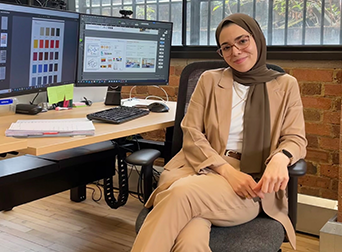
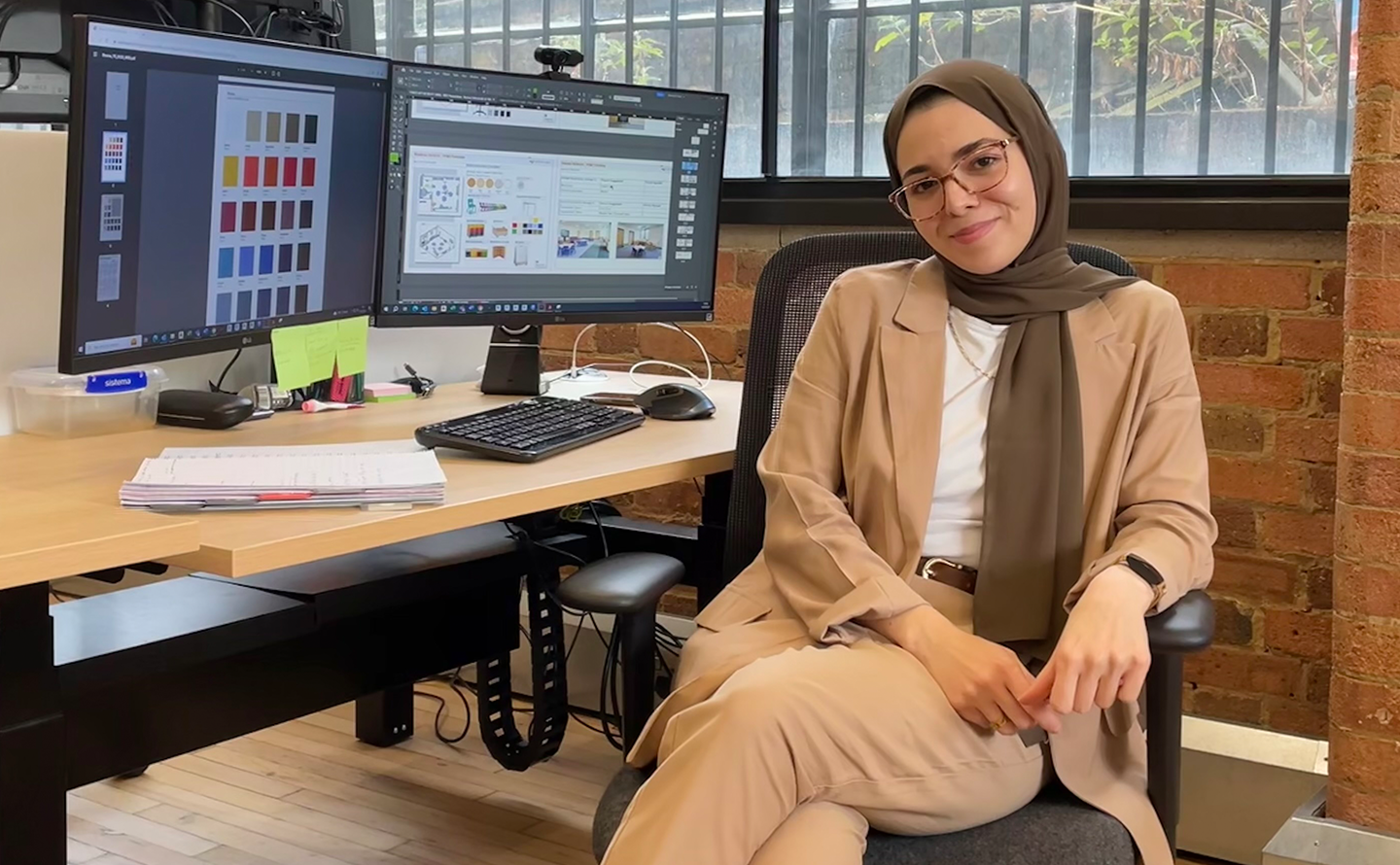
Meet Beyza. After completing an undergraduate degree at Herts, Beyza found her first role through the University’s online careers platform. To power her development, she has chosen to complete her postgraduate degree at Herts too.
Read more stories BA (Hons) Interior Architecture and Design| Current job role | Furniture, Fixtures, and Equipment (FF&E) Interior Designer at a central London design company |
|---|---|
| Year of graduation | 2021 |
| Course of study | BA (Hons) Interior Architecture and Design |
Choosing Herts
Beyza’s brother inspired her to study at Herts. He had already chosen a course here, and the School of Creative Arts’ strong international reputation persuaded her to apply to Herts too. Beyza adds, ‘The University is very diverse, and this was an important factor for me choosing to study here.’
Earning a Go Herts Award
Beyza found her course challenging, but interesting to study. She also built strong relationships with her tutors.
Some of her favourite memories from Herts were spending every day during her final assignments in the University’s Learning Resources Centres with friends, and the deep conversations they used to have when they had group assignments together.
She also became a Student Representative for her course in her second year and then went on to become a School Community Organiser for the School of Creative Arts in her final year. Beyza also contributed to the School of Creative Arts’ Student Society. She says, ‘All my voluntary roles and extra-curricular activities counted towards my Gold Go Herts Award, and they were something I enjoyed doing too. The award was just a nice bonus!’
Becoming an interior designer
Beyza is now an FF&E Interior Designer for a London-based design company. She says, ‘My course prepared me well for this role, from learning certain types of software, to how to create design schedules.’
Beyza found her first job after Herts through Handshake, the University’s online careers platform. She adds, ‘My first job after graduating was at a construction company in Hatfield, not far from the University’s campus. I made great connections there and learnt a lot.’
Her ambition is to become an experienced Senior Designer, who can make her mark on the industry through her sustainable creations. To achieve her goals, she has started studying MA Interior Architecture and Design part-time at Herts, where she is able to explore the topic of sustainability in design and construction further.
Her advice to current and future Herts students is to, ‘Take it easy and enjoy your time at Herts. Stay in touch with your tutors too, as they may have great connections for your future work!’