
Undergraduate courses
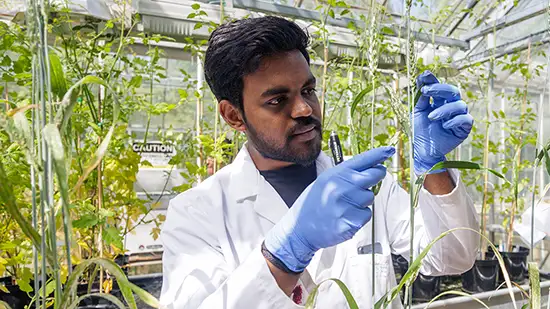

See where a Herts degree can take you. Discover our graduates’ stories and the impact they’re making in their industries.
Why choose Herts?
At Herts, you’ll gain more than a degree; you’ll build the skills and confidence to go further in your career. Learn from industry professionals, take on a work placement and learn in world-class facilities. Join an enterprising university and become part of a friendly, inclusive community.

Guardian Top 40 University
We’ve ranked 37th for teaching quality, student satisfaction and graduate success in the Guardian University Guide 2027.

14th in the UK for student satisfaction
We achieved above average results in the National Student Survey 2026, reflecting rising student satisfaction.

6th in the UK for facilities
Voted for by students in the 2025 Whatuni Student Choice Awards.

Outstanding graduate employability
91% of undergraduates in employment or further study (Graduate Outcomes Survey, 2026).*
Browse undergraduate courses by subject
Our undergraduate courses put your future first. You’ll learn in state-of-the-art, industry-standard environments and gain real-world experience through work placements or study abroad opportunities, so you’re ready to succeed in a fast-changing world.
-

Accounting and finance
Launch a global finance career with industry‑informed courses and real‑world insight.
-

Animation, film, games and creative media
Build a creative career with award‑winning courses in animation, film, games and media.
-
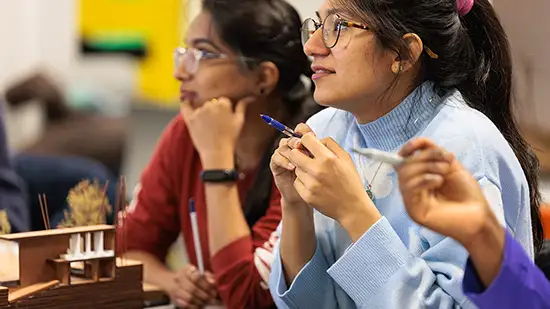
Architecture
Design the future with an architecture degree for innovative, sustainability‑minded designers.
-

Art, design and fashion
Create, collaborate and connect with industry through dynamic art, design and fashion degrees.
-
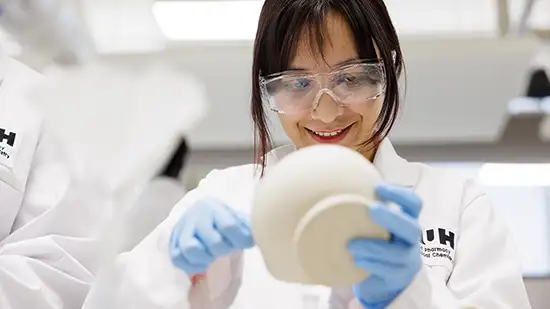
Biological sciences
Explore life, DNA and ecosystems in expert‑led labs with hands‑on scientific training.
-

Business
Gain practical skills and industry connections with global partners including Google and Microsoft.
-

Computer science
Shape the digital future with degrees in AI, robotics and computing, taught in cutting‑edge labs.
-

Education and teaching
Train to teach and inspire, with a strong focus on employability and classroom practice.
-
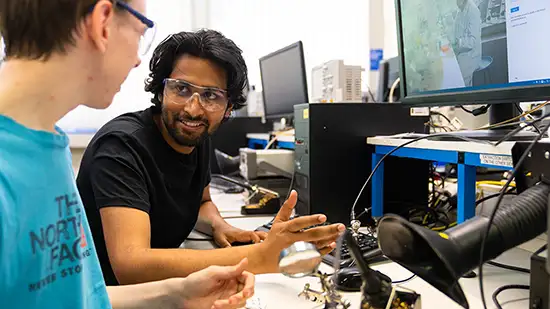
Engineering, AI and robotics
Design tomorrow’s technology in our state‑of‑the‑art Spectra engineering facilities.
-

Health, nursing, midwifery and social work
Prepare for a meaningful career improving lives through expert‑led health and care courses.
-

Law and criminology
Gain real legal experience through pro bono work in our on‑campus Law Clinic.
-

Media
Develop content, reporting and digital skills for a fast‑moving media career.
-

Medicine
Study medicine at Herts. Now open to international students, our Medicine MBBS combines academic excellence with practical clinical training.
-

Music composition, technology and production
Create, record and perform using industry‑standard studios and equipment.
-
Physics, astrophysics and mathematics
Solve complex problems and explore the universe through physics and maths.
-

Politics, environment and sociology
Understand power, society and global change through critical, analytical study.
-

Psychology
Explore the mind using specialist facilities, real‑world research and expert teaching.
-

Sport
Build your sports career with hands‑on industry experience and partnerships including Watford FC.
FAQs
Find quick answers to frequently asked questions about studying at Herts. From entry requirements and scholarships to student life and support services, our FAQs cover everything you need to know.
An undergraduate bachelor’s degree at the University of Hertfordshire is the initial level of university education. It usually takes three to four years to complete and includes qualifications such as Bachelor of Science (BSc), Bachelor of Arts (BA), Bachelor of Engineering (BEng), Master of Engineering (MEng), Master of Pharmacy (MPharm), Master of Optometry (MOptom) and Master of Physics (MPhys).
Head over to our how to apply page to learn more about applying to Herts via UCAS.
For courses that don’t require an interview or portfolio, we’ll usually make a decision within 10 working days once we’ve received all the required information. If we ask for anything further, we’ll update you within 10 working days of receiving it.
For courses that do require an interview or portfolio, we’ll contact you within 10 working days of your application to confirm the next steps, such as arranging an interview or requesting your portfolio. Following your interview or portfolio review, we’ll usually let you know our decision within 10 working days of the interview date or portfolio submission.
If you're studying a sandwich programme, you won’t normally pay full tuition fees for any placement or study abroad year that you take.
Yes, many students choose to work part-time, with a wide range of opportunities available both locally and on campus, including roles as Student Ambassadors or with Hertfordshire Students’ Union.
If you want to find out more about what it’s like studying at Herts, you can always message our current students who will be happy to share their experiences with you.
If you need to discuss anything more specific, please contact our friendly team.
The University of Hertfordshire has state-of-the-art sports facilities, including two fully equipped gyms, an indoor swimming pool, multipurpose sports halls and various outdoor pitches.
For more details on how these facilities can enhance your student experience, visit the sports and physical activity page.
Yes, students and visitors can either park on campus – or a short bus ride away in our park and ride car park. For more details on parking, including about permits and regulations, visit the parking page.
At the University of Hertfordshire, we want to ensure your time studying with us is as stress-free and rewarding as possible. We offer a range of support, including mental health support, counselling, and disability services. Visit the support and wellbeing page for more details.
These are alternative routes which lead to a bachelor’s degree. They have lower entry requirements and are taught at one of our partner colleges.
A foundation degree is a standalone two-year qualification, following which you can enter the final year of a bachelor’s degree at Herts (depending on your grades).
An extended degree includes an initial year taught at a partner college, following which you can progress onto the first year of a bachelor’s degree at Herts.
Visit the relevant course page to view the University of Hertfordshire entry requirements, including any specialist criteria. This will show the accepted A levels, BTEC, International Baccalaureate, Access course and T level qualifications for university entry.
We offer a range of non-repayable scholarships and bursaries to help fund your studies at Herts.
You could be eligible for a maintenance loan to help cover your living costs. You could use this for accommodation, food, travel, and other day-to-day expenses. The amount you receive depends on various factors, including your household income, where you live while studying, and whether you are in your first, second, or later years of study.
The estimated cost of living includes accommodation, food, travel, and other expenses. For a detailed breakdown, visit the managing your finances page.
Campus life at the University of Hertfordshire is vibrant and engaging, with modern facilities, diverse social spaces, and a wide range of activities. With students from over 140 countries, the University offers a multicultural environment that enriches learning and interaction. Students can join various clubs, sports, and events organised by the Students' Union. For more details, visit the student life page.
Hertfordshire Students' Union (Herts SU) represents students' interests, offers support services and organises events. Learn more about Herts SU, and yes, you can get involved with them once you become a student.
The University offers a range of study abroad programmes in various countries. Details can be found on the study abroad page.
Mental health support is available through counselling services and other resources. More information is available on the mental health support page.
At Herts, undergraduate courses start in September, with January entry also available on selected courses. January is a planned start point, so you won’t be joining a course halfway through. You’ll begin your studies alongside other students starting at the same time, following the relevant modules for your intake. Check your chosen course page to see whether January entry is available.
from 2023/24 graduates, in employment or further study 15 months after graduation.
subject to meeting application deadlines and personal needs.