
PhD opportunities
Applications for part-time or full-time PhDs in nursing, midwifery, health visiting, social work, public health or other health-related disciplines are warmly invited.
CRIPACC particularly welcomes applications that fall into one of the four main programme areas of the research centre:
- Communities, Young People and Family Lives
- Older People's Health and Complex Conditions
- Patient Experience and Public Involvement Evidence Based Practice
- Data, AI and Technology in Health
CRIPACC offers a dynamic multidisciplinary research environment, with opportunities to undergo robust research training and networking. PhD students can access the University-wide Researcher Development Programme and benefit from tutorials with the dedicated PhD tutor for the School of Health, Medicine and Life Sciences. PhD students are encouraged to attend the School's lunchtime seminar programme and have an opportunity to present their research at the School's annual research conference. CRIPACC also offers a selection of research networks which are open to PhD students, including FoodNet, ReACH and AgeNet.
Doctoral students are supported by a team of experienced supervisors and a PhD tutor Dr Rosemary Godbold.
Further information on the experiences of our PhD students can be seen below.
Sandra-Eve Bamigbade
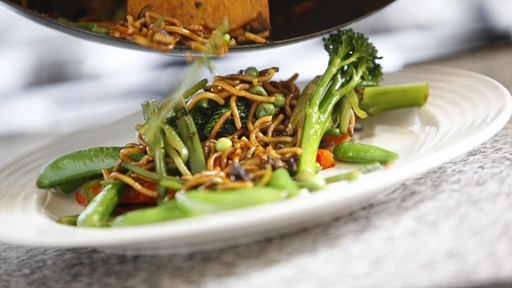
Understanding shared mealtime experiences for adolescents with Tourette Syndrome and Tic Disorders within multiple foodscapes
Supervised by Dr Samantha Rogers, Dr Amanda Ludlow and Professor Wendy Wills
Virgina Woolf famously said "One cannot think well, love well, sleep well, if one has not dined well". Food is more than nutrition, it is a means of connection and can significantly alter the quality of life of those with eating difficulties. It is this theme which has been of great interest and that has led me to research mealtime experiences.
For my Master’s project at the University of Hertfordshire (2015-2016) I worked on my dissertation under the supervision of Dr Samantha Rogers. I conducted quantitative research to explore whether children’s eating behaviours and parental use of controlling feeding practices differed according to parental ethnicity and weight status. I enjoyed the research process thoroughly, although it was challenging. The chance to grow and overcome research obstacles made the whole process fulfilling and being able to write up findings of my own was an achievement in itself! By the time I finished my MSc, I was unsure what my next step was. Unbeknownst to me, a year later I would be working under the guidance of Dr Samantha Rogers again on a multidisciplinary PhD in Food and Public Health within CRIPACC.
Towards the end of my MSc, I started working with CRIPACC as a casual research assistant and as a result I learnt many valuable skills. During this time, I was introduced to Professor Wendy Wills and I was fortunate enough to speak with her about my work with CRIPACC and my future aspirations. It was during this conversation that I learnt that CRIPACC were announcing their first full-time PhD studentship. I would never have thought that I would be capable of undertaking a PhD, let alone be awarded a studentship. With the support and encouragement of Dr Samantha Rogers, Dr Amanda Ludlow and Dr Lisa Whiting, I drafted a research proposal and personal statement that was shortlisted. Following a panel interview, I was awarded the studentship. The first lesson my PhD taught me was that one should never underestimate their ability to grow so long as they are in an environment conducive to growth and surrounded by those who believe in them and are willing to nurture their quest for knowledge.
I am keen to progress my career as a researcher and to push myself to new limits; which this amazing opportunity provides me everyday. While a PhD is full of challenges, feelings of being overwhelmed and some sleepless nights, there is nothing that can compare with the freedom permitted to follow your intellectual curiosities and the satisfaction of seeing your finished work. Although I am still in the early stages of my PhD, I can already see how much I have developed as a researcher and academic with the help of my supervisory team and the university’s Researcher Development Programme. This PhD process has already taught me a lot about myself and has stretched me emotionally and intellectually in ways I could never have imagined. Whilst my PhD is ongoing, one thing I do know for certain is that I like the person I am becoming and am excited to see the woman I am at the end of this learning adventure.
On a final note, I would encourage anyone who enjoys research to apply for a PhD; you just might surprise yourself.
Karen Machin
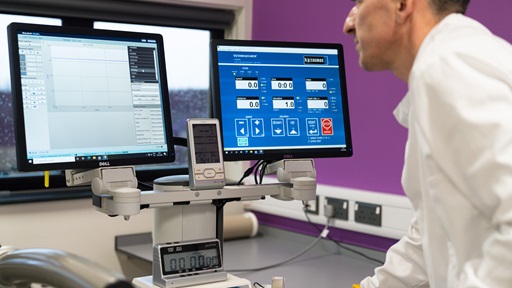
Technology enhanced peer support: a participatory study of the use of digital technologies for developing peer knowledge in mental health and wellbeing
Supervised by Professor Shula Ramon and Professor Brian Littlechild
I am currently undertaking a part-time PhD that focuses on how peer support (when people use their own experiences to help others) can make use of technology in the area of mental health and wellbeing; my supervisors are Professor Shula Ramon and Professor Brian Littlechild. I am working with an advisory group of peer supporters on this participatory study - for the first part of the research, I will interview them about their experiences with technology, I will then apply this knowledge to online learning for peer supporters.
Alongside my studies, I work freelance in mental health from the perspective of lived experience, something I have done since 2007. After a long period of working, including developing and delivering training to peer supporters, I wanted to study a PhD for my own personal development.
Prior to undertaking doctoral studies, I was one of the first group of students on the MSc in Mental Health Recovery and Social Inclusion, a distance learning course at the University of Hertfordshire. I thoroughly enjoyed this programme as it stretched my thinking while valuing my existing knowledge. The tutors and other students shared their learning as equals and I particularly enjoyed the diverse mix of UK and international students. Throughout the course, I could apply the learning to my own interest in peer support – as a result, I wanted to develop this beyond the MSc. The tutors encouraged and supported me with my application for a PhD. This previous relationship with the School gave me the confidence that I needed.
As someone who is based 200 miles away from the University, I do miss the day to day interactions that can take place with other students. However, I have the same online access to the library and other systems and I hear about all of the research facilities available for PhD students. I come to the University a number of times in each academic year to take advantage of some of the Researcher Development Programme sessions as well as for supervision; in addition, I have supervision meetings via Skype and that works very well.
I have already learnt a huge amount about the research process and the realities of doing my own study - I look forward to that developing further. I am surprised at how quickly time is passing and I am very aware of how life can get in the way of studying; I have learnt to respond pro-actively to changing circumstances rather than becoming over-anxious.
I would encourage anyone who is interested in research to consider applying for a PhD. The School of Health, Medicine and Life Sciences is welcoming of all experiences and views and has a strong reputation around patient and public involvement. They understand how to support people and go the ‘extra mile’ to respond to people’s needs.
The School of Health, Medicine and Life Sciences offers a supportive environment in which to study and has been awarded Athena SWAN Silver status for gender equality, the University has Bronze status. PhD students can benefit from a number of Athena SWAN support initiatives including the day nursery on campus. Further information about Athena SWAN can be found here.
For further details, you can contact: