
Accommodation
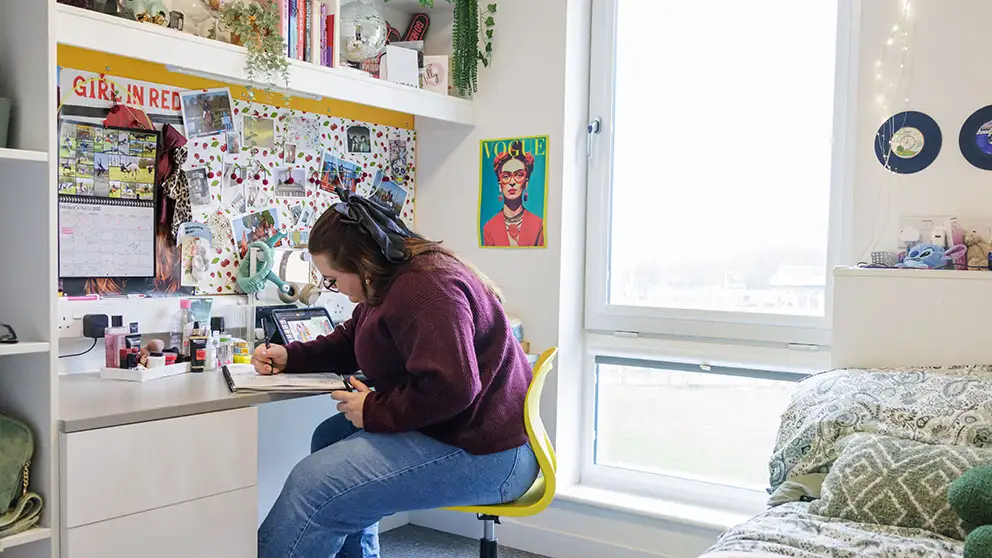
A place to live, study and connect
Choosing where you live is a key part of starting university. Our accommodation across the de Havilland and College Lane Campuses includes accessible room options and puts you at the centre of student life, with teaching spaces, libraries, and social venues within easy reach. Living close to where you study makes it easier to feel part of the community from day one. For postgraduate students, we also offer a dedicated accommodation block on our de Havilland Campus.

Feel at home at Herts
Our halls are recognised for quality, safety and design, offering comfy, modern spaces built around student needs. With a range of room types across both campuses, our accommodation provides a cosy and secure base for studying, socialising and everyday living.

1st in the East of England for accommodation
Voted for by students in the 2025 Whatuni Student Choice Awards.

Around-the-clock security services
24/7 campus security and monitored accommodation for peace of mind.

Bills included
Electricity, gas, water and internet are included in your rent, making it easier to manage your budget.

Accommodation guarantee
Apply by the deadline and you’ll have a place in on-campus accommodation. The guarantee covers both first-year and returning students (terms and conditions apply).
Explore room types
-
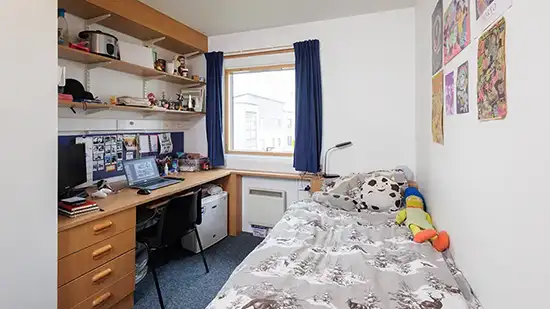
Single en suite, de Havilland
Compact single bed with private bathroom, shared kitchen access, 10.7m² space.
-
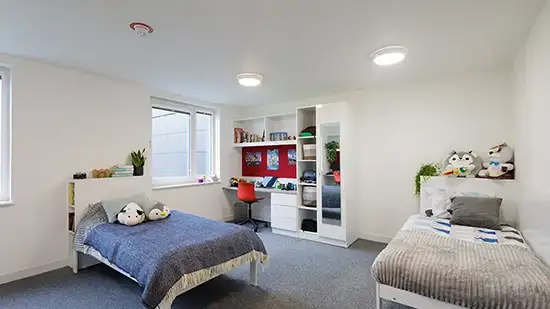
Twin en suite, College Lane
Shared room with two single beds, private shared bathroom, shared kitchen, 25m² space.
-
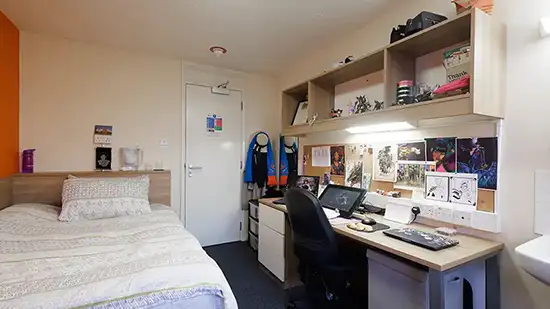
Single, College Lane
Double (queen) bed with shared bathroom, shared kitchen, approx 13.3m² space.
-
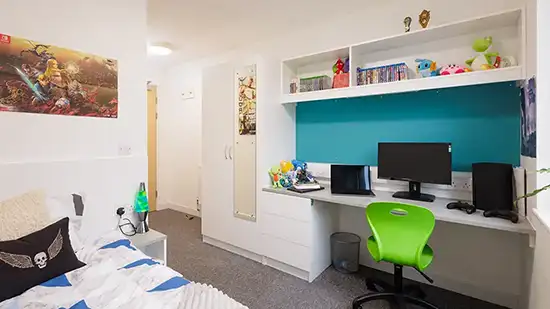
Single en suite, College Lane
Compact single bed with private bathroom, shared kitchen access, 12m² space.
-
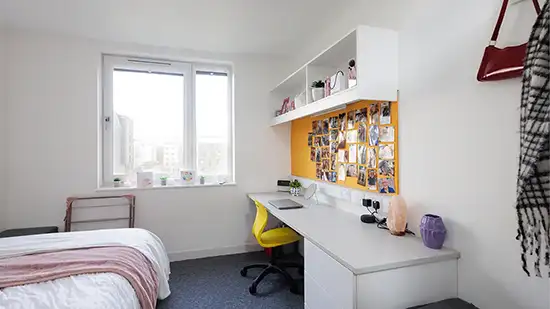
Enhanced en suite, College Lane
Double (queen) bed with private bathroom, shared kitchen, 14.5m² space.
-
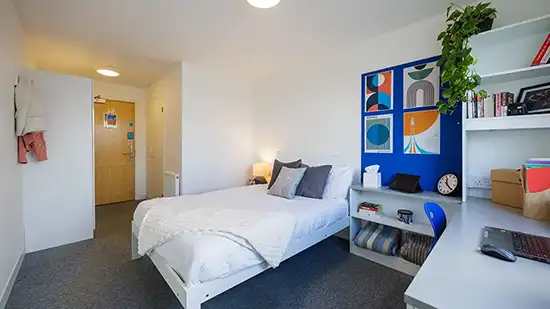
Premium en suite, College Lane
Double bedroom with private bathroom, shared kitchen, 16.5m² space.
-
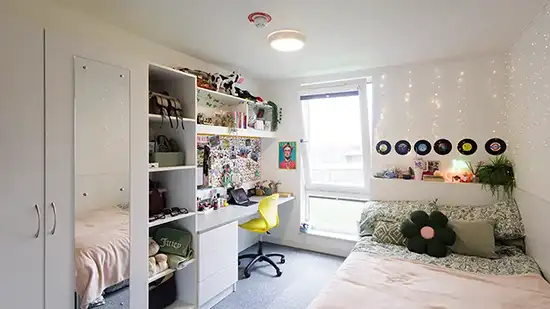
Single - campus townhouse, College Lane
Double (queen) bed with shared bathroom (with one other), shared kitchen, 10m² space.
-
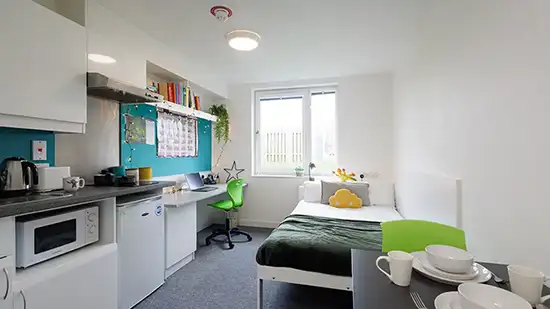
Studio en suite, College Lane
Small double (queen) bed with private bathroom, private kitchen, 16.5m² space.
Your on-campus experience
Living in halls puts you at the heart of campus life throughout your studies – from walking to lectures and study sessions in minutes, to being part of a vibrant student community, enjoying on-site events and building routines. With facilities close by, you’ll have everything you need.

Short walk to your lectures and study facilities
Everything you need to succeed – from lectures to libraries – are just minutes away.

Easy access to sport and exercise
Gyms, sports facilities and active spaces close to where you live.

Food, drink and social spaces
On-campus cafés, food outlets and social spaces all in one place.

Nightlife
Students’ Union venues and events on your doorstep.

Support and security
Dedicated Residence Life Officers support and 24/7 security for peace of mind on campus.

Community
A mix of events and shared spaces brings your student experience to life.
Location, location, location
Living on campus means everything is close by. From lectures and study to social and leisure time, everything is within walking distance, with the de Havilland and College Lane Campuses both well-connected for travel across Hertfordshire and into London.
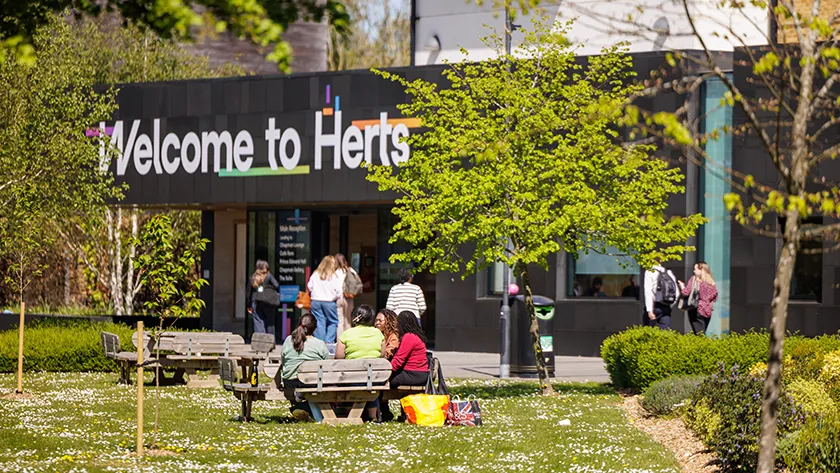
Your social life, sorted
From Students’ Union organised events to shared social spaces and common areas, on‑campus living makes it easier to meet people and get involved. Everything happens nearby, so social life fits naturally around study and everyday routines.
There's always something happening through ResLife. With regular events taking place throughout the week on both campuses, the programme is designed to help you meet people, make friends and feel at home. Whether you're joining a board games night, getting creative at a craft session or unwinding at pet therapy, ResLife makes it easier to build connections and become part of the Herts community.

Health and fitness
Living on campus puts fitness and wellbeing within easy reach. You’ll have access to gyms, sports facilities and active spaces across campus, including a range of free-to-access activities. It’s easier to stay active, build healthy habits and meet new people.

Reviews
-
The rooms are modern, spacious and well furnished, providing a comfortable and pleasant living environment. The communal areas are well maintained and create a great space for both studying and socialising.
-
The price is relatively cheap and the quality is good. We have so many opportunities to meet so many people and new experiences.
-
The accomodations are quite cozy and the community here are very welcome and the easy access to classes makes it even more appealing.
-
I had a really great experience staying here. The place was clean, comfortable, and felt safe. The staff were friendly and always helpful, and the location was very convenient for getting to campus and nearby shops.
What’s included?
Living on campus includes features designed around student life, such as inclusive bills, furnished rooms, quick access to teaching spaces, facilities and on‑site support. Living off campus offers more independence but often means managing contracts, bills, deposits and household arrangements yourself. Understanding what’s included can help you decide which option works best for you.
Living on-campus | Living off-campus |
|---|---|
Bills included – Electricity, gas, water and internet. | Bills often extra – Utilities may not be included, or may be capped. You’ll need to budget for gas, electricity, water, Wi‑Fi. |
Close to everything – Lectures, facilities and social. | More independence – You choose where you live, but may have a longer commute and fewer on‑hand services. |
24/7 support – On‑site support teams and security. | Self‑managed support – No resident assistants or on‑site support; issues must be handled directly with the landlord or agent. |
National Code Assured – University accommodation meets recognised quality standards. | Quality varies – Standards depend on the landlord and property. Always check carefully before signing. |
Contents insurance included. | Insurance needed – You’ll usually need to arrange your own contents insurance. |
No council tax – Students living in halls are exempt. | Council tax may apply – Students are usually exempt, but you must ensure the property is correctly registered. |
Fixed, simpler contract. | Legally binding tenancy – Larger deposits, possible rent in advance. |
No guarantor required. | Guarantor often required – Usually UK‑based and legally responsible if rent isn’t paid. |
Ready‑made community – Easy to meet people, with nightlife and events. | Housemate responsibility – You must choose housemates carefully; common issues include cleanliness, noise and unpaid bills. |
| Accommodation helpdesk – Dedicated support for housing questions and advice throughout your stay. | Landlord support – Help depends on your landlord or letting agent. |
Useful links
Quick access to key information to help you plan where to live before applying.
-

Support for students living on campus
Advice and support for students living on campus, including wellbeing, safety and practical help.
-

Choosing to live off campus
Guidance on private renting, accredited landlords, guarantors and off-campus student support.
-

Commuting to Herts
Information and guidance on travelling to campus, including local transport options.
FAQs
Yes – if you apply by the deadline, you’ll have a place in on-campus accommodation. This guarantee applies to eligible first-year and returning students, including those applying through Clearing. Terms and conditions apply.
You can apply after receiving an offer to study at Herts, once the booking portal opens. Application timings and deadlines vary depending on your route of entry.
A range of accessible room types is available across both campuses, including en suite, shared facility and studio options giving flexibility around budget, privacy and lifestyle.
The University has two main, easy-to-reach and accessible campuses – College Lane and de Havilland – both based in Hatfield and well-connected for travel around Hertfordshire and into central London.
Yes, we have a postgraduate-only accommodation block available on our de Havilland Campus, just a short walk from teaching spaces, the 24/7 library, Hertfordshire Sports Village and other campus facilities.
Students living on campus have access to Residence Life Officers, Resident Assistants, accommodation teams and 24/7 campus security, alongside wider wellbeing and student support services. Find out more on our support page.
On‑campus living includes furnished rooms, inclusive utility bills, Wi‑Fi, access to facilities, and on‑site support and security – helping simplify day‑to‑day living.
Yes. Some students choose to live off campus in private rented accommodation. This option involves different responsibilities, such as managing rent, bills and contracts independently. Find out more on our living off-campus page.
Support is available for students living off campus, including advice on private accommodation, accredited landlords and tenancy issues through dedicated University and Students’ Union services.
Think about location, cost, length of stay, support needs, lifestyle preferences and how you want to experience student life. Comparing on‑campus and off‑campus options can help you decide what suits you best.
If you’re unsure which accommodation is right, get advice before applying. Email the Residential Allocations team who can talk through the choices and explain what to expect.
Uliving@Hertfordshire is built on a 50-year partnership with the University, created to deliver high-quality, modern accommodation on the College Lane Campus. Together, we share the same goal: to provide the best possible living experience for University of Hertfordshire students.
Through this strong collaboration, more than 3,000 students now live in purpose-built, supportive, and well-managed accommodation. Uliving@Herts oversees the day-to-day running of these residences while working closely with the University to ensure a seamless, student-focused service.
During the 2026/27 academic year, we'll be carrying out works to the external facades of the College Lane accommodation blocks. The work will be staggered and take place between 9am and 6pm Monday to Friday. You will hear noise disruption during working hours and may experience some reduced light to your room at times. We will communicate notice of these works ahead of them starting and update you throughout the process. We'll also hold face to face drop-in sessions for students throughout the year.