
Apprenticeships
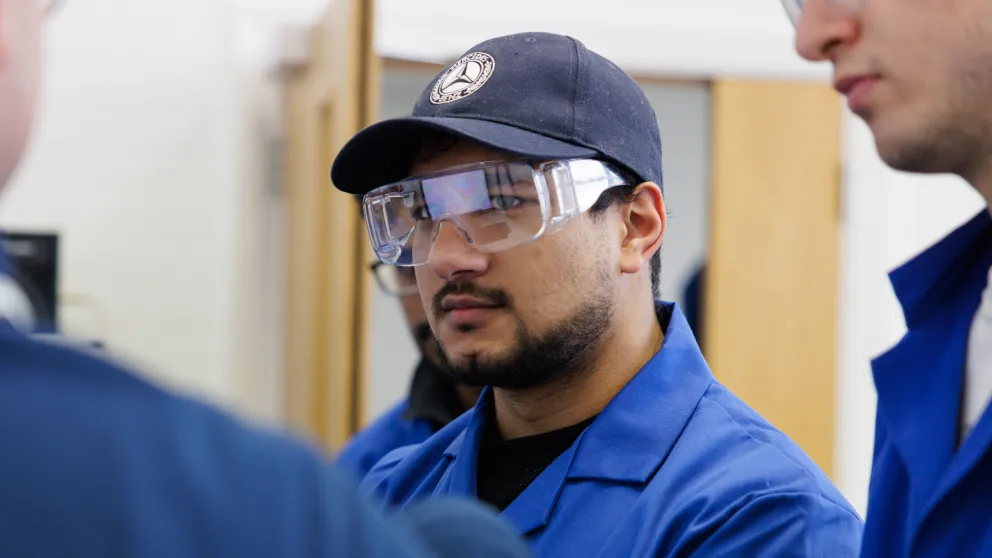
Higher and degree apprenticeships
For learners
Whether you're starting your career or building on existing experience, apprenticeships allow you to gain recognised qualifications while developing workplace skills. You'll be employed throughout your programme and combine study with practical learning in your role.
For employers
Whether you are looking to recruit new talent, develop your existing workforce or address skills gaps, Herts works with you to find the right apprenticeship solution for your organisation.
Why Herts?
Learn from industry-informed teaching, build your skills in the workplace and benefit from dedicated support throughout your apprenticeship journey at Herts.

Ofsted Good provider
Ofsted overall effectiveness judgment (2024).

Flexible learning
Learning is designed to fit alongside your workplace responsibilities.

Dedicated support throughout your studies
Get support to help balance your work, study and personal commitments.

Trusted by leading employers
We work with organisations across Hertfordshire and beyond to develop talent, address skills gaps and support workforce development.
Apprenticeship success stories
Hear from apprentices and employer partners as they share how apprenticeships at Herts combine university study with workplace experience, helping learners develop skills and careers while supporting employers.



Browse Apprenticeship courses by subject area
-

Business
Gain practical skills and industry connections with global partners including Google and Microsoft.
-

Computer science
Develop technical skills in software, systems and digital technologies.
-
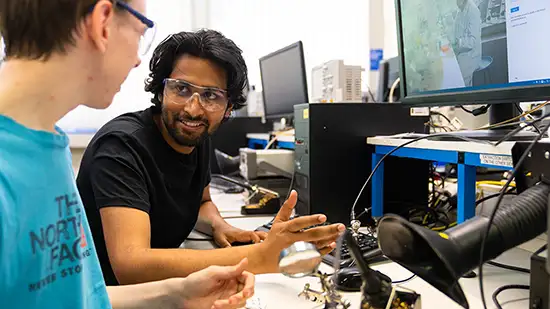
Engineering, AI and robotics
Apply engineering knowledge to emerging technologies and intelligent systems.
-

Education and teaching
Build the skills and knowledge to support learning and educational practice.
-

Health, nursing, midwifery and social work
Progress your healthcare career through practice-based professional learning.
-

Sport
Build your sports career with hands‑on industry experience and partnerships.
How to apply
If you are currently employed
Speak to your employer about apprenticeship opportunities within your organisation. Your employer must be willing to support your apprenticeship and your role must be relevant to the programme you wish to study.
If you are not currently employed in a suitable role
You'll need to apply for an apprenticeship vacancy with an employer. Apprenticeships are work-based programmes, so you'll need to secure employment before you can begin your studies at Herts.
Current apprenticeship vacancies
There are currently no vacancies listed. New opportunities are added regularly, so please check back soon
FAQs
Higher apprenticeships lead to Level 4 or 5 qualifications. Degree apprenticeships sit above them at Level 6, leading to a bachelor's degree. Both combine paid work with academic study.
Yes. Apprenticeships are work-based programmes, so you must be employed in a role that is relevant to the apprenticeship you want to study.
Yes. If your employer supports apprenticeships and your role is relevant to the programme, you may be able to start an apprenticeship while remaining in your current job.
Yes. Apprenticeships lead to an academic qualification that is fully integrated into the programme.
Depending on the apprenticeship, apprentices will achieve a higher education qualification, bachelor's degree or master's degree alongside the knowledge, skills and behaviours required for their profession.
Apprentices split their time between workplace learning and university study. Apprenticeships include off-the-job learning time, equivalent to 20% of the learners’ working hours dedicated to training and development. The delivery pattern varies by programme and may include campus-based teaching, online learning, work-based projects and independent learning.
Yes. Apprenticeships lead to an academic qualification that is fully integrated into the programme.
Depending on the apprenticeship, apprentices will achieve a higher education qualification or bachelor's degree alongside the knowledge, skills and behaviours required for their profession.