
Biological sciences
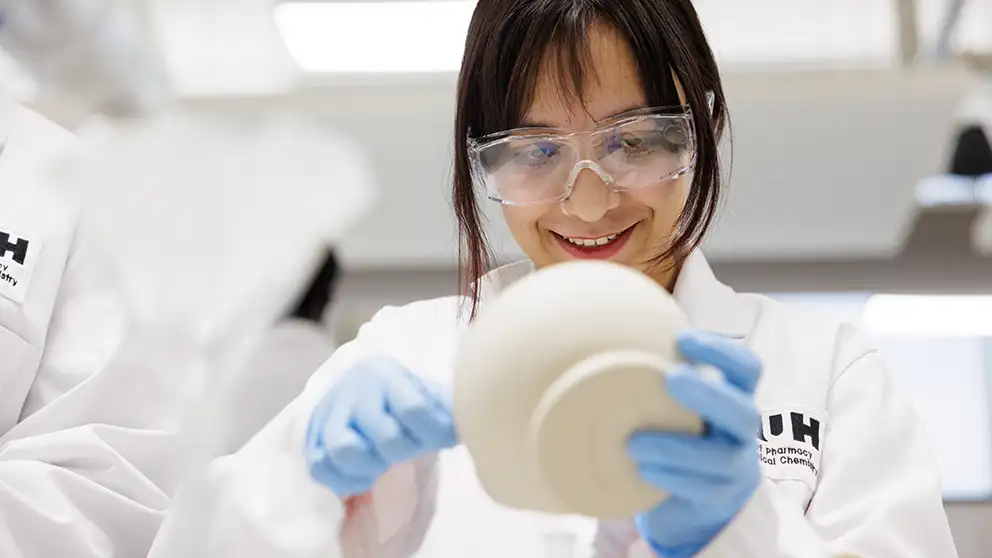
Gain hands-on experience through laboratory work and scientific research, learning how living organisms function, adapt, and evolve. From genetics and human health to ecology and environmental sustainability, you’ll build the knowledge and practical skills to contribute to fields that shape society and the natural world.
You’ll study in a state-of-the-art science building with advanced research and simulation facilities, taught by specialist staff with experience across research, industry, and the NHS. All degrees include placement opportunities with organisations such as councils, hospitals, and external partners.
Why choose Herts
Biological sciences degrees at the University of Hertfordshire give you lab skills, research experience, and industry insight for a scientific career. Learn from academics across genetics, ecology, and microbiology, take part in global research, and use cutting-edge facilities.

1st in the East of England
for medical technology and bioengineering (Complete University Guide, 2027).

Guardian Top 40 University
We’ve ranked 37th for teaching quality, student satisfaction and graduate success in the Guardian University Guide 2027.

2nd in the UK
for teaching in pharmacology (Daily Mail University Guide, 2027).

World-leading research
Ranked in the top 25% of all UK universities for research impact (Research Excellence Framework, 2021).
Explore our courses
Your first year gives you a solid grounding in pharmaceutical science. You'll find your feet in the lab and the library - learning experimental techniques, getting to grips with powerful data and...
A big focus is how scientists use laboratory tests to support patient diagnosis. You will learn about the structure and function of tissues and organs in normal and disease states. You'll link your...
Pharmacology covers all aspects of drugs and their uses as medicines. You'll learn how new drugs are discovered and tested. You'll understand why they are effective in treating disease. You'll...
On completion of this extended degree, there will be at least three undergraduate courses you'll have the option to progress onto, allowing you multiple opportunities to gain entry to a Batchelor...
On completion of this extended degree, there will be at least three undergraduate courses you'll have the option to progress onto, allowing you multiple opportunities to gain entry to a Batchelor...
On completion of this extended degree, there will be at least three undergraduate courses you'll have the option to progress onto, allowing you multiple opportunities to gain entry to a Batchelor...
On completion of this extended degree, there will be at least three undergraduate courses you'll have the option to progress onto, allowing you multiple opportunities to gain entry to a Batchelor...