Master of Pharmacy
Become a healthcare expert in medicines and patient care. Gain hands-on experience, study drug development, and enhance your skills in a supportive environment. With state-of-the-art facilities, you'll be ready for a rewarding career.

What type of applicant are you?


Sign up for Clearing VIP Access
Skip the queues on results day with an exclusive priority Clearing hotline number.
Get info and updates
Sign up for updates
Interested in studying at the University of Hertfordshire and want to sign up to our mailing list to learn more about our facilities, living in the UK and student life? Use the form below and our team will also keep you informed of key updates such as events near you, applications opening and more!
-
Typical offer: 128 – 136
Entry requirements -
Fees: £9,790 per year (UK)
Full details -
UCAS code: B230
-
Course length: Various
Find out more -
Location:
- University of Hertfordshire, Hatfield
-
Institute code: H36

4th in the UK for pharmacology (Daily Mail University Guide, 2025)

Hospital, community and industry placements across the year

98% of graduates are in work or further study 15 months after graduation (Graduate Outcomes, 2021/22).
Course overview
A master's in pharmacy will enable you to provide reliable advice and guide patients on medications and treatments. It will prepare you for work in a rapidly evolving field which offers exciting opportunities to support patients through medicine management and drug development.
With access to state-of-the-art facilities, you'll acquire the scientific knowledge and practical skills needed to thrive in this dynamic role. Throughout the pharmacy degree, you'll explore the pharmacist's contributions to both healthcare and industry while enhancing your interpersonal abilities. Plus, you'll gain valuable hands-on experience through work placements integrated into every year of your course, preparing you for a successful career in pharmacy.
Why choose this course?
Studying Master of Pharmacy (MPharm) at Herts will equip you with the skills, insights, and confidence required to become a fully qualified pharmacist.
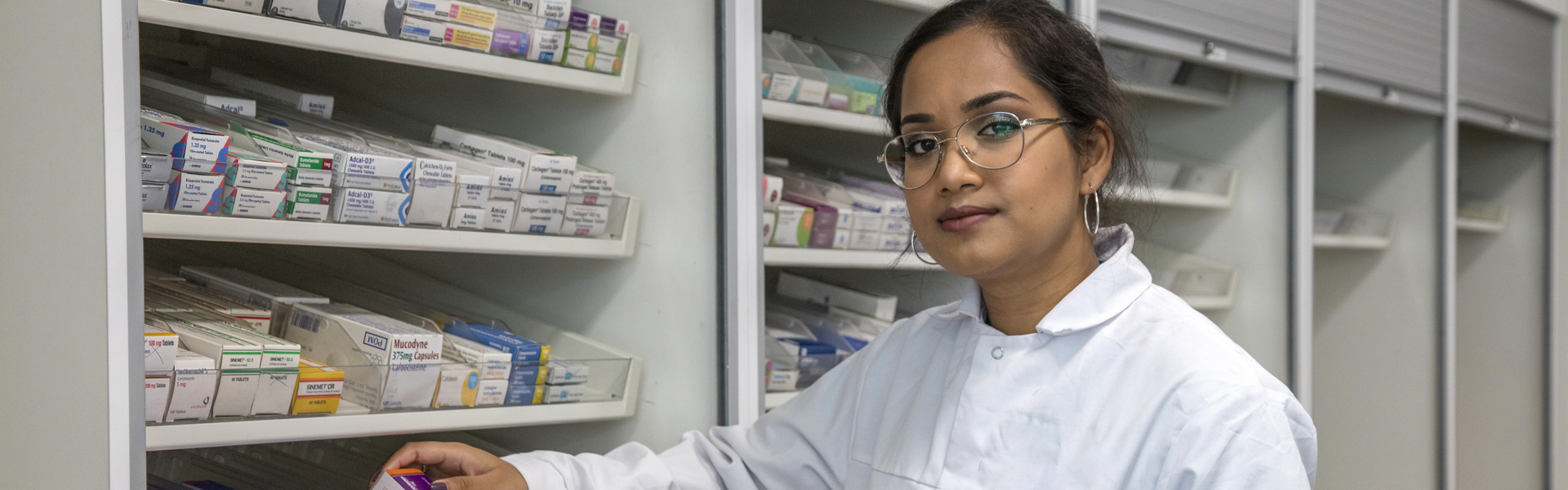
State-of-the-art facilities: gain practical experience in our simulated pharmacy and refurbished chemistry labs, providing you with hands-on experience in a cutting-edge environment. This practical approach is further enhanced by placement visits throughout all years of the programme, allowing you to gain valuable insights and real-world experience.
Become industry qualified: We are committed to your professional development, regularly promoting work experience opportunities and hosting workshops tailored to prepare you for a successful career as a pharmacist. These sessions cover essential skills such as interview techniques, navigating workplace dynamics, and preparing for foundation training applications.
Benefit from a peer-to-peer mentoring programme: our mentoring programme pairs students across different years, fostering a supportive learning community that encourages collaboration and growth. Joining our active Pharmacy Society will immerse you in a vibrant student community, providing networking opportunities and a platform to engage with your peers.
Strong employment prospects: 98% of Herts Health and social care graduates are in work or further study 15 months after graduation (Graduate Outcomes, 2021/22).
Ongoing work placements: you’ll gain pharmacy practice experience within hospital, community or industry placements. Through the placements, you will develop new skills and knowledge through contact with pharmacists, patients and other healthcare professionals. This will provide a wide range of experiences and will develop your ability to relate pharmacy theory to practice.
Professional accreditations
General Pharmaceutical Council accreditation
Our program is accredited by the General Pharmaceutical Council, ensuring that you receive a high-quality education that meets professional standards. The organisation regulates pharmacies, pharmacists and pharmacy technician in Great Britian.
Foundation training year regulated by the GPhC
Graduating from the MPharm degree at Herts qualifies you to enter the Foundation training year regulated by the GPhC. Please note that there is no guarantee of a foundation training place for any graduate as these are recruited to on a competitive national basis. Students who are studying on a Student Visa will need to apply for further immigration leave to undertake their foundation training.
Your future career
An impressive 98% of Herts health and social care graduates are in work or further study 15 months after graduation (Graduate Outcomes, 2021/22).
Typical areas of work for master of pharmacy graduates include:
- community pharmacist
- pharmacologist
- clinical research associate
- regulatory affairs associate
- research scientist
- quality control officer
Once completing the Master of Pharmacy degree, you’ll possess a versatile skill set that paves the way for a multitude of career opportunities spanning various sectors. Research and development present another avenue for pharmacists, allowing you to delve into areas such as drug formulation, clinical trials, and healthcare advancements.
See what recent graduates are up to

Nikunj Thakrar
Pharmacy Manager at Tesco Pharmacy
University experience
Nikunj has been working at Tesco since he was a foundation training Pharmacist and has worked his way up to the position he is now in. He speaks highly of the University, crediting us with helping him succeed in his career. Through the University's resources, facilities and exceptional Pharmacy degree, Nikunj had the opportunity to train three pharmacists as a foundation training tutor. This hands-on practical experience helped him when entering employment and gave him tangible skills to take into his career.
He says, 'The University had, and still has, a massive impact on how my career has progressed. The teaching, support and resources were excellent and helped me develop into the pharmacist I am today. I count my time at university as one of the main contributing factors to my success.'
Real world skills
Nikunj's experience and career demonstrates how the University gives students the skills to succeed, delivering fully skilled, work ready graduates to the professional world, equipped with unique experience and knowledge. Nikunj says, 'I feel that the preparation we were given for the real world was extremely useful in helping me settle as a pharmacist. We spent a lot of time in the mock pharmacy and dispensing suites which were the closest thing to an actual pharmacy. And although daunting, OSCE examinations were an extremely effective way of mimicking real-life scenarios a pharmacist may encounter, ultimately testing our knowledge.'
Aspirations for the future
As a visiting lecturer, the University recognised Nikunj's talent and was able to facilitate his passion for the subject. He is continually developing new skills that he can incorporate into his professional role, in addition to help nurture the pharmacists of tomorrow. He encourages prospective pharmacists to gain experience alongside their degree as it will be invaluable when qualified. He adds, 'Set yourself goals to work towards and never lose sight of them.'
Looking ahead to the future, Nikunj says, 'I am currently very happy with my roles at Tesco and the University of Hertfordshire. However, in the future, I plan on helping out with more central and operational projects within the company and to increase my time spent in academia.'
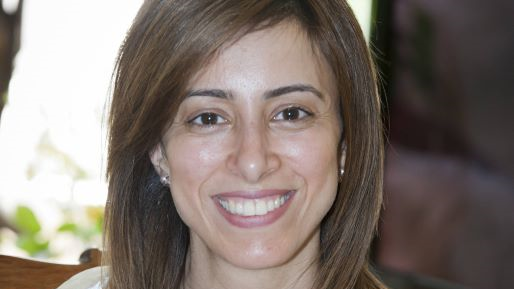
Amira Guirguis
Pharmacist at Ealing Hospital
A move into pharmacy
Amira Guirguis’ career path into pharmacy did not begin in the most traditional way. Initially, Amira trained as an accountant, but always had an interest in people and languages, speaking three fluently. After subsequently working in interpretation and translation, she then decided to retrain as a pharmacist.
One of the benefits that Amira saw with pharmacy was the broad opportunities it offered, including being able to work in the community, hospitals, industry or research. Given this, she advises making the most of all opportunities available. She says, ‘Be proactive and learn from the different expertise of lecturers and researchers. Pharmacy is not just about passing an exam but about developing the skills and competences which would enable you to be a successful pharmacist or researcher.’
Focusing on research
After completing her foundation training year at Ealing Hospital, Amira decided to undertake a PhD having spent the summers of her MPharm working in research. ‘I am very interested in research and keen in pursuing a career in pharmaceutical research, aiming at finding out new methods to improve patient safety and raise our profile as pharmacists.’
Her PhD focuses on using different spectroscopic methods and computational modelling which could be used to identify novel psychoactive substances (NPS) or ‘legal highs’. Currently, Amira is reviewing the existing research and literature, and plans to start in the lab shortly.
Future plans
Even though her focus is very much on pharmaceutical research and her PhD, Amira is keen to retain her skills as a pharmacist and is currently working to gain the necessary accreditations to be able to undertake locum opportunities at community pharmacies. ‘As I’m hospital trained, I would need to undertake some mandatory and other optional courses related to enhanced and advanced services in community pharmacy, although still hope to also locum in hospitals.’
Longer term, her focus remains on research alongside helping future pharmacists. ‘In the future, I want to work in research and contribute into pharmaceutical discoveries. My ambitions are also to develop a course for foundation training pharmacists that would assist them towards their foundation training and foundation exam.’
What you'll study
Throughout this full-time, four-year Master of Pharmacy degree, you will benefit from a combination of theoretical and practical experience.
In the first year of the pharmacy degree, you’ll engage in a comprehensive curriculum designed to establish a strong foundation in pharmaceutical sciences. The program begins with modules such as drugs and medicines, where you’ll explore the fundamental properties, classifications, and therapeutic uses of various pharmaceuticals. As practical experience is so important, you’ll be out on placement from your first year of study. This placement is aimed at getting you used to the professional environment and to develop excellent communication skills.
In your second year, you’ll have the opportunity to deepen your understanding of key pharmaceutical concepts through a series of interconnected modules. In this year, you will also focus on the chemical principles underlying drug design and development, enhancing your knowledge of the molecular aspects of pharmaceuticals. You’ll also explore the formulation and production of medications, linking theoretical knowledge with practical applications.
In your third year, you’ll engage in advanced studies that integrate clinical practice with a strong emphasis on therapeutic interventions. You’ll also start a project which will enable you to undertake a significant research project, fostering critical thinking and analytical skills while exploring a specific area of interest within pharmacy.
In your fourth year, your knowledge will be expanded further with the level 7 modules, taking you another step closer to being prepared to kickstart your career. You will focus on the integration of pharmaceutical care with an emphasis on patient safety and public health.
What if I need support?
You’ll have a personal tutor to guide you throughout your course, all the way to graduation. If you need additional support during your time with us, rest assured that we’ve got you covered. For help with study skills, including referencing, essay writing and presentations, you’ll have access to our academic support services. You can attend workshops, 1-to-1 sessions and online tutorials. Both our LRCs run drop-in study skills sessions. And the best thing is, it’s all free.
Where you'll study
Your main campus is College Lane, this is where the creative arts, science and health-related subjects are based. This means you’ll share the campus with future nurses, scientists, artists and more. You can use the common rooms to relax with friends, work out in the 24-hour gym or have a drink in our on-campus bar. We also have restaurants for you to eat in or grab something on the go. Our Learning Resources Centres are open 24/7, which means you can study whenever suits you best. Want to pop over to the other campus? You can take the free shuttle bus or walk there in just 15 minutes.
Who you'll learn from
You will be taught by our team of highly qualified academics, experienced in the field of pharmacy. Additionally, you have access to an academic support team, a well-being team, and a personal tutor who will help you navigate university learning and living.
Working together, your teaching and support team is committed to assisting you in realising and achieving your full potential.
Check out our student blogs
How we support our students
At the University of Hertfordshire, we want to make sure your time studying with us is as stress-free and rewarding as possible.
We offer a range of support services, from childcare to counselling, ensuring that you make the most of your time at Herts and can focus on studying, having fun, and have the support you need.
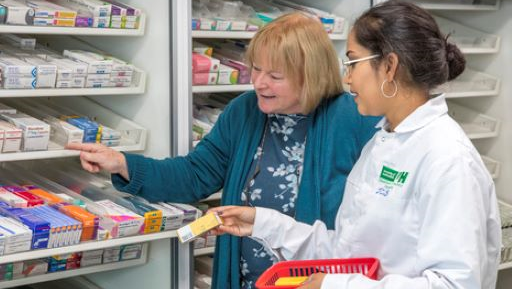
Student Blogs
Iqra - Why I love Pharmacy
What I love about my course
Hello, I’m Iqra and here is why I love studying pharmacy.
I love studying pharmacy, as I have always wanted to become a pharmacist and I find it interesting.
The things I love are the modules and the information we learn. First-year is a build-up from A levels (I studied Biology, Chemistry and Maths) so the knowledge learnt in those years will help. We learn about how medicines work, what we can give to patients for different conditions such as heartburn, diarrhoea etc... and different drug interactions which is fascinating. The information that is taught is very interesting and it follows on and links to facts within other modules which makes it easier to understand.
Furthermore, I also love studying pharmacy, as we carry out practical lessons in the labs which helps with engaging with other people within the course. Also, in semester B, you start dispensing which is awesome! You have your own dispensing coat, and you get to practise writing prescriptions and labels which is fun. In addition, during some dispensing classes, you spend time in the mock pharmacy which really helps with understanding how real-life pharmacies look and operate. The workshops are brilliant. I found them especially useful in the first year as they helped reinforce the knowledge I learnt during the lectures. Pharmacy is an intense, yet fun course to study. All the lecturers are extremely helpful and are always willing to help with anything you don’t understand which is useful.
At the end of semester B, or even before, if you haven’t already, I would definitely recommend working part-time in a pharmacy! I started working at the beginning of March. Working in a pharmacy has improved my knowledge of all the content learnt in the first year and helps with interacting with customers. Also, recommending a product for the minor ailments learnt during the pharmacist module has enhanced my understanding further.
Student Blogs
Iqra - Why I chose Herts
Why I chose Herts
Hi, I’m Iqra and I have just finished my first year studying Pharmacy at the University of Hertfordshire. Here is the reason why I chose to study at Hertfordshire University
I come from a small town just outside of London, so the location of this Uni is very convenient. However, it still far for me to commute daily, especially how I would have to travel on the M25 where there is always a ridiculous amount of traffic!
At first, living in the accommodation was difficult as I had no experience living away from family. However, after settling in and making friends with my flatmates, I do not regret this decision at all. Living in the accommodation meant I was able to focus on work and get my notes done without any distractions (from family), but also have fun with my flatmates. Furthermore, living alone has allowed me to become independent as I would have to cook and clean for myself and has helped me grow confidence! Furthermore, living on campus is helpful, as the Learning Resource Centre (LRC) is open throughout the day and night, and are situated next to the accommodations. This is useful when it comes to exam season and you need to study quietly and also if you urgently needed to use the computer/print something off.
The initial attraction for me to come to the University of Hertfordshire was the newly built science building, the vast amount of resources found within the library on both campuses, the variety of sports activities the university offers and the free shuttle that runs between the campuses (they come every 10 minutes!). From attending these sports clubs, I was able to make friends from different courses which allowed me to grow as an individual and become more confident. The shuttle bus is particularly useful when travelling between campuses. For instance, if you have forgotten something, you can easily go back and grab it without having to pay.
Student Blogs
Iqra - My typical day
My typical day
My day usually starts off at around 06:30, when I get up to pray. After praying, if I have a 09:00 I try to not go back to sleep as that usually makes me very lazy, so instead, I make breakfast and start to get ready for university. I live on de Havilland Campus, but I study on College Lane, so I usually catch the bus at 08:30, to make sure I have enough time to get to my lecture room, and in case anything happened on the bus, I would have enough time to walk.
Majority of my lectures last two hours and I usually have at least three lectures a day (sometimes less, sometimes more). During the lectures, I tend to scribble down important information and sometimes lectures get recorded so you can go over anything covered. This helps me to understand what they are saying about each slide.
Depending on the time the lectures finish, and the time gap I have between the next one, I go to the library and start to write up my notes as I hate falling behind. Listening to the lecture takes time so I like to start as soon as possible so I can finish them quickly.
Once all my lectures have finished (mostly around 17:00-18:00), I go back to my accommodation and relax for an hour, where I watch Netflix and catch up with my family and friends. After this, I usually have a shower and have dinner. If I know, I have an early start the next day, I try to get to go to sleep around 23:00 so ensure I get enough sleep, but I have a day off I sometimes stay up slightly longer.
This is then repeated throughout the week
Entry requirements
The University of Hertfordshire is committed to welcoming students with a wide range of qualifications and levels of experience. The entry requirements listed on the course pages provide a guide to the minimum level of qualifications needed to study each course. However, we have a flexible approach to admissions and each application will be considered on an individual basis.
The programme receives a high number of applications each year. Meeting the entry requirements does not guarantee an offer, as admissions decisions consider academic achievement, interview performance, and overall suitability for the course.
Ready to apply?
UK and EU applicants with pre-settled/settled status in the UK
| Start date | Study type | Apply |
|---|---|---|
| September 2026 | Full time | Apply via UCAS |
| September 2027 | Full time | Apply via UCAS |
International and EU applicants without pre-settled status in the UK
Apply through Clearing


Our Clearing hotline is open for support, Monday - Thursday 9.00-16.45 and Friday 9.00-15.45. You can apply online at any time.
Fees and funding
At Herts, we’re dedicated to providing world-class teaching supported by industry-level facilities and incredible social spaces. We believe cost shouldn’t be a barrier to higher education, and we strive to keep both our standard and additional costs as low as possible.
| Study type | ||
|---|---|---|
| UK students | Full time | £9,790 for the 2026/2027 academic year |
| EU students | Full time | £17,450 for the 2026/2027 academic year |
| International students | Full time | £19,450 for the 2026/2027 academic year |
Tuition fees are charged annually. The fees quoted above are for the specified year(s) only. Fees may be higher in future years, for both new and continuing students. Please see the University’s Fees and Finance Policy (and in particular the section headed “When tuition fees change”), for further information about when and by how much the University may increase its fees for future years.
| Scholarships, grants and bursaries | Depending on your circumstances, you may be eligible for a non-repayable scholarship, grant or bursary to support your studies. |
|---|---|
| Disabled Students' Allowance | The Disabled Students’ Allowance can cover any study-related costs you have because of a mental health problem, long term illness or any other disability. |
| Student loans | Find out about securing a student loan, from how much you could be eligible for to when you need to start making repayments. |
| Accommodation costs | We offer a great choice of student accommodation, on campus or nearby in the local area, to suit every student budget. |
| Additional course fees | Additional costs include: travel costs for visits and placements, £30 deposit for chemistry locker covering years one and two of study (refundable), £25 for dispensing lab coat and two lab books (non-refundable),£35 deposit for EVS system (refundable after year four of study). For students who wear a Hijab or head cover there is a laboratory flame-proof Hijab or other head cover for £10– non-refundable Read more about additional fees in the course fact sheet. |
More about the course
| Programme specifications | |
|---|---|
| MPharm Master of Pharmacy - Full Time, Sem A | Download PDF |
| Additional information | |
|---|---|
|
Applications open to international and EU students |
Yes |
Course length |
Full Time, 4 Years |