



Sign up for updates
Interested in studying at the University of Hertfordshire and want to sign up to our mailing list to learn more about our facilities, living in the UK and student life? Use the form below and our team will also keep you informed of key updates such as events near you, applications opening and more!
BSc (Hons) Mathematics with Computer Science
Key information
-

Typical offer:
Entry requirements -

Fees: See below
Full details -

UCAS code: G901
-

Institute code: H36
-

Work placement option
Find out more
Why choose this course?
- Outstanding facilities in the new School of Physics, Engineering and Computer Science building
- Benefit from strong links to business and research
- 99% satisfaction for academic support (NSS 2025)
Expert teaching across two departments: Mathematics modules are offered by the Department of Physics, Astronomy, and Mathematics (PAM), while computer science modules are delivered by one of the UK’s most established and largest computer science departments, combining personalised support with extensive resources.
Personalised student support: Smaller department sizes ensure tailored guidance and attention throughout your studies.
Industry-standard facilities: Study at Spectra, the School of Physics, Engineering and Computer Science’s new home, equipped with industry-standard software, hardware, and simulators for a fully immersive technology experience.
Hands-on practical learning: Modules integrate theoretical understanding with real-world computational applications, including Graph and Game Theory, Operational Research, Machine Learning, Cryptography, and Cyber Security.
What's the course about?
The BSc (Hons) Mathematics with Computer Science degree is designed for you if you’re interested to combine mathematical rigour with cutting-edge technology. The degree provides an integrated understanding of mathematical theory and computational practice - skills essential for success in today’s fast-evolving, technology-driven world. Problem-solving and interdisciplinarity are at the heart of the course. You’ll begin by building a strong foundation in core mathematical concepts and programming before progressing to advanced modules such as Graph and Game Theory, Operational Research, Machine Learning, Cryptography, and Cyber Security. These modules develop both theoretical insight and practical expertise, enhancing your analytical and problem-solving skills. Through hands-on projects, industry-aligned modules, and access to advanced facilities, you’ll engage in career-defining opportunities that not only strengthen your academic knowledge but also prepare you for roles in areas such as data science, cyber security, software development, financial modelling, and AI. This combination of experience, skills and specialisation ensures you’ll gain the confidence to thrive in tomorrow’s dynamic digital landscape.
What will I study?
A mathematics with computer science degree combines the precision of mathematical reasoning with the creativity of computing, preparing you for a rapidly evolving digital world. The degree gives you a strong foundation in both disciplines, developing the analytical, problem-solving, and computational skills that are highly valued in technology, data science, and research.
In your first year, you will build a solid base in core mathematics and computing. You will explore fundamental concepts in mathematical reasoning, calculus, linear algebra, probability, and statistics, alongside practical programming in C and Python. Modules such as From Silicon to C and Mathematical and Computational Methods will give you a deep understanding of how computer systems operate from the ground up, while Maths and Computing in Society will help you consider the ethical, historical, and societal impact of your work.
In your second year, you will expand your knowledge into more specialised areas. You will study Discrete Mathematics, Abstract Algebra, Algorithms and Data Structures, Operating Systems and Networks, Artificial Intelligence, and Introduction to Machine Learning and Neural Networks. These modules will strengthen your ability to design algorithms, analyse data, and solve computational problems. You will also develop skills in professional and career planning through Career Planning and Development, preparing you for your future in technology or further study.
In your third year, the focus shifts to advanced topics and individual exploration. You will study modules such as Graph and Game Theory, Optimisation and Operational Research, Robotics, and Computer Systems Security, applying your knowledge to complex, real-world problems. A substantial individual project module in Mathematics and Computer Science allows you to investigate an area of particular interest, integrating mathematics and computer science to develop practical, research, or innovative solutions.
Throughout the degree, emphasis is placed on hands-on learning, problem-solving, and the practical application of theory. Optional modules such as Information Theory and Differential Equations let you tailor your studies, while collaborative projects and programming exercises ensure you graduate ready to meet the challenges of technology, data, and innovation in a wide range of careers.
Your main campus is College Lane
Your main campus is College Lane, this is where the creative arts, science and health-related subjects are based. This means you’ll share the campus with future nurses, doctors, scientists, artists and more. You can use the common rooms to relax with friends, work out in the 24-hour gym or have a drink in our on-campus cafes. We also have restaurants for you to eat in or grab something on the go. Our Learning Resources Centres are open 24/7, which means you can study whenever suits you best. Want to pop over to the other campus? You can take the free shuttle bus or walk there in just 15 minutes.
Learn in our brand new state-of-the-art building called Spectra, where you’ll experience a range of experiential learning zones. You will have access to modelling, simulation and research labs. Spectra also provides space to collaborate, with plenty of workshops, social and meeting spaces available. Even better, the building has been designed with the University’s net zero carbon target in mind, and forms a major step in the University’s drive to maintain modern and world-leading facilities that are energy efficient.
You will also benefit from our Academic Support Hub, which is aimed at helping you build your employability and academic skills. Plus, you will have access to industry mentors, who will provide you with pastoral support, vocational guidance, and career progression opportunities.
Check out our student blogs
Student Blogs
Jonathon - A typical day
My typical uni day
An average day when studying maths at Herts consists mainly of commuting, lectures and study.
Going from the beginning of my day, lectures start at 09:00 on some days, which is a long struggle to get up and out by 07:30 but it gets done. I only like that time to beat the motorway traffic and get a good short walk in before lectures, great to clear the head and get ready to learn.
Other days they can be at 11:00, or if you're lucky 13:00. These are the lie in days or catch up on extra study before driving to university.
Once at university, lectures are typically 2 hours and we cover a lot of content, normally a whole section or chapter.
After the first lecture, depending on my timetable it's either a tutorial or a break. During my break, I either head to the Learning Resource Centre (LRC) or the PAM Ready Room and do some extra study or just relax a bit before the next lecture or tutorial.
An average day at University ends at 17:00 or 18:00 for me but my average day does just end there.
Depending on the day I have either society meeting and socials, scouts or sports that I attend on a regular basis so I'm always active whether in or out of University.
At the end of the day, there is nothing I enjoy more than either a bit of gaming with friends or a good nights sleep.
Student Blogs
Jonathon - Guide to mathematics
Guide to the mathematics facilities
There are a few key facilities for our Mathematics course at Herts
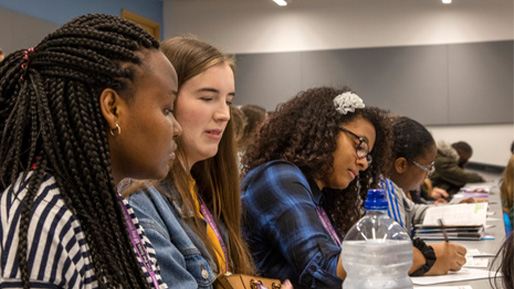
The first thing that comes to mind is our lecture rooms and classrooms. Simple I know but not are they just for our lectures and tutorials, if they are empty most of the rooms are available for you to use as a study space or if you have a group of friends you can study together and share ideas on the screen or the whiteboards.
We also have some designated learning zones which you can use to study. These are dotted all over campus.
The key facilities are our high specification PC Labs. Used by all students for Python, R, and MATLAB just to name a few software we use. These labs are open from around 8 am to 8 pm within the main buildings.
We also have our Learning Resource Centre (LRC for short). Here are all the key study spaces from single study rooms to group study rooms and computers. The LRC has practically everything you could need to study. It's open 24/7 so whether an early bird or a night owl it's open for those brain waves whenever they may come.
The LRC is also home to our Maths Support Service. This is a small team of people on a rota that sets up in a specific spot in the LRC to help with any maths problem you may have they can help.
Student Blogs
Jonathon - Why I chose Herts
Why I chose Herts
There are many reasons why I chose to come to Herts. Here are just a few.
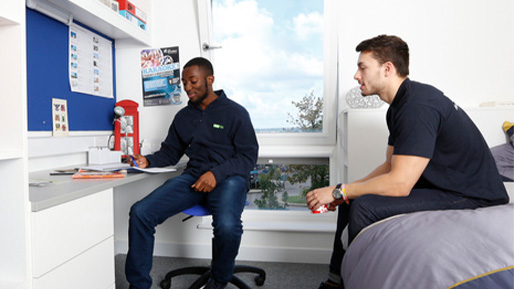
Firstly, the accommodation was phenomenal compared to what other places were offering at the time (2017). This is what sold Herts to me when I was making my final decision along with my next reason.
Next is I live in North London. I didn't want a university too far that I couldn't drive to it as a commuting student if I wanted to. As well as it being close to home for when I may want to go home or for my family to come up and visit; the journey isn't too long to make.
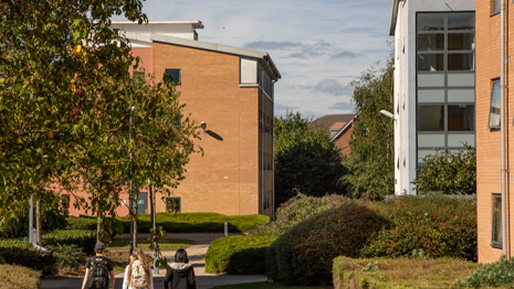
My next reason is space. The outdoor space is brilliant. There is such a diverse scenery at Herts that you could be in a built-up area of campus then in 3 minutes you are in a forest. The Great outdoors helps to relax and clear the mind which is why I love it so much.
Lastly is the staff. On the open days, I went to the staff and they were always friendly and the lecturers are so enthusiastic about their subjects. That's what I want to see.
So, there's my story or mini stories behind choosing Herts.
Alumni Stories
Heather Tymms
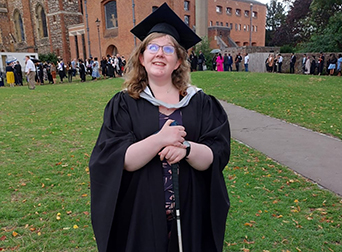
Meet Institute of Mathematics prize-winner Heather, who loved her time at Herts and was determined not to let her sight-loss become a barrier to getting fully involved with student life and achieving a first-class degree.
Read more stories BSc (Hons) Mathematics| Current job role | Data Science and Analytics Advisor for GHD |
|---|---|
| Year of graduation | 2022 |
| Course of study | BSc (Hons) Mathematics with Placement Year |
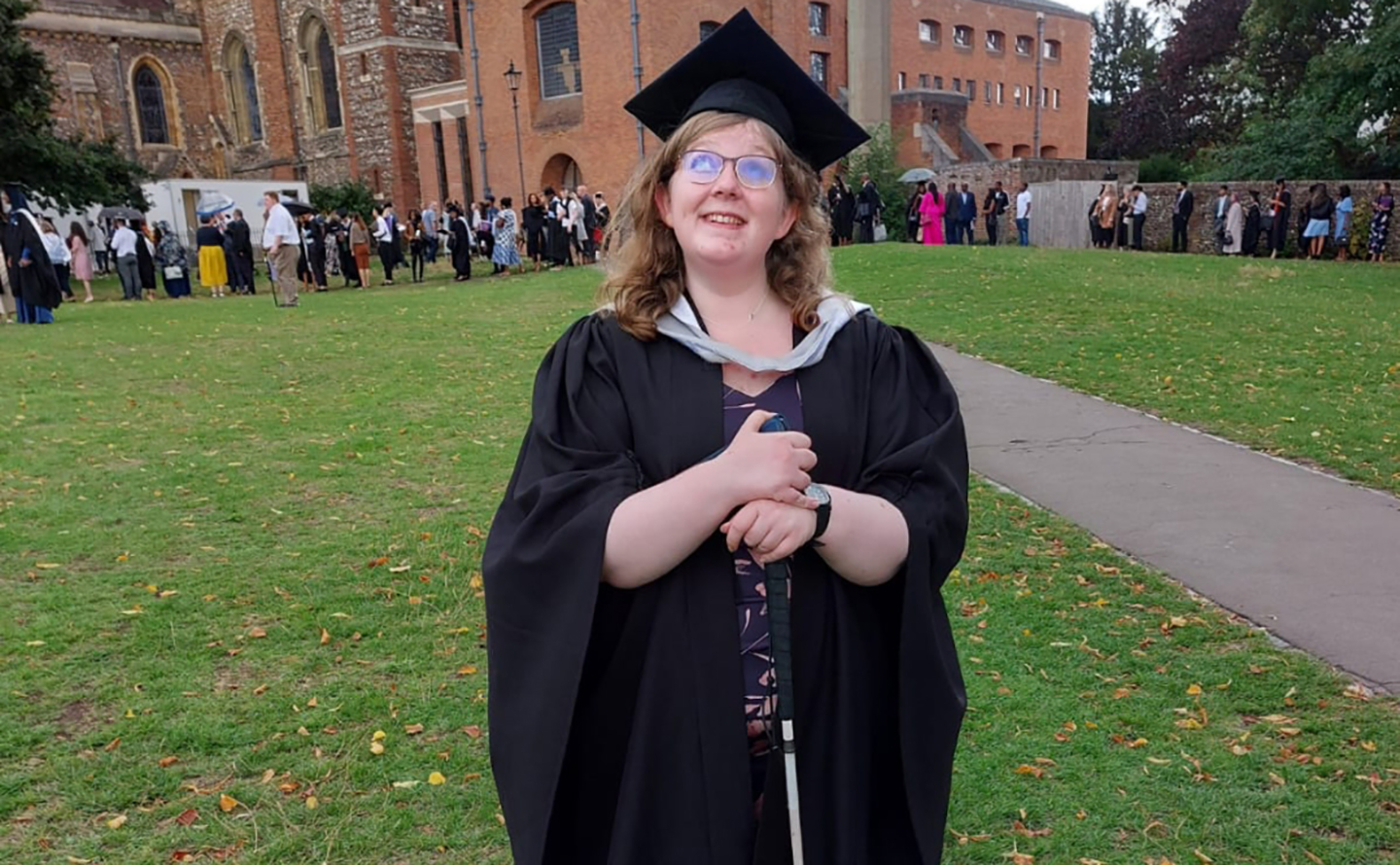
Studying at Herts with a disability
Heather hadn’t planned to go to university straight after A-Levels as she lacked the confidence. However six years ago she lost the majority of her sight and wanted to find her independence again. This was when she decided she needed a challenge and a new qualification. Her journey has led her to achieving a first-class degree in Mathematics, winning a school prize from the Institute of Mathematics and its Applications.
Heather says, ‘I can’t believe how far I have come. I have grown so much, and the future is brighter than I ever imagined it to be. When I started at Herts I would never have dreamt of being able to commute to London. Herts has given me the confidence to achieve more and provided me with the skills and ambition I needed to equip myself for a professional career in a fascinating sector!’
Heather chose to study at Herts as it was her local university and because she knew she would be able to get the support she needed.
‘Being new to having a disability, I needed some extra help and guidance along the way. The Wellbeing Team at Herts provided me with lots of support and resources. Before I started, I was taken on a tour to familiarise myself with the campus so I could learn the best routes between my lectures. This was very useful, as I can get anxious in new places. I also had help in the lectures because I couldn’t see the board! My lecturers were very accommodating and changed timetabled classrooms to improve access for me if required. I was able to claim the Disabled Students' Allowance, which enabled me to buy a specialist laptop with assistive technology and a magnifier.’
‘I stayed closely connected with my lecturers and the Wellbeing Team through my studies, and I was able to help improve the experience of other disabled students on campus. For example, working with university staff on signage and communication around building sites to enhance safety measures. The university staff were always happy to help improve the safety of all their students.’
‘I really benefited from the support I received from my school careers advisor. Through this service, I had help to secure both a placement and graduate job. I received expert practical advice to help me apply for jobs, they helped improve my confidence with job interviews, and showed how I could disclose my disability to employers in a covering letter.’
Life at Herts
Heather had a brilliant student experience and got involved with lots of extra-circular activities.
‘I really enjoyed my course, I found the lecturers extremely friendly, knowledgeable, and approachable, something which I really valued. I also enjoyed meeting and working with people from all different backgrounds. Herts is a truly diverse and inclusive place to study, and I benefited from collaborating with so many different people.
‘My favorite place on campus was the library. It has such a good atmosphere, and this was where I could concentrate on course work with friends.’
‘I also got involved with the Physics, Astronomy and Maths Society (PAMsoc) and in my final year, I was the society chair. Through PAMsoc activities I was able to learn and make friends with like-minded people, enriching my student experience. We did quizzes, pub nights, discussion groups, and invited our lecturers to speak to us about their personal career paths and the cutting-edge research they are doing.’
Heather’s future career aspirations
Heather is passionate about Maths and says, ‘You can do so many different things with a Maths degree, and not just teaching. You learn transferable skills, critical thinking, elements of computer science, and physics.’
‘I was introduced to the data sector in my placement year at Sainsbury's Digital, where I got to work on interesting projects like using data analysis to improve the experience of customers at the supermarket checkout. I now work for an Engineering Consultancy, GHD, a company who are committed to solving global challenges in the areas of water, energy and urbanisation, values which align to my own. I do a job that I love using data models and python, skills learnt on my course.’
‘I do miss academia sometimes and I may like to do further study in the future.’
Heather’s advice for other students
‘At Herts, you can learn about your chosen subject, but also learn about yourself. Make sure you take the time to reflect and understand both you and your passion throughout your studies and take every opportunity you can. Say yes to new things but know your own limit and don’t burn yourself out. At Herts, there is always support available to you, so seek out help if you need it.’

Alumni Stories
Jonathon Keevash
Meet Jonathon. After finding Herts through Clearing, Jonathon has gone on to become an analyst in the IT sector.
Read more stories BSc (Hons) Mathematics| Current job role | Analyst in the IT sector |
|---|---|
| Year of graduation | 2022 |
| Course of study | BSc Mathematics |

A flexible learning experience
Jonathon enjoyed maths at school and wanted to study it at a higher level. He found Herts through Clearing and the University’s BSc Mathematics course impressed him. He says, ‘The course had a variety of modules you can take, so it allowed you to really customise your experience and do what you were best suited to. The University was also close to home, so I had the opportunity to commute if I wanted to.’
As the first person in his immediate family to go to university, Jonathon wanted to make the most out of his Herts experience. He was a Student Ambassador and joined the Student Union’s Physics, Astronomy and Mathematics (PAM) Society, which he is still involved in today. Jonathon is still friends with many he met at Herts and met his partner here too.
Future plans and advice
Jonathon is now an analyst in the IT sector and says the skills he learned on his course have been important for his career, particularly critical thinking. Jonathon adds, ‘I have always been keen on teaching and may return to Herts to complete a PGCE. If not, then I will look to develop in my current role.’
Jonathon’s one piece of advice for future students is to maintain a good work-life balance. He says, ‘Remember to take time for yourself and to do anything but study.’
As well as remaining an active member of the PAM Society, Jonathon is making use of his alumni benefits, having signed up for a Hertfordshire Sports Village membership at a discounted rate.