



Apply through Clearing


Our Clearing hotline is open for support, Monday - Thursday 9.00-16.45 and Friday 9.00-15.45. You can apply online at any time.


Sign up for updates
Interested in studying at the University of Hertfordshire and want to sign up to our mailing list to learn more about our facilities, living in the UK and student life? Use the form below and our team will also keep you informed of key updates such as events near you, applications opening and more!
BSc (Hons) Sports Studies
Key information
-

Typical offer:
Entry requirements -

Fees: See below
Full details -

UCAS code: C602
-

Institute code: H36
-

Study abroad option
-
Work placement option
Find out more
Why choose this course?
- 2nd in the East of England for Sports Science (2023 Complete University Guide)
- Work placement opportunities through our partnerships with external partners such as Watford FC
- Outstanding facilities in our Institute of Sport, with experienced, practising teaching staff
On this sports studies degree, you will learn in our specialist facility: You’ll have access to some of the best university sports facilities in the UK, including our multi-million-pound Institute of Sport Building based at the de Havilland Campus. Our Sports Village facilities include a 25-metre swimming pool, 12m high climbing wall and a 110+ station gym. The gym has both strength and cardio equipment, such as rowing machines, cable stations and a free weights area. Facilities also include match-quality courts, sports halls and new generation astro pitches and so much more.
Your learning will be enhanced by our industry connections: The University works closely with national and international researchers, coaches and athletes, giving you the opportunity of masterclasses and insights from those at the top of their game.
Benefit from our official partnerships with Watford FC and the London Mavericks: As a Herts student, you’ll have exclusive access to unique career and educational opportunities.
Herts offers an Active Students and Staff programme, with free sports and exercise sessions available. You could even get a part time job working as an activator, leading your own exercise sessions or assisting with qualified instructors.
What's the course about?
The BSc (Hons) Sports Studies at the University of Hertfordshire is ideal for you if you’re passionate about sport, coaching, management and the broader social and psychological dimensions of sport and physical activity. The course provides a solid foundation for your future career in sports delivery, education, business or community-based roles.
The sports studies course covers a wide range of subjects, including sport management, coaching, sport science, psychology, sociology, research methods, leadership, ethics and events management. You'll benefit from hands-on learning through practical workshops, coaching sessions, and performance testing. There is also the option of a sandwich year or study abroad placement to gain real-world experience and boost your CV and future employment prospects.
The course is shaped with input from sports employers and industry bodies such as the LTA, Hertfordshire Sports Village and Watford FC. This ensures the degree remains relevant and practical for today’s sports industry. Graduates go on to exciting careers in coaching, development, management, marketing, media, performance analysis and health promotion, or pursue further study such as PGCE teacher training.
You will graduate with a broad and industry-relevant skillset, including leadership, communication, analytical thinking, research and practical sport and fitness expertise.
What will I study?
Degree programmes are structured into levels, 4, 5 and 6. These correspond to your first, second and third/final year of study. Below you can see the modules you’ll be studying in each level.
In your first year, you’ll learn the foundations of sports coaching, aspects related to physical activity and sports development, and begin to understand the sports industry. You'll also learn about media and communications in sport as well as how the sport sector operates within a global world. To help you settle into university life, you’ll take a module focused on developing the academic skills you need to be a successful student.
Your second year, builds on what you learned in the first year. You’ll consider important ethical issues in sport, understand how to construct funding bids for active communities, and the essential processes that enable nations to succeed in the Olympic and Paralympic Games. Study global perspectives of sports development, applied sports coaching and management of sports events. The module on research methods helps you to understand the principles and methods that underpin social science research. You’ll be able to use this to critique and understand the research done in the areas of sports development, sports coaching, or the sports business management field. It will also come in handy for your final year dissertation. Your Sport Experience Learning module provides you an opportunity to get applied work experience in the sport industry. In addition, we also offer optional modules for you to choose from including Leadership in Sport, Coaching modules, Global Perspectives of Sport Development, Management of Sport Events, or Sport Marketing and Public Relations.
Work placement/study abroad option: Between your second and final year, you’ll have the option to study abroad or complete a work placement for up to a year. Not only will this give you an amazing experience to talk about, but it will also give your CV a boost. If you would rather go straight to your final year, that’s fine too. You can decide in your second year with us, so there is still plenty of time to think about this.
In your final year, you’ll be able to develop your research skills through our research dissertation module and/or focus on a work experience dissertation. You’ll get a personal supervisor to support you with the research and/or work experience dissertation. Here, you’ll design and undertake your own project on a topic relevant to your area of study, and more importantly, it will be aligned to an area that interests you. You’ll also be able to study other modules in the final year, such as insight and evaluation, contemporary issues in sport, and sport law and governance. You can choose to supplement these modules with coaching modules, behaviour change for physcial activity and sport, creating business strategies for sport, or sport sales and customer service.
Modules are assessed in a variety of ways via coursework, debates, presentations, infographics, viva and practical. The type of coursework is varied, depending on the module and includes reports, reflections, write up of practicals, portfolios, posters and presentations.
Your main campus is de Havilland
You’ll share this campus with students from business, law, sport and education subjects. The student housing is close to our Sports Village which includes a gym, swimming pool and climbing wall. You can get breakfast, lunch, or dinner in our on-campus restaurant or bar (in the newly built Enterprise Hub) on days you don’t feel like cooking. You can also use the common room to play pool, video games or just to hang out with friends. Our Learning Resources Centres are open 24/7, which means you can study whenever suits you best. Want to pop over to the other campus? You can take the free shuttle bus or walk there in just 15 minutes.
Alumni Stories
Annabelle Bullock
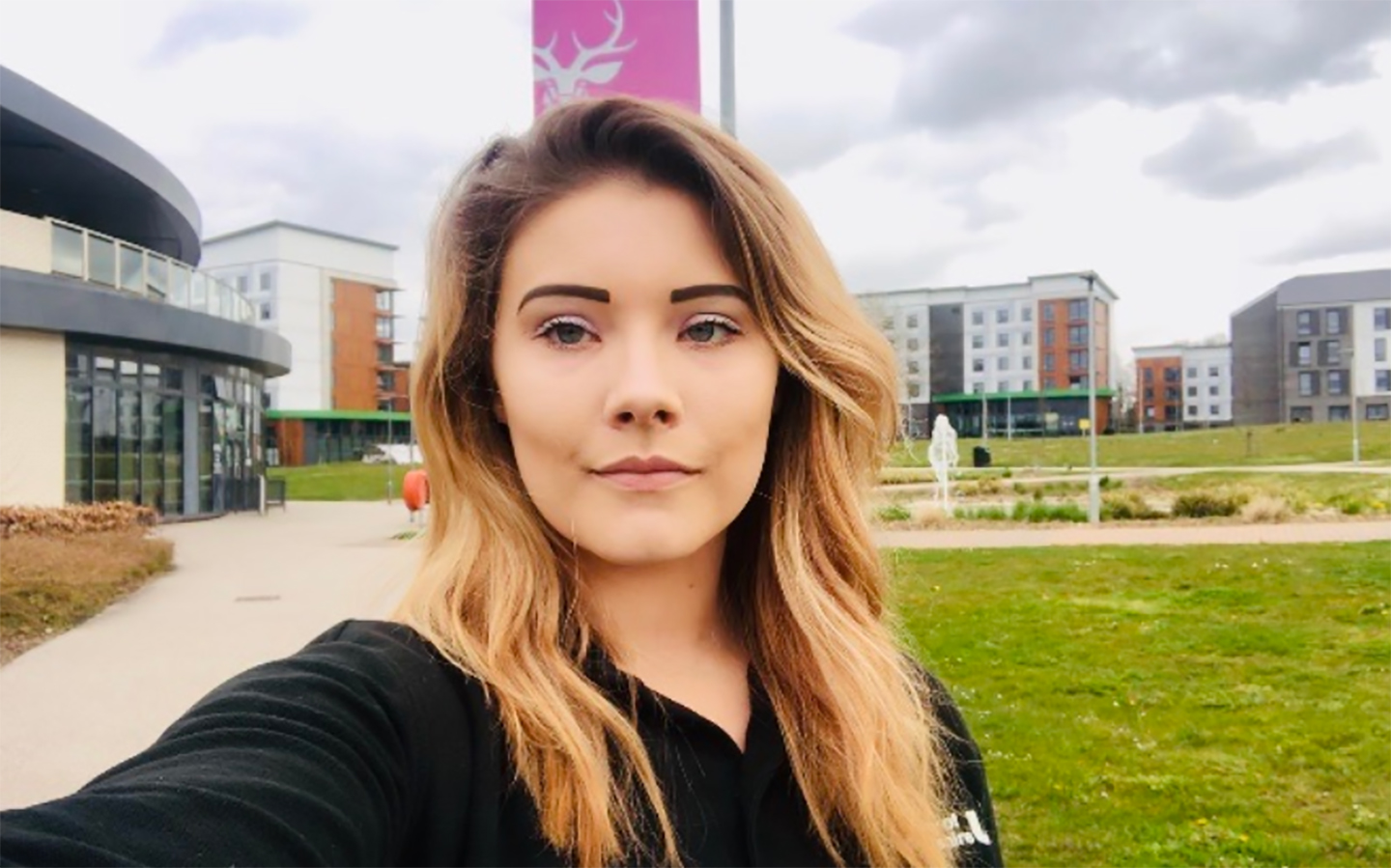
Meet Annabelle Bullock, a BUCS gold medallist, who studied Sports Studies alongside her athletic pursuits. As an athlete she competed in target shooting and as a member of the women's Lacrosse team.
Read more stories MA Education| Current job role | Education Liaison Coordinator |
|---|---|
| Year of graduation | 2018 / 2019 |
| Course of study | BSc (Hons) Sports Studies |
| MA Education |
University experience and support
The University supported Annabelle by making her one of its sponsored athletes providing her with greater flexibility and access to sporting facilities and opportunities. This helped her develop a broad and transferable set of skills and experience.
Annabelle says, 'Being an athlete and studying was challenging, but the University and my lecturers were so supportive. Being made a sponsored athlete also came with a bunch of perks. All this support and the opportunities that the University provided helped me to build the skills and confidence I needed to be truly successful in my job today.'
Annabelle currently works as one of the Education Liaison Coordinators at Herts. Having established fantastic contacts within the University, her student activities meant she could seamlessly progress into a professional role that complimented many of her skills and interests.
'I always assumed that I would do something within sport, but when it came to my final year in BSc Sport Studies, I had found my passion for Coach Education. During my MA in Education at the University, I discovered another passion for helping others and working with student athletes.'
Opportunities to explore
The University is committed to recognising talent in its students and offering any exciting opportunities that can enrich their studies and further their careers. Annabelle's lecturers' encouraged her to explore her passion for research which inspired her to continue with postgraduate study. Most impressively, the University helped her win its first BUCS gold medal in target shooting, which she says 'felt amazing as I was the only one in the team!'
Annabelle's advice for new and current students is to 'Do things that are out of your comfort zone because the skills and experiences you develop may just be the thing that your employer is looking for. Take all of the opportunities you can. I thought I was going to be an athlete forever, then I discovered coaching. I am very lucky that my first "proper" job is something that I absolutely love but I am still able to continue coaching. This summer I am helping coach a target shooting national team in the biggest junior, under 21, competition in the country.'
Alumni Stories
Toby Jackson
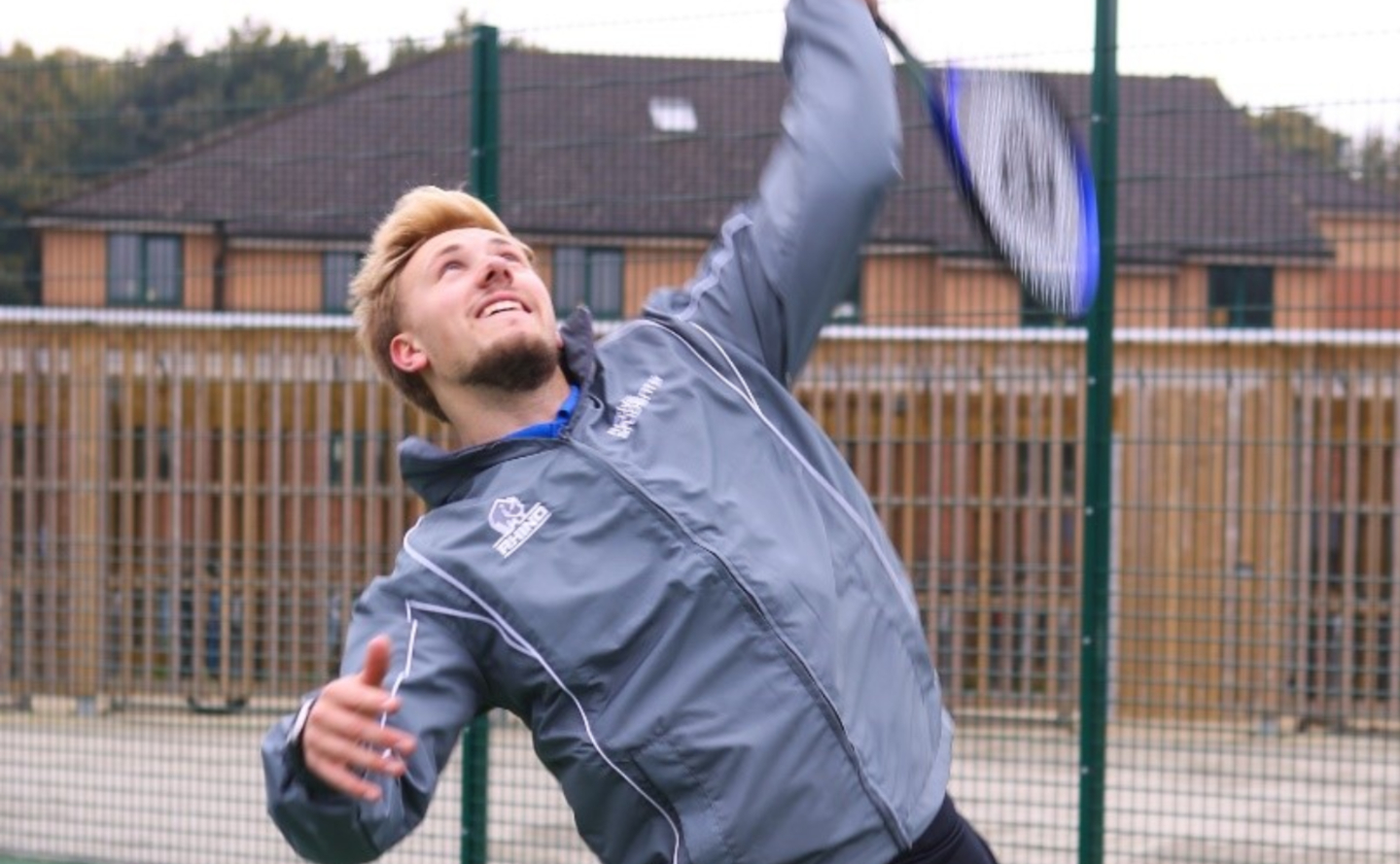
Meet Toby Jackson who pursued his passion for tennis as his career. He is currently the Head Tennis Coach at Cambourne Tennis, one of the biggest clubs in Cambridgeshire, and founder of Game Set Tennis.
Read more stories| Current job role | Head Coach and Company Founder |
|---|---|
| Year of graduation | 2017 |
| Course of study | BSc (Hons) Sports Studies |
University life and experience
Toby applied to the University of Hertfordshire through Clearing after not getting into his chosen universities on A-level results day. After contacting the University, he managed to meet one of his future lecturers the same day! He was immediately won over by the course content and the apprehension of having to do a foundation degree first, soon turned into excitement as he realised how well it integrated into his undergraduate degree. While the University wasn’t Toby’s first choice of university, he says that he ‘wouldn’t have wanted to go anywhere else!’
While studying his foundation degree at one of our Consortium Colleges, Toby benefited from small class sizes enabling lecturers to provide 1-2-1 support and a range of different assessment types, including a Dragons Den style pitch enabling him to develop core transferable skills. These skills not only helped him when he started his undergraduate course but continue to do so in his career.
Toby’s undergraduate degree offered a range of modules enabling him to pinpoint his strengths and weaknesses allowing him to identify which areas of sport he wanted to pursue a career in.
During his time at University, Toby played an active role in the University tennis team. He was fortunate enough to become the University Tennis Ambassador allowing him to influence how tennis is delivered at the University. His influence encouraged the Tennis Programme to grow and it now has links with Gosling Tennis Centre – one of the best in the country!
Future aspirations
In the future, Toby hopes to become an LTA Level 4 Accredited + Coach and help to increase the coaching programme at Cambourne Tennis to 250 juniors and adults a week. He also hopes to expand Game Set Tennis – his own business which he started before graduating – across Cambridgeshire while still maintaining a high standard of coaching across the clubs.