



Apply through Clearing


Our Clearing hotline is open for support, Monday - Thursday 9.00-16.45 and Friday 9.00-15.45. You can apply online at any time.


Sign up for updates
Interested in studying at the University of Hertfordshire and want to sign up to our mailing list to learn more about our facilities, living in the UK and student life? Use the form below and our team will also keep you informed of key updates such as events near you, applications opening and more!
BSc (Hons) Sport and Exercise Science
Key information
-

Typical offer:
Entry requirements -

Fees: See below
Full details -

UCAS code: C600
-

Institute code: H36
-

Study abroad option
-
Work placement option
Find out more
-
Professional accreditations
All our sport and exercise science courses are endorsed by the governing body, the Chartered Association of Sport and Exercise Sciences (CASES). You'll learn the core principles underpinning sport and exercise science and graduate with the professional requirements of being a sport and exercise scientist. You'll also have the opportunity to undertake a range of optional modules and extra-curricular activities which have been highlighted by CASES as they provide you with better employability prospects after graduation.
Find out more about the Chartered Association of Sport and Exercise Sciences (CASES)
The BSc (Hons) Sports and Exercise Science is also a pre-approved degree* for eligibility to the American College of Sports Medicine Certified Exercise Physiologist qualification (ACSM-EP) and is also recognised by the NSCA Educational Recognition Programme.
*specific module options required.


Why choose this course?
- 2nd in the East of England for sports science (Complete University Guide, 2023)
- Benefit from our partnerships with prestigious clubs such as Watford FC and the London Mavericks
- Learn in specialised labs, including altitude chambers
On this BSc (Hons) Sport and Exercise Science, you’ll study on a National Strength and Conditioning Association (NSCA) recognised programme: This will allow you to complete the Certified Strength and Conditioning Specialist qualification.
You will receive high quality teaching: Many of our lecturers are accredited or chartered with professional bodies. These include the Chartered Association of Sport and Exercise Sciences (CASES), the UK Strength and Conditioning Association (UKSCA) and the British Psychological Society (BPS).
Benefit from specialist labs and facilities: You’ll have access to two dedicated sports science and therapy laboratories on campus, equipped with a state-of-the-art grail treadmill, force plates, a bod pod and a climate chamber. You'll be able to use specialist physiology, biomechanical and biochemistry equipment such as our online gas analysers. You’ll be able to do blood analysis to test for blood lactate and cholesterol, or use the running treadmills, cycling and rowing ergometers to measure physiological processes. You’ll use specialist arthrometric equipment, dynamometers and weight-lifting equipment. There’s even an indoor putting green for psychological and biomechanical analysis!
You’ll be able to get a membership with the University’s £15 million Hertfordshire Sports Village (HSV) on the de Havilland campus. It has a 25-metre swimming pool, a 12m climbing wall and a gym. The gym has both strength and cardio equipment, such as rowing machines, cable stations and a free weights area. There is a smaller 24-hour gym on the College Lane campus.
Gain work experience: This sport and exercise science degree includes a work experience module in the final year; many local, national, and international employers, such as football and rugby clubs, hospitals other universities will support Herts students with this.
Benefit from our official partnership with Watford Football Club: As a Herts student, you’ll have exclusive access to unique career and educational opportunities with this prestigious football club.
Herts offers an Active Students and Staff programme, with free sports and exercise sessions available. You could even get a part time job working as an activator, leading your own exercise sessions or assisting with qualified instructors.
What's the course about?
This sports science degree will open doors to a range of exciting career options, from working with professional athletes, to becoming a sports coach or teacher, or managing a fitness centre. Our graduates have gone on to work and study in sectors such as education, business and nutrition. The opportunities are endless..
You’ll cover the three main disciplines of sport science: physiology (including nutrition), biomechanics and psychology. You’ll learn about human anatomy, sports performance, and strength and conditioning. You’ll use our performance labs to learn how to assess and improve sporting performance and will gain invaluable knowledge on the role exercise plays in improving health and wellbeing. Guest lectures from renowned companies such as GlaxoSmithKline and inspiring individuals further complement your learning.
Your main campus is de Havilland
You’ll share this campus with students from business, law, sport and education, with modern accommodation on site. Our Sports Village is also on campus and includes a gym, swimming pool and climbing wall. You can get breakfast, lunch, or dinner in our on-campus restaurant or bar (in the newly built Enterprise Hub) on days you don’t feel like cooking. You can also use the common room to play pool, video games or just to hang out with friends. Our Learning Resources Centre is open 24/7, which means you can study whenever suits you best. Want to pop over to the other campus? You can take the free shuttle bus or walk there in just 15 minutes.
What will I study?
On the BSc Sport and Exercise Science, you’ll spend around eight hours in lectures per week and eight hours in practical sessions. Some of these will take place in our labs, and others take the form of interactive workshops and seminars.
Throughout your time at the University, you’ll work closely with a personal tutor to develop academic, personal, and vocational skills. This work is supported by the University intranet (Studynet) which provides a location for lecture notes, study guides, assessment details, example exam papers, and discussion forums amongst other things.
In your first year, you’ll learn a variety of subjects such as foundations of human physiology and nutrition, as well as musculoskeletal anatomy, the principles of biomechanics. You’ll gain the analytical and problem-solving skills needed to excel. To help you settle into university life, you’ll take a module focused on developing the academic skills you need to be a successful student.
Your second year builds on what you learnt in first year. You’ll study subjects such as applied biomechanics of performance, applied sport and exercise psychology and exercise physiology. The module on research design helps you understand the principles and methods that underpin scientific research. You’ll be able to use this to critique and understand research done in this field. It’ll also come in handy for your final year project in third year. There are also a few optional modules for you to choose from.
Work placement/study abroad option: Between your second and final year, you’ll have the option to study abroad or do a work placement for up to a year. Not only will this give you an amazing experience to talk about but will also give your CV a boost. If you’d rather go straight to your final year, that’s fine too. You’ll decide in your second year with us, so there is still plenty of time to think about this.
In your third year, there is only one compulsory module: your final year project. You’ll get a personal supervisor and together you will produce an independent sports research project. This means you’ll design and undertake you own project on a topic relevant to your area of study. All other modules are optional and allow you to specialise in the areas you like best. There is one module that allows you to gain 70 hours of work experience*
Modules are assessed in a variety of ways via coursework, practicals and exams. The type of coursework is varied, depending on the module and includes essays, reports, practical write-ups, posters and seminar presentations.
'My undergraduate degree in Sport & Exercise Science at the University of Hertfordshire gave me a broad understanding of sport and exercise physiology and psychology needed to enter the working world. I benefited from learning about nutrition, biomechanics, strength and conditioning from an applied sense, which made the degree current and interesting. This multi-disciplinary course also offered a balanced range of assessments including, presentations, coursework and exams. Having the opportunity to take a placement year in my third year became the foundation I built my career and specialism in cardiac physiology within the NHS. I would definitely recommend this course, as the staff, resources and opportunities are top class.'
Check out our student blogs
Student Blogs
Ayooluwa - Week at a glance
My week at a glance
To start off the week I look over my timetable so that I am aware of what lectures, practicals and workshops I have. This is because my timetable doesn’t stay the same every week and I like to plan around my timetable. I make notes during my lectures and then go over them afterwards with some essential reading. All my lectures are two hours long and the times for practicals vary. I usually have a maximum of two or three sessions per day and there is free time during the day. If there is a 30 minute or an hour break between lectures, I would usually get something to eat at the restaurant, SU shop or library café.
Due to the assignments I get given either individual or group ones, a lot of my time is spent in the Learning Resource Centre (LRC) with my course mates. When given my assignments I plan them according to the due dates and the word count. Also, I do some research by reading online journals for a good foundation. To get extra help with lectures or assignments I book tutorials with my lecturers and I find them very helpful. Sometimes I feel overwhelmed or I don’t know where to start but asking for help from my lectures makes it easier.
When I am not focusing on my academics, I attend weekly sessions of netball, badminton, Zumba and roller-skating which is run by Active Students. I enjoy physical activities especially when they are free of charge so taking part in this programme is a great way for me to spend my free time. It gives me the chance to let my hair down and bond with my friends and other students. Also, on Wednesdays, I attend a Christian fellowship called RCF. I enjoy it because I allow me to grow my faith and meet amazing people. And of course, Netflix & YouTube = Chill Time!!!
Within the university, I work part-time as a student ambassador. As my weeks can be loaded sometimes it is important for me to balance my work, social life, well-being and academics. This is my main aim because I want to achieve the best grades I can accomplish and have a great university experience. As I was told before coming to university, ‘University will be one of the best experiences of your life,’ and this statement is spot on.
Student Blogs
Ayooluwa - Things you should know
Things you need to know before studying Sport & Exercise Science
Assumptions
As someone who loves sport, I was excited to be studying this course. But I was in for a shock. Sport & Exercise Science, emphasis on the science part. Please don’t think this course is only about testing, training, sport, and exercise. When I tell people that I study this course they ask me ‘do you guys just run around.’ Erm no. There is a lot of science involved which is paired with sport and exercise. So please be prepared for that. The science part is interesting as it gives an insight into how an athlete’s body works and how to improve training etc. Sport Science is not an ‘easy’ course, you must work just as hard as if you were studying any other course.
Reading
There is essential reading for this course and recommended reading. Essential reading is given at the beginning of the course to aid your learning, it is information that you need to know for this course. Recommended reading is important for widening your course knowledge. Further reading is good for when you don’t understand something during lecture and need to learn about a topic in more depth. I would suggest following the readings given to you by lecturers because with course knowledge and knowledge outside of the course specification you are more likely to achieve higher grades on essays and exams.
Assessments
The way you will be assessed is split between assignments and exams. The assignments usually involve essays, written exams, practical exams, group presentations and individual presentations. Having a mixture of assessments is quite good because it multiplies your skills and if you are too positive about one method you can make up for it with the other. Most of the assignments are online submission now.
Organisation
Being organised is crucial for staying on top of assignments and feeling less stressed. This involves planning essays, spreading out revision and setting time aside for reading. Sometimes some assignments have due dates close together and to avoid feeling bombarded it’s best to start assignments early and plan which ones to focus on first. It’s so easy to leave assignments to last minute without even realising it but it’s best to avoid this to increase your chances of higher grades and maintaining positive well-being.
Wellbeing
Whilst completing your academics it is easy to forget about your wellbeing and mental health. Forgetting to take care of yourself could lead to a build-up of stress that can lead to breakdowns, which we want to avoid. It’s important to take breaks whilst studying and reading (not super long ones though). Also, don’t overload yourself. Sport & Exercise Science has a society which allows you to socialise with course mates and lecturers so this may be a good way to chill out a bit. Make sure you have free time as well!!
Support
For this course, there is a lot of support available to the students. If you need help with your assignments, revision, the course content, or the course, in general, you can book tutorials with your lecturers during the week. The staff are friendly and extremely helpful so don’t hesitate to ask for help if you need it. Also, if you are struggling to write essays there are services available in the Learning Resource Centre (LRC) to help you. Sessions can be booked to get some help.
Well, my last piece of advice is to study well, make memories and enjoy yourself. Good Luck!!!
Student Blogs
Ayooluwa - Guide to the facilities
Guide to Sport & Exercise Facilities
Here is a short guide to the sport and exercise science facilities accessible.
Labs
Labs are used for practicals, on campus, there are physiology labs and performance labs. The physiology labs have all the equipment needed for physiological testing and anatomy. The performance labs have equipment related to fitness and training. These labs are supervised by staff and can be used for data collection for assignments and for practising practical exams. The labs have all the equipment needed for the course.
Learning Resource Centres (LRCs)
There are two Learning Resource Centres (LRCs) at the University of Hertfordshire. The one on College Lane Campus has the books needed for this course. Mostly every book that is under essential and recommended reading is found in this LRC. Books are loaned from the LRC and can be automatically renewed until the end of the academic year unless someone requires the book. There will be at least three copies of each book available and one copy that is only to be used in the LRC. There is also an online library system that tells you whether there are any books left to loan and has access to e-books. Every book you need for the course is available with the university, so it is best not to buy books in advance before starting the course. They will be in the LRC already. There are study rooms available for group sessions or individual study. There are silent study floors and quiet rooms available. The computers already have software on them that are needed for lectures and practical sessions. Additionally, there is a café and social space if you want to take a break from studying or want a bite to eat.
Lectures & Staff
All the lectures take place in lecture rooms. They are recorded and uploaded to Canvas so you can go over it many times. The lecture slides are also uploaded. Having these materials accessible online is extremely helpful when I have gaps in my lecture notes and for any misunderstandings, I had during the lecture. If you have any further misunderstandings, you can talk to your lecturers during the week. The lecturers are friendly and extremely helpful when you go to them for help. You can book tutorials with them or go to drop-in sessions that the lecturers set up.
Support
The careers department give support for students that are looking for jobs, placements, internships and furthers study. They give advice on where to look, where to get more information etc. Additionally, they can help you with job interviews, applications, your CV, cover letters and finding vacancies.
I have found these facilities to be very helpful towards my degree and have not needed anything that the university does not have. Make sure you make the most of these facilities and utilise them. Good luck!!!

Alumni Stories
Gavin Beard
Meet Gavin Beard who has taken his love for sports into industry. Since graduating he has worked his way up the career ladder and is now the Head of Marketing for Norwich Football Club.
Read more stories| Current job role | Head of Marketing |
|---|---|
| Year of graduation | 2013 |
| Course of study | BSc (Hons) Sports Studies |
More than a degree
Gavin graduated from the University of Hertfordshire with more than a degree; his university experience helped him to gain valuable insight to several disciplines and allowed him to narrow down his career choices.
He says, 'My degree allowed me to study various disciplines, including coaching, science and business. Having exposure to these different areas helped me understand what I favoured, and it was clear that business (and in particular, marketing) was an area I felt I could forge a career in.'
After successfully completing his degree Gavin began moving up the career ladder, working at many well respected companies such as Coral, BT Sport and currently Norwich City Football Club. Gavin puts a lot of his success down to the degree he studied and the support provided by the university.
He comments, 'The variety of modules and the exposure to different disciplines within my course were extremely useful. This was crucial in helping me determine my path. After year one, I knew I liked marketing, so I worked with the ERASMUS team to find a pathway to help me study this abroad. I then studied business in Valencia for a year and it was an experience I’ll never forget.'
Aspirations for the future
Gavin is still really enjoying his career in leading the Marketing team at Norwich City Football Club. He says, 'It’s an incredibly varied role; one day I could be leading the campaign to promote the new kit, the next it’ll be marketing the Take That gig at Carrow Road!'
Gavin is hopeful for the future and says 'Given my experience, my future roles will continue to be in marketing, hopefully I will help Norwich to become an established Premier League team. Then who knows!'
Alumni Stories
Annabelle Bullock
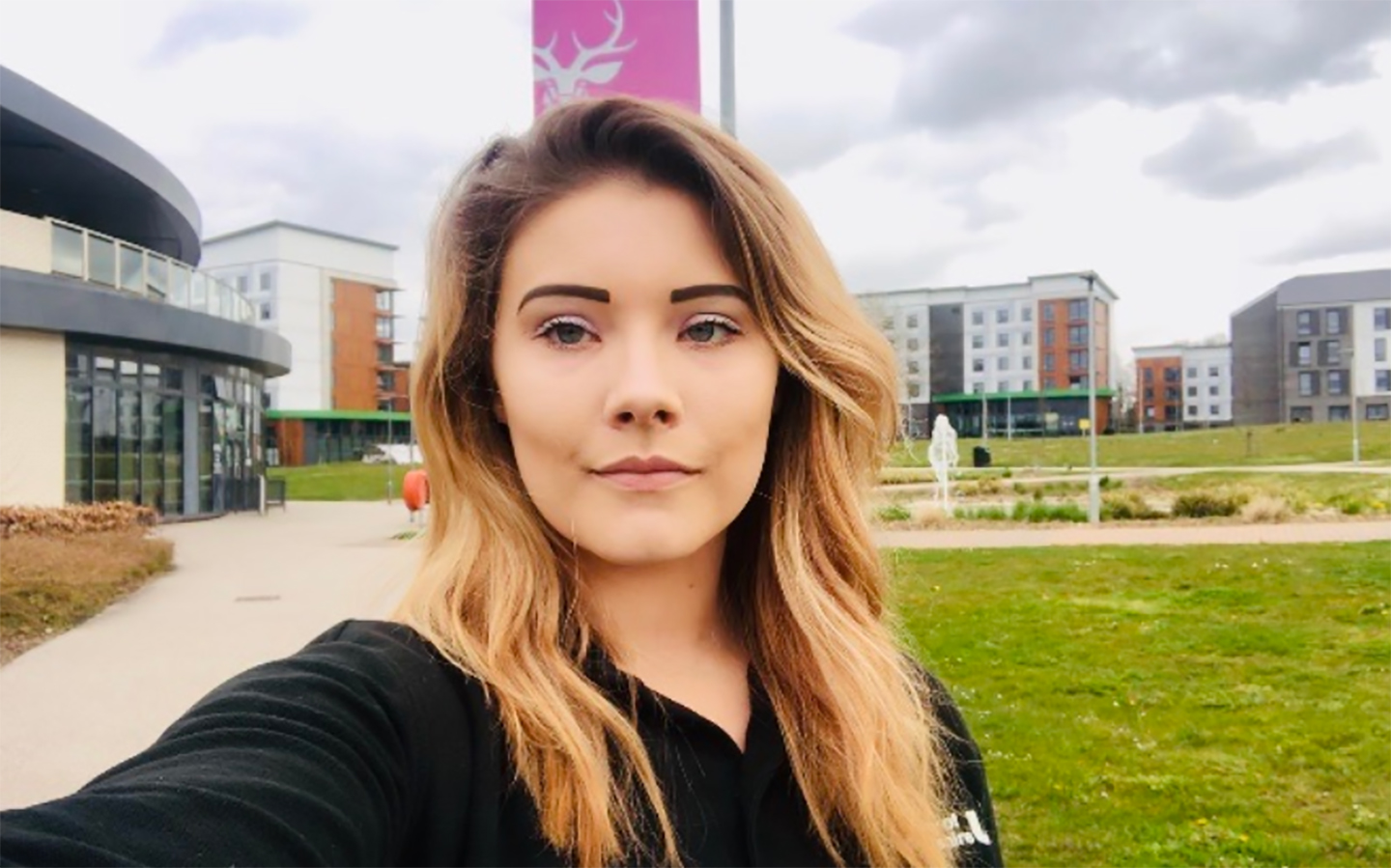
Meet Annabelle Bullock, a BUCS gold medallist, who studied Sports Studies alongside her athletic pursuits. As an athlete she competed in target shooting and as a member of the women's Lacrosse team.
Read more stories MA Education| Current job role | Education Liaison Coordinator |
|---|---|
| Year of graduation | 2018 / 2019 |
| Course of study | BSc (Hons) Sports Studies |
| MA Education |
University experience and support
The University supported Annabelle by making her one of its sponsored athletes providing her with greater flexibility and access to sporting facilities and opportunities. This helped her develop a broad and transferable set of skills and experience.
Annabelle says, 'Being an athlete and studying was challenging, but the University and my lecturers were so supportive. Being made a sponsored athlete also came with a bunch of perks. All this support and the opportunities that the University provided helped me to build the skills and confidence I needed to be truly successful in my job today.'
Annabelle currently works as one of the Education Liaison Coordinators at Herts. Having established fantastic contacts within the University, her student activities meant she could seamlessly progress into a professional role that complimented many of her skills and interests.
'I always assumed that I would do something within sport, but when it came to my final year in BSc Sport Studies, I had found my passion for Coach Education. During my MA in Education at the University, I discovered another passion for helping others and working with student athletes.'
Opportunities to explore
The University is committed to recognising talent in its students and offering any exciting opportunities that can enrich their studies and further their careers. Annabelle's lecturers' encouraged her to explore her passion for research which inspired her to continue with postgraduate study. Most impressively, the University helped her win its first BUCS gold medal in target shooting, which she says 'felt amazing as I was the only one in the team!'
Annabelle's advice for new and current students is to 'Do things that are out of your comfort zone because the skills and experiences you develop may just be the thing that your employer is looking for. Take all of the opportunities you can. I thought I was going to be an athlete forever, then I discovered coaching. I am very lucky that my first "proper" job is something that I absolutely love but I am still able to continue coaching. This summer I am helping coach a target shooting national team in the biggest junior, under 21, competition in the country.'