
Paralympic stars help University of Hertfordshire researcher chart 50 years of the Winter Paralympics
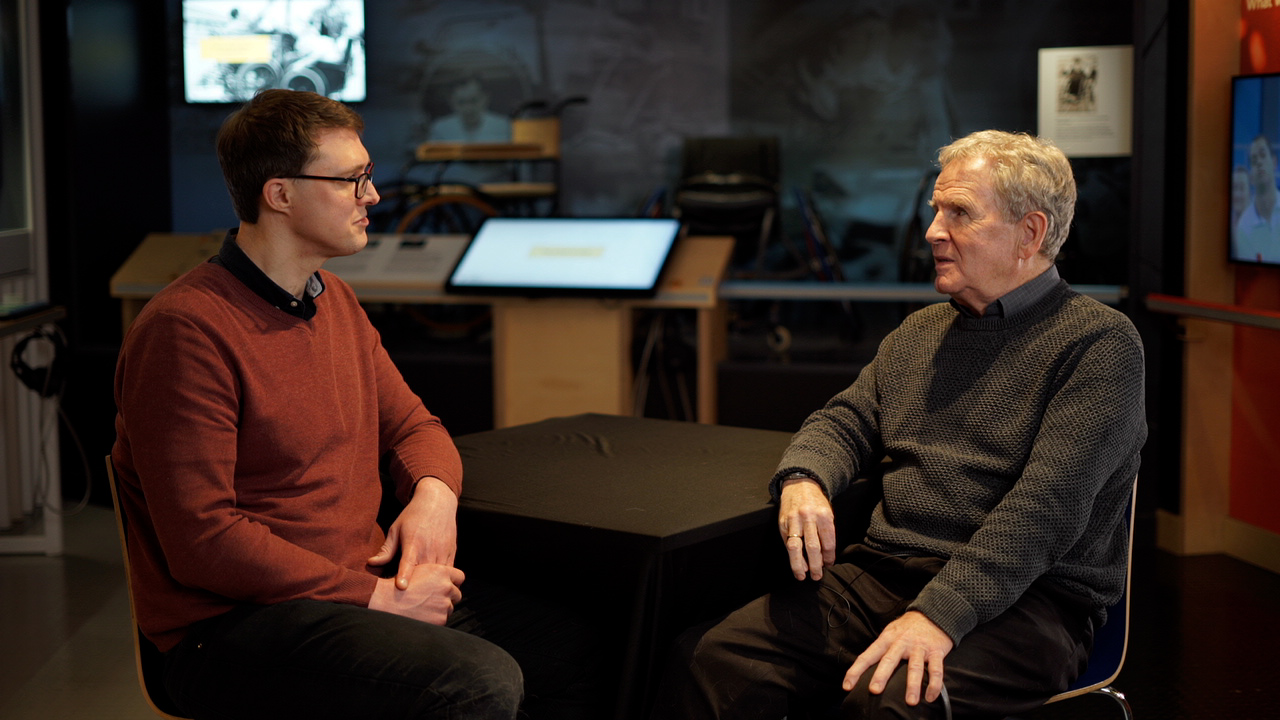
Titled The Winter Paralympics: 50 Years in the Making, the film, which was presented by Dr Christopher Brown, researcher and Senior Lecturer in Sport Development at the University of Hertfordshire and jointly produced with the National Paralympic Heritage Trust, was launched with a screening at the University last week.
Drawing on in‑depth interviews with Paralympians, the documentary charts the evolution of the Winter Games and the experiences of the athletes who helped shape them.
Among those featured is one of Britain’s first Winter Paralympians, Mike Brace CBE, who, blind from the age of 10, competed as a cross-country skier in the inaugural Winter Paralympics in 1976. Sean Rose, a double Winter Paralympian, World Cup downhill gold medallist and professional commentator who was left paralysed after a skiing accident in 2000, and Kelly Gallagher MBE, who is visually impaired as a result of oculocutaneous albinism, and the first athlete from Northern Ireland to compete at the Winter Paralympics and the UK’s first Winter Paralympic gold medallist (Sochi 2014).
While Gallagher describes the Paralympics as being a “highly professionalised” environment by 2014, Brace recalls the very different conditions in 1976: “We had two weeks of skiing experience and used wooden skis. Two of our three guides couldn’t speak English.
“Initially it seemed mad to invite blind people to ski, but I loved it. The event showed everybody the possibilities of what we could do, rather than what we could not. It challenged their perception about what blind and partially sighted people could achieve.”
Sean Rose added: “Having skied in the RAF, I could not believe the standard of my initial opponents. It was a tremendous revelation. Every competitor wants to be known as an athlete first. London 2012 was the big game changer, showing the athleticism and commitment involved. Today, broadcasting and social media are transforming the reach of the Paralympics.”
Participation in the Winter Paralympics has grown from just six British athletes and 16 nations in 1976 to 562 athletes from 31 nations by the Nagano Games in 1998. In the documentary, Dr Brown – one of the UK’s leading experts on Paralympic history and legacy – calls for the Winter Paralympics to be moved earlier in the year to protect the sport’s future in the face of climate change.
The Paralympics are presently held in March after the Winter Olympics and hosted by the same host city.
“Climate change means we will lose many potential host cities by 2050,” Dr Brown explains. “A better option would be to move forward the Paralympics to January or February. Doing this may mean altering the present ties with the Olympics host city however, so that would require some serious discussions.”
He also highlights the need to increase women’s representation, noting that only 25% of current Winter Paralympians are women.
The Winter Paralympics: 50 Years in the Making is supported by the 2026 No Limits campaign by Herts Sport and Physical Activity Partnership, a year-long campaign aiming to break down barriers and create lasting change in how disabled people access and experience sport and physical activity.
It was funded by the Economic and Social Research Council (ESRC), part of the UK Research and Innovation (UKRI) through an award from the University’s ESRC Impact Acceleration Account.
Watch The Winter Paralympics: 50 Years in the Making. Learn more about studying Sport at the University of Hertfordshire.
Photo caption: Dr Christopher Brown (left) interviews paralympic cross-country skier Mike Brace CBE (right) for the documentary.