
OPINION: Care is a team sport - and medical students need to be ready
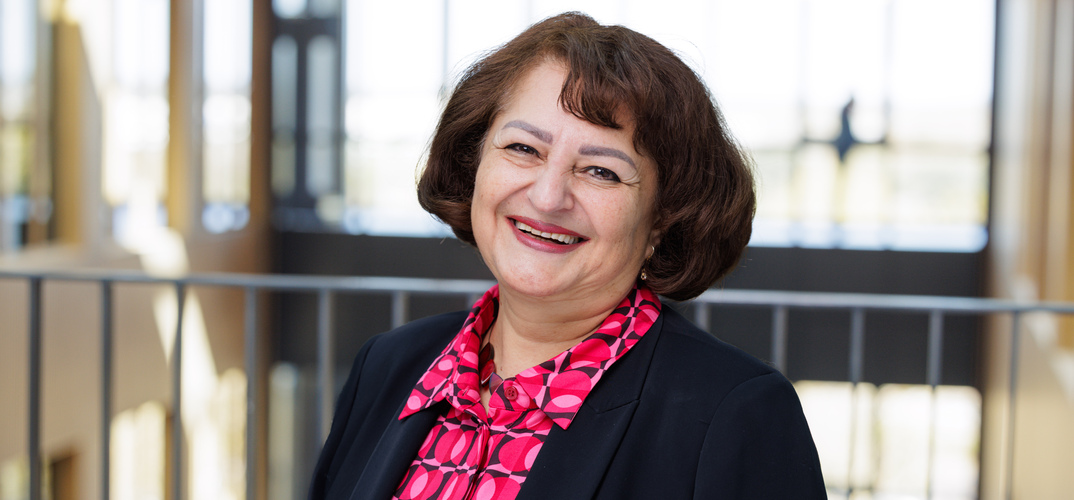
As patients present with increasingly complex physical and mental health needs, tomorrow’s doctors must be equipped to work across disciplines, embrace new technologies and see the whole person behind the diagnosis, argues Professor Zoe Aslanpour, Head of Medicine at the University of Hertfordshire.
The doctors graduating today will practise medicine in a fundamentally different world from the one many of us entered.
Patients are presenting with increasingly complex needs, driven by an ageing population, the longer-term consequences of Covid, rising multimorbidity and a mental health crisis among children and young people. At the same time, medicine is becoming more connected, more data-driven and more technologically-advanced than ever before.
We need to ensure the next generation of doctors is ready for that reality.
If you have worked in healthcare for decades, you will have seen the change for yourself. If you haven’t, the shift is well evidenced.
Taking general practice as an example, workload rose by 16% between 2007 and 2014, with patients consulting their GPs 14% more often, according to a study of more than 100 million GP and nurse consultations in England published in The Lancet.
The trend has continued. RCGP data showed that GPs were seeing over 20% more appointments per month in 2023 than in 2019.
The challenge is not simply that people are seeing their GP more often: the problems they bring are also more complicated.
In this context, it makes sense that the BMA has called for standard appointments to move from ten towards fifteen minutes, in response to the ageing population, increasing medical complexity and rising multimorbidity.
It is perhaps intuitive that an ageing population goes hand-in-hand with multimorbidity. As people live longer, they are more likely to develop a range of conditions, requiring more care, more monitoring and often more complex clinical decision-making.
But this takes careful management. One area of my own research is public health and polypharmacy, where patients take multiple medicines. This is particularly important in older people. A frail older person may be taking several medicines for different conditions, each prescribed for a perfectly good reason. But when those medicines are taken together, interactions and adverse effects can occur. In these situations, good medicine does not necessarily mean adding another prescription. Doctors may need to consider deprescribing – carefully reviewing medicines and reducing or stopping those that may no longer be necessary or beneficial. It requires clinical judgement, an understanding of the evidence and, importantly, a conversation with the patient about what matters to them.
Likewise, breakthroughs in cancer treatment mean that, thankfully, more people are surviving cancer and living longer.
Many people with cancer are also living with pre-existing conditions such as diabetes, asthma and cardiovascular disease. These conditions do not disappear with a cancer diagnosis. They need to be understood and managed alongside cancer treatment, often requiring input from several healthcare professionals.
We are also seeing significant challenges at the other end of the age spectrum. The mental health crisis among children and young people has rightly received considerable attention. NHS England data analysed by the Royal College of Paediatrics and Child Health showed a 36% rise in mental health-related A&E attendances among children and young people between 2019 and 2025, with children as young as six presenting to emergency departments with mental health problems.
Physical and mental health are deeply interconnected. Increasingly, it makes little sense for a doctor to consider one without the other. We need to understand the whole person in front of us.
What helps with that is interprofessional learning. It’s an important part of our approach at Hertfordshire. Our medical students learn to approach patient problems alongside future nurses, pharmacists, paramedics, radiographers, physiotherapists and other healthcare professionals.
This helps them understand what their colleagues contribute and, importantly, to see a patient through perspectives other than their own.
Why does that matter? Well, medicine in a team sport.
From a patient’s perspective, arriving at hospital may mean encountering doctors, nurses, pharmacists, paramedics, radiographers, physiotherapists and many other professionals. Patients do not experience their care as a series of specialist clinical silos. They experience one healthcare journey.
For the professional, this means looking at a patient not simply as a set of blood test results or a particular diagnosis, but as a whole person – someone with a history, physical and mental health needs, medicines, family circumstances, responsibilities and a place within a wider community.
That is not just better medicine; it is better care. To a patient, it feels like compassion. To a healthcare professional, it is good clinical practice.
Considering the patient holistically has always been important. But perhaps it has never been more important than it is now.
If today’s patients are arriving at GP surgeries, hospitals and community health services with more conditions, greater complexity and more competing needs, then the doctors we train need to be able to recognise issues beyond their own immediate area of expertise. They need to know when to involve another professional, when technology can help, and when the most important thing they can do is to listen.
Find out more about studying at the Hertfordshire Medical School.