
Herts robotics research reaches thousands at New Scientist Live
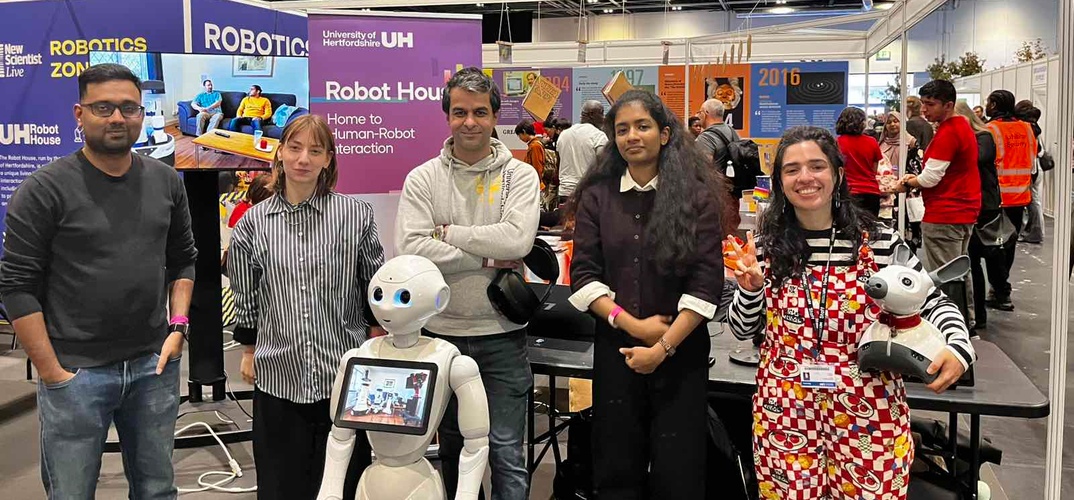
Researchers, students and technicians from the University of Hertfordshire showcased cutting-edge robotics research to more than 23,000 visitors at New Scientist Live 2026, one of the UK's largest science festivals.
Supported by a £4,000 grant from UK RAS STEPS, the Herts team brought its popular Robot House Immersive Showcase to the event and joined colleagues from King's College London and Edinburgh Napier University on the Robotics Zone stand, giving visitors the opportunity to explore the latest developments in human-robot interaction and intelligent systems.
The event also provided a valuable opportunity for University of Hertfordshire students and early career researchers to share their work with a public audience, gain experience of science engagement and develop their communication skills alongside leading academics and technicians.
The University team included PhD researchers Gayathri Girijadevi Radhakrishnan, Ali Fallahi and Sofia Gioumatzidou, postdoctoral researcher Dr Dimitra Tsakona, senior technician Callium Dawes and outreach specialist Helen Rennie. The showcase was coordinated by Dr Vignesh Velmurugan, a Herts lecturer in Robotic Engineering, and Dr Patrick Holthaus, Reader in Interactive Assistive Technology, University of Hertfordshire Robot House Manager and lead for the project, with support from colleagues across the University's internationally recognised Robotics Research Group.
Thousands of visitors stopped to explore the stand over the weekend, taking part in hands-on demonstrations and learning more about how robotics research is helping to address real-world challenges.
Dr Patrick Holthaus said: "New Scientist Live provided an excellent opportunity not only to showcase the University's robotics research, but also to give our students and early career researchers first-hand experience of engaging with the public about their work.
“Communicating complex research to diverse audiences is an important skill for the next generation of scientists and engineers, and it was fantastic to see our team inspire visitors while developing their own confidence and experience. The event also highlighted the strength of our collaborative robotics community and the real-world impact of the research taking place at the University of Hertfordshire."
Professor Tim Vorley, Deputy Vice-Chancellor and executive lead for Research and Enterprise at the University of Hertfordshire, added:
"This showcase demonstrates what makes research at Hertfordshire distinctive. Our students, researchers and technical staff are working together to develop technologies that address real-world challenges, while sharing that work with thousands of people.
“Opportunities such as New Scientist Live allow our students to develop valuable skills, build professional networks and gain experience beyond the classroom, while helping to inspire future generations to explore careers in science, technology and engineering."
Discover how we're shaping the future of engineering, AI and robotics. Find out more about our courses, research and partnership opportunities or contact be@herts.ac.uk to start a conversation on how we can work together.