
Hertfordshire Medical School welcomes its first cohort of future doctors
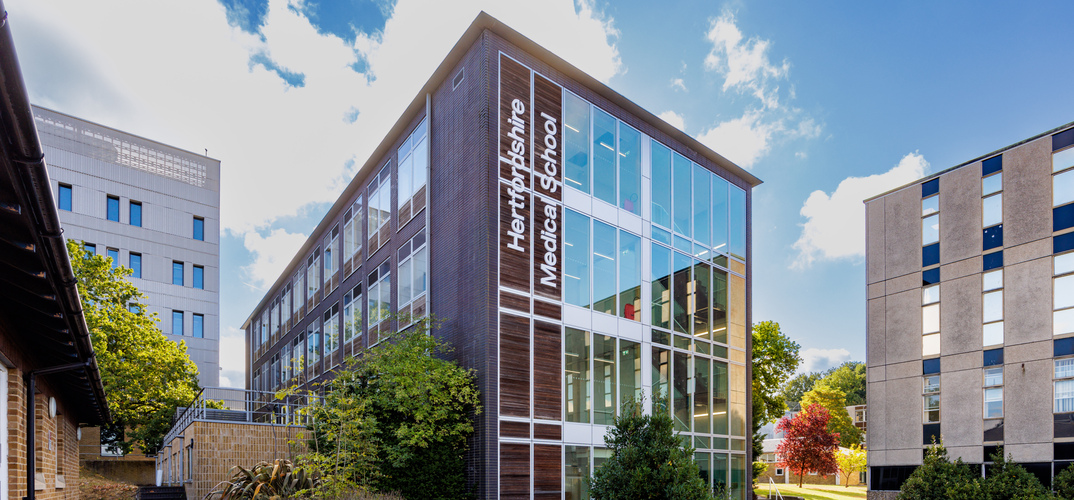
The University of Hertfordshire has today (Monday, 14 September) marked a major milestone as Hertfordshire Medical School begins welcoming students from its inaugural cohort. Over the coming weeks, future doctors will arrive on campus for an induction programme ahead of starting the new five-year Bachelor of Medicine, Bachelor of Surgery (MBBS) degree when term begins on 5 October.
As the first medical school in the county, Hertfordshire Medical School represents a major investment in the future of healthcare in Hertfordshire and the wider East of England. The new school has been established in response to the UK's long-term ambition to expand and strengthen its domestic medical workforce, creating additional training capacity in the region and helping to develop a pipeline of doctors connected to the communities they will go on to serve.
Professor Anthony Woodman, Vice-Chancellor of the University of Hertfordshire, said:
"We are thrilled to begin welcoming the first cohort of students to Hertfordshire Medical School. Over the coming weeks, these future doctors will join us, bringing with them enormous ambition and potential as they prepare to begin their medical training.
"This is a landmark moment not only for the University, but for Hertfordshire and the region. The establishment of Hertfordshire Medical School strengthens medical education capacity in our region and creates opportunities to train doctors in the communities where they are most needed.
"Through close collaboration with NHS partners, we are creating a pathway that develops highly skilled, compassionate doctors while supporting the long-term sustainability of the healthcare workforce. We are particularly proud that widening opportunity and serving our communities sit at the heart of this vision."
Students joining the inaugural cohort have travelled from countries including Australia, Canada, the United States, the United Arab Emirates and Zimbabwe. The University aims to welcome UK-funded medical students in future years as national allocations become available.
Students will study in state-of-the-art facilities at the University's College Lane campus in Hatfield. Purpose-built teaching spaces include advanced digital anatomy facilities featuring an Anatomage table, which allows students to undertake detailed virtual dissections and explore human anatomy in 3D. Students will also learn using specialist anatomical models and human plastinates, giving them the opportunity to study real anatomical structures in exceptional detail.
Alongside this, the medical school features a fully equipped, life-like hospital simulation ward where students can develop clinical and decision-making skills in a realistic but safe environment before working with patients in healthcare settings. The facilities have been designed to mirror modern clinical practice and support students from their first days of training through to graduation.
A distinctive feature of the University’s MBBS course is its emphasis on interprofessional learning. Medical students will learn alongside paramedics, nurses, occupational therapists, radiographers, radiotherapists and other healthcare professionals, developing the collaborative skills required in modern healthcare settings.
Throughout their training, students will undertake placements across hospitals, GP practices and community healthcare settings, gaining hands-on experience while supporting local healthcare teams. Patient-facing from the second term of their first year, they will spend increasing amounts of time in clinical settings as they progress through the programme, with around three-quarters of their final year spent on placement across hospitals, community services and primary care.
Professor Irene Ctori, Dean of the School of Health, Medicine and Life Sciences, said:
"The University is well placed to deliver medical education, building on its longstanding strengths in healthcare teaching and research. Our students will benefit from outstanding facilities, close partnerships with NHS providers and the opportunity to learn in real-world clinical settings from the earliest stages of their training.
"We have designed the curriculum to reflect how healthcare is delivered in practice. Doctors, nurses, midwives, pharmacists, physiotherapists and many other professionals work together every day to achieve the best outcomes for patients.
"By learning alongside students from other healthcare disciplines and gaining experience in local NHS and community settings from an early stage, our future doctors will develop the skills, understanding and confidence needed to thrive in modern healthcare environments."
The opening of Hertfordshire Medical School aligns with national plans to increase medical education capacity and develop a sustainable, home-grown medical workforce. It also reflects a growing emphasis on widening participation, ensuring talented students from all backgrounds can access careers in medicine and helping address areas of workforce need.
Professor Ctori added:
“For our students, this is the start of a remarkable journey. Over the next five years, they will learn from experienced clinicians, work alongside other healthcare professionals and gain hands-on experience in the communities they will go on to serve.
"We are proud to be welcoming the next generation of doctors to the University of Hertfordshire and look forward to seeing the difference they will make to patients, communities and the future of healthcare.”
Find out more about studying at Hertfordshire Medical School.