Paranormal Psychology Research Group (PPRG)
About the Paranormal Psychology Research Group (PPRG)
Why do people report experiences that seem to defy scientific explanation? Why do people form paranormal beliefs across cultures and throughout history? And what can these experiences tell us about the mind?
The Paranormal Psychology Research Group investigates paranormal beliefs, anomalous experiences, and other unusual aspects of human psychology. Drawing on cognitive psychology, personality research, parapsychology, wellbeing science, psychophysiology, and consciousness studies, we explore extraordinary experiences from a wide variety of perspectives.
One major strand of our work focuses on measurement. We develop and validate scientifically robust tools for assessing paranormal beliefs, anomalous experiences, and related forms of thinking. By creating reliable and culturally sensitive measures, we help improve the quality of research in this field and deepen our understanding of why such beliefs and experiences are so widespread.
Another strand examines the psychology of horror and supernatural entertainment. Horror films, ghost stories, and paranormal media provide unique opportunities to study fear, curiosity, imagination, and emotional regulation. Our research explores why some people actively seek out frightening experiences and how personality influences preferences for different forms of horror.
Together, these strands of research use scientific methods to better understand how people perceive, interpret, and find meaning in extraordinary experiences. Whether investigating paranormal beliefs, unusual experiences, cognitive processes, or the appeal of horror, our goal is to shed light on some of the most intriguing aspects of human psychology.
Members:
Professor Neil Dagnall
Professor of Applied Cognitive Psychology, Manchester Metropolitan University
Dr Charlotte Dean
Lecturer in Psychology, University of Hertfordshire
Dr Shazia Akhtar
Senior Lecturer in Psychology, University of Hertfordshire
Shazia's research focuses on autobiographical memory, with particular interests in false memory and false denial across the lifespan, including in memory-impaired populations such as those with Alzheimer's disease and amnestic Mild Cognitive Impairment. More recently, she has extended this work to examine spontaneous past and future thinking across the age trajectory. Her research connects to paranormal and anomalous experience through the role of memory processes in the construction and maintenance of unusual beliefs.
Professor Keith Laws
Professor Cognitive Neuropsychology, University of Hertfordshire
Dr Kenneth Drinkwater
Senior Lecturer in Psychology, Manchester Metropolitan University
Kenneth specialises in the psychology of anomalous beliefs and conspiratorial ideation, with a focus on the cognitive and psychological mechanisms underlying scientifically unsubstantiated beliefs. His research investigates how parapsychological experiences and conspiracy theories serve adaptive functions in daily life, exploring their intersections with cognitive processing styles, schizotypy, and markers of positive wellbeing such as self-esteem and meaning in life.
Dr Nicholas Shipp
Senior Lecturer in Psychology, University of Hertfordshire
Nicholas's research spans cognitive psychology, with interests in semantic memory and categorical decision-making. More recently, his work has turned to the typology of horror fans, examining why individuals engage with horror media and what psychological functions this engagement serves. This work connects to broader group interests in anomalous and boundary-pushing experiences.
Professor Tim M Gale
Visiting Professor, University of Hertfordshire; NHS Clinical Research
Tim's research interests span cognitive psychology, knowledge and memory, risk perception, scale development, and clinical topics including depression, anxiety, and paranormal beliefs and experiences. He has supervised nine successful doctoral projects, many in collaboration with Prof Keith Laws. He holds a parallel appointment in NHS-based clinical research.
Dr Andrew Denovan
Reader in Applied Individual Differences, Liverpool John Moores University
Andrew's research spans individual differences, psychological wellbeing, psychometrics and scientifically unsubstantiated beliefs, including paranormal and conspiracy beliefs. A central strand of his work concerns the development and validation of psychological measures and the use of longitudinal and advanced quantitative methods to examine how individual differences shape beliefs, wellbeing and behaviour. He has increasingly applied these interests to paranormal and anomalous health beliefs, exploring their relationships with psychological functioning, coping and positive wellbeing.
Measuring Paranormal Beliefs and Experiences
Why do we need better measures?
How do you accurately measure something as personal and varied as paranormal belief and experience?
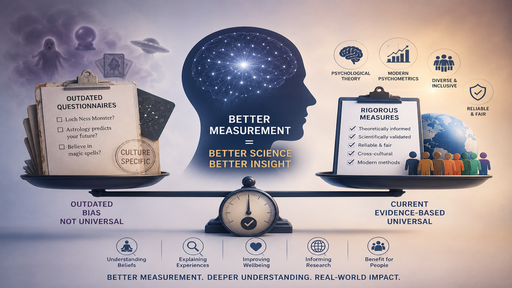
People around the world report a wide range of experiences, from sensing a presence or precognition to beliefs about spirits, psychic abilities, and life after death. Yet many of the questionnaires used in paranormal research were developed decades ago and often contain culturally specific, outdated, or highly unusual items that may not reflect how people think about the paranormal today.
Good science depends on good measurement. If we want to understand why people hold paranormal beliefs, how common particular experiences are, and how they relate to wellbeing and everyday life, we first need reliable and scientifically robust tools to assess them.
One strand of our research develops and validates new psychological measures that are both theoretically informed and suitable for use across diverse populations. We combine psychological theory with modern psychometric methods to ensure that our scales are accurate, reliable, and fair. We also test whether questions work equally well across different ages, genders, and cultural backgrounds, helping to create measures that can be used confidently in international research.
Our Measures
One outcome of this work is the Paranormal and Supernatural Beliefs Scale (PSBS). The PSBS was designed to measure core paranormal and supernatural beliefs while avoiding many of the limitations of earlier questionnaires. The scale focuses on beliefs that are widely recognised across cultures and has demonstrated excellent reliability and stability over time. It has also been successfully translated and validated in other languages, including Hindi, providing evidence that it performs consistently across different cultural contexts.
Not everyone who reports unusual experiences interprets them in the same way. Some people may experience unusual perceptions but view them as psychological or natural events, while others may see them as evidence of paranormal or spiritual forces. To capture this distinction, we developed the Survey of Anomalous Experiences (SAE). The scale separates a person's tendency to experience unusual events from their tendency to explain those events in paranormal terms. This allows researchers to study experiences and interpretations independently, providing a more nuanced understanding of anomalous experiences.
Beliefs that lack scientific support are not limited to the paranormal. Indeed, many people also endorse health myths, pseudoscientific claims, and forms of magical thinking about wellbeing.
We developed the Illusory Health Beliefs Scale (IHBS) to assess belief in scientifically unsupported health claims and explores how such beliefs may influence health-related decision making and behaviour.
Why This Matters
Developing better measurement tools helps researchers ask better questions and produce more reliable findings. By improving how paranormal beliefs and experiences are assessed, we can better understand why such beliefs are so widespread, how people make sense of unusual experiences, and how these experiences relate to wellbeing, meaning, coping, and everyday life.
Ultimately, our goal is simple: to provide rigorous scientific tools that help researchers understand some of the most fascinating aspects of human experience.
Paranormal Beliefs, Experiences and Wellbeing
Paranormal Beliefs, Experiences, and Wellbeing
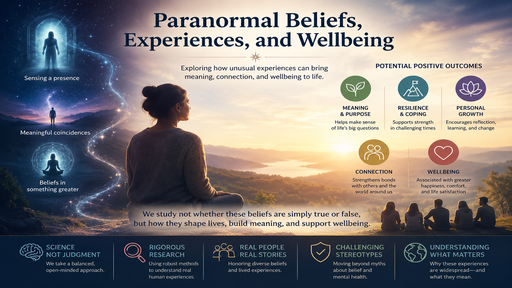
Many people report experiences they consider paranormal, such as sensing a presence, having meaningful coincidences, or believing in supernatural forces. While such beliefs were once assumed to be signs of poor psychological functioning, research increasingly suggests that, for many people, they can be associated with positive outcomes.
This research explores how paranormal beliefs and experiences help people make sense of their lives. In particular, it examines whether they contribute to meaning, purpose, personal growth, resilience, and coping during difficult times. Rather than asking whether paranormal beliefs are simply true or false, the research investigates what role they play in people's everyday lives and psychological wellbeing.
By studying how individuals interpret unusual experiences and construct personal meaning from them, this work challenges stereotypes about paranormal belief and mental health. The findings suggest that, in some circumstances, paranormal experiences may provide comfort, promote self-understanding, strengthen a sense of connection to others, and contribute to both happiness and a deeper sense of purpose. Ultimately, this research offers a more balanced understanding of why paranormal beliefs remain widespread and how they can shape people's lives in meaningful and sometimes beneficial ways.
Horror Engagement
Horror Engagement – Understanding Why People Seek Fear
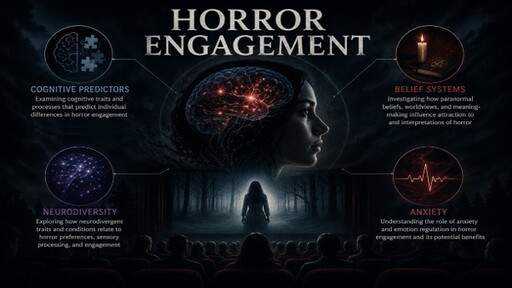
Horror engagement refers to the psychological, emotional, and cognitive processes that shape how individuals experience frightening media. Our work examines horror engagement across distinct horror fan types, considering motivations for consuming frightening content and exploring how these patterns relate to paranormal belief systems.
Motivations for Engaging with Horror
Benefits of Horror Engagement
Although horror films are designed to evoke fear, many people use them in ways that help them manage anxiety, practise coping strategies, and explore difficult emotions in a safe and controlled environment. Our work examines the potential benefits of horror engagement, including its role in emotional regulation, psychological resilience, and wellbeing.
The Paranormal Mind
The Paranormal Mind - Understanding Belief and Experience
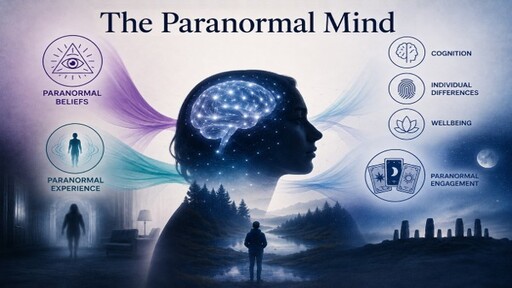
‘Paranormal’ refers to phenomena that fall outside of current scientific explanation, including ghosts, psychic abilities, and extrasensory perception. Our work examines paranormal beliefs, experiences, and engagement as they relate to individual differences, cognitive processes, and psychological wellbeing.
Recent Projects
Cognitive Functioning
In a systematic review of 71 studies, spanning almost 21,000 participants, we found evidence of cognitive differences related to paranormal beliefs. However, differences appear to be the result of tasks that largely assess higher-order executive functions and fluid intelligence. We propose a fluid-executive theory to progress understanding of the relationship between paranormal beliefs and cognitive function. We are also considering this in relation to paranormal experiences and engagement, to present a fuller picture of the area.
Psychological Wellbeing
Our work considers how paranormal beliefs, experiences, and engagement might impact on a person’s psychological wellbeing. This work makes use of both qualitative and quantitative research methods to provide a comprehensive understanding of the personal impact of the paranormal.
Sensory Processing and Body Awareness
People who report paranormal experiences often describe hearing, seeing, feeling, or even smelling something that they consider scientifically unexplainable. In ongoing work, we are considering how sensory processing and body-related perception might be a core factor in paranormal experiences.