
From root to revolution: how an AAKTP transformed cassava processing in Nigeria
In the heart of Oyo State, Nigeria - a region rich in cassava farming - Tosmat Foods and Agro Products had a vision: to become a leader in the cassava value chain while uplifting rural communities. But like many small and medium enterprises in developing economies, Tosmat faced sustainability issues that hindered growth, and are looking to innovate their sustainable production technologies and practices for competitive advantage.
Enter the African Agricultural Knowledge Transfer Partnership (AAKTP) - a bold cross-cultural collaboration between Tosmat and the University of Ibadan (UI) in Nigeria, with the University of Hertfordshire (UH) in the UK. Funded at 100% by Innovate UK, this 15-month project (July 2023 - October 2024) set out to modernise Tosmat’s operations, embed sustainable practices, and build capacity from the ground up.
At the centre of the transformation project was Odegua Florence Ogunbor, the AAKTP Associate, whose project management leadership and technical skills were instrumental in the project’s success. Working collaboratively with an experienced Plant Engineer, Mr Solomon Ojeleye, Florence project managed the redesign of manufacturing processes based on innovative industrial engineering techniques. Amongst others, together, they developed and fabricated a multipurpose hammer mill - an innovation that not only improved processing efficiency but also laid the groundwork for future product diversification. Florence and Solomon collaborated closely with their academic supervisors, university leads, and Tosmat's Company Supervisor.
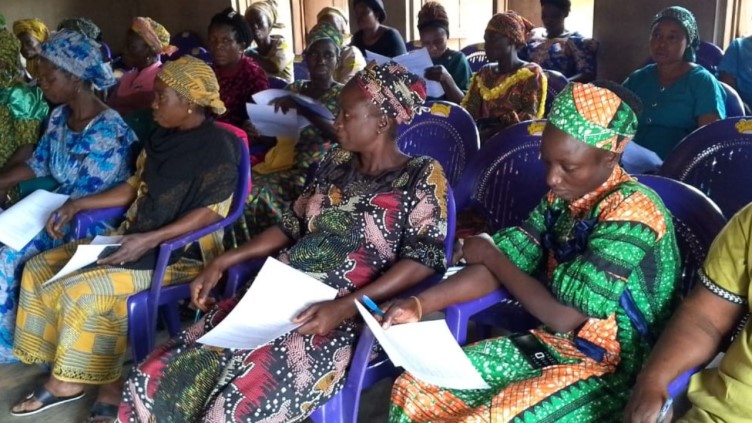
But the project was about more than just machines; it was about people. Through workshops and training sessions (Pictured: One of the many capacity-building workshop sessions conducted with various processor groups throughout the project), Tosmat’s staff and local farmers were introduced to lean green practices, food safety standards, and digital tools. The company transitioned from paper-based systems to electronic shop floor data collection, paving the way for a full-scale Enterprise Resource Planning (ERP) system. These changes enabled real-time monitoring, better decision-making, and a significant reduction in waste.
The impact was immediate and far-reaching. Sales turnover more than doubled, exports were initiated, and profit before tax rose by over 80%. Tosmat’s workforce grew from 26 to 40, and the company’s market competitiveness improved markedly. Perhaps most impressively, cassava peel waste - once an environmental burden - was innovatively transformed into High-Quality Cassava Peel (HQCP) for animal feed, creating a new revenue stream and contributing to a circular economy
The ripple effects extended beyond the factory floor. The AAKTP fostered stronger ties between Tosmat and local farming communities, positioning the company as a regional leader in sustainable agriculture. Joint efforts by the Associate and the Plant Engineer extended to academic achievements, notably two papers presented at the Industrial Engineering and Operations Management World Congress 2024, with additional journal publications in the pipeline.
The partnership also created a unique opportunity for both the University of Hertfordshire and the University of Ibadan to apply academic knowledge in a real-world setting. University staff gained valuable insights into the challenges faced by SMEs in developing economies, which significantly enriched their teaching with real-world practice and strengthened their research, creating a feedback loop for informed pedagogy. Meanwhile, students from the University of Ibadan directly benefited from site visits to Tosmat’s facilities, acquiring hands-on experience crucial for shaping their future careers.
The project’s legacy is being established by Tosmat’s plans to launch a training school for sustainable cassava production and further develop its in-house fabricated equipment.