
AI for independent living: transforming safety through smart vision technology
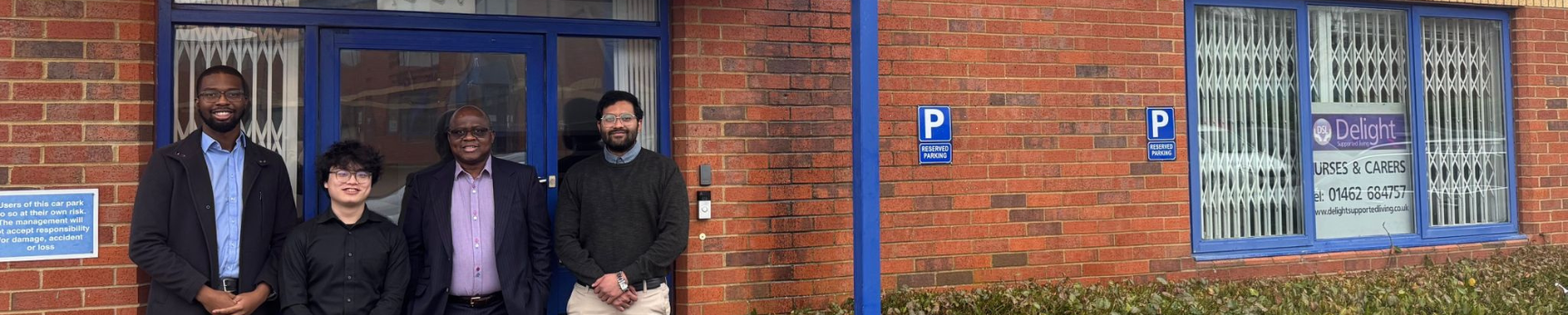
A Knowledge Transfer Partnership (KTP) between the University of Hertfordshire and Delight Supported Living (DSL) is helping reshape how vulnerable people are supported at home. The partnership brings together regional care expertise and university research strength to develop new technology that can detect risks before they become emergencies.
Developing technology to keep people safe at home
DSL is a domiciliary care provider and staffing agency operating across the health and social care sector. They support clients in their own homes and supply locum staff to social welfare organisations nationwide. Because many of the people they care for live alone or have limited mobility, DSL faces a critical challenge: ensuring individuals remain safe between visits, especially when falls often go unreported.
To address this, staff researchers in computer science partnered with DSL over a 31‑month period, from June 2023 to January 2026, to explore how artificial intelligence could help predict and detect falls. DSL wanted a proactive safety solution that didn’t rely on individuals activating alarms themselves – something particularly important for clients who may be unable to call for help after a fall.
The project began with a clear objective: to recognise hazardous behaviours and detect sudden falls automatically. The team developed an AI‑powered camera system capable of identifying risky movements and sending real‑time alerts to care staff or family members, offering earlier intervention and greater peace of mind for those living independently.
Falls are a major challenge for the NHS. They cost more than £2.3 billion each year and are the leading cause of fatal injuries in people over 65. Helping people stay safely in their homes for longer not only improves quality of life but also reduces pressure on health and social care services.
A breakthrough in assistive technology
Using the University’s expertise in AI and machine learning, the team created fall‑detection software ready for real‑world trials. The system includes a secure web‑based dashboard that sends alerts by email or text, along with a short video clip of the incident. Privacy and ethical considerations were built into the design from the start.
The work has opened new opportunities for DSL in the growing assistive‑technology market. In 2024, the team published their research, Vision‑Based Human Fall Detection Using 3D Neural Networks, at an international AI conference – highlighting the project’s strong academic and commercial impact.
Building skills and creating new opportunities
The project has delivered long‑term benefits for both partners. The KTP Associate who led the technical development is now employed by DSL as a Software Engineer and is expanding the system to include body temperature, heart‑rate and facial‑based monitoring. Plans are also in place for another project using machine learning for scheduling home‑care and locum staff. The success of the partnership has already led to a second KTP, launched in June 2025, focusing on AI‑powered job scheduling and route optimisation for home‑care staff.
The collaboration has strengthened the University’s research profile and helped shape a new undergraduate module in Applied Data Science and Analytics. Students at both BSc and MSc level contributed to the project, gaining valuable industry experience while supporting DSL’s innovation.
This KTP has enabled DSL to enter a rapidly expanding area of AI‑enabled community care. The company now has embedded expertise in machine learning and cloud‑based systems, positioning it strongly for future innovation. Together, DSL and the University of Hertfordshire have demonstrated how academic and industry collaboration can deliver real‑world impact and improve the lives of vulnerable people across the region.