
University of Hertfordshire leads influential national consultation on assisted dying
The report, produced by the highly respected St George’s House and finalised this week, draws on discussions led by the University and considers the practical implications of the Terminally Ill Adults (End of Life) Bill, which has passed the House of Commons and is currently under scrutiny in the House of Lords.
Rather than debating the principle of assisted dying, the consultation brought together a specialist audience to explore what systems, safeguards and guidance would be required to implement the legislation safely, consistently and ethically.
Among the report’s key recommendations is the creation of a national working group to develop and publish a comprehensive Code of Practice alongside the legislation. This would include input from legal, clinical, faith and community representatives and address issues such as assessing mental capacity and ensuring consistent professional standards.
University of Hertfordshire academic leadership
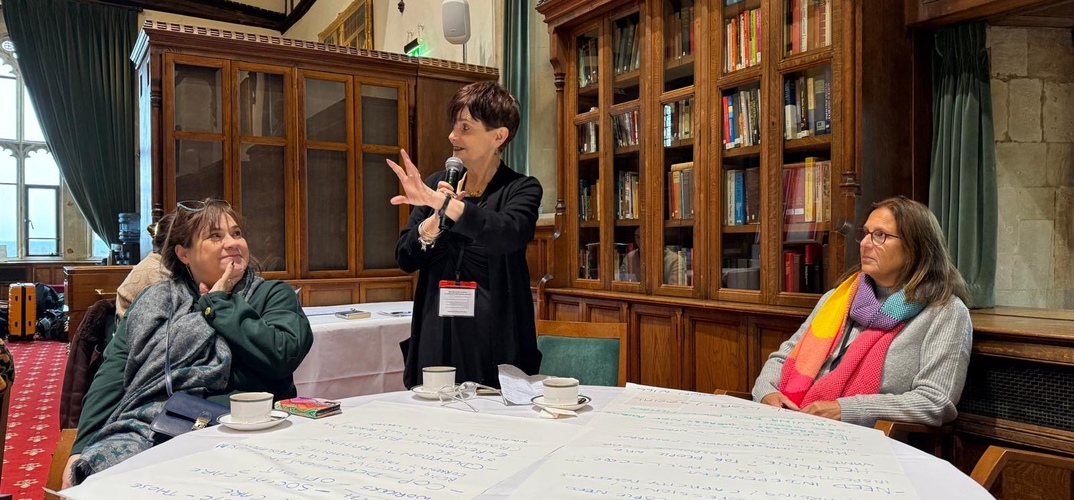
Professor Denise Turner, Professor of Social Work at the University of Hertfordshire, helped to shape the terms of the landmark consultation held at Windsor Castle in January.
Professor Turner said:
“Establishing a clear and practical code of practice for assessing mental capacity would be a valuable step to take before the legislation comes into force.
“A dedicated working group could develop and consult on this guidance alongside the legislation, ensuring it reflects best practice across medical and social care professions without needing to be written into the law itself.”
Key findings from the St George’s House report
The consultation involved 28 participants, including GPs, psychiatrists, intensive care clinicians, palliative care professionals and nurses, alongside faith leaders from Islam, Hinduism, Christianity and Judaism. Participants were not asked to support or oppose the legislation, but to focus on how it might operate in practice.
Further recommendations include:
- Establishing a separate service structure independent of existing healthcare providers
- Redesigning the proposed approval panel to ensure timely access for practitioners
- Simplifying legislation and public communication to integrate assisted dying within wider end-of-life care
- Ensuring social carers, not only social workers, are included in information-sharing
- Making clear that assisted dying is not a ‘cheaper option’ or a substitute for medical treatment
- Encouraging broader public understanding and open conversations about death
Professor Turner added:
“It is a considerable achievement for the University to have played such a central role in one of these prestigious consultations. The report draws extensively on our research and on focus group work conducted with Whittington NHS Trust, which highlighted the need for detailed attention to practical realities.
“We are particularly pleased that our ‘Cycle of Support’ model has been adopted within the report, providing a patient-centred framework for responding to requests for assisted dying.”
Legal insights from Herts experts
Dr Claudia Carr, an academic lawyer at the University of Hertfordshire specialising in end-of-life law, advised on the legal aspects of the Bill and helped shape the consultation agenda.
Dr Carr said:
“Another key recommendation is the development of clear national guidelines for assisted dying, informed by international experience. These should be prepared alongside the legislation - not after it - to ensure services and professionals are ready and consistency can be adapted to regional needs.”
Commenting on the consultation, Professor Wendy Wills, Pro Vice Chancellor (Research and Enterprise) at the University of Hertfordshire, said:
“Our purpose as a university is to find real-world solutions to problems that have an impact on people’s lives. By leading a consultation that involves so many other influential voices, Herts is demonstrating leadership on this sensitive topic and we are contributing directly to an issue of relevance to all of society.”
Next steps for assisted dying legislation
Scrutiny of the Bill in the House of Lords continues until April. Dr Carr has previously warned that inconsistencies between proposed legislation in England and Scotland could lead some people to consider relocating if legal frameworks diverge. Jersey and the Isle of Man are also close to passing legislation on the same issue.
The St George’s House report concludes that, with a collaborative and inclusive approach, assisted dying legislation “can be fair, sensitive and well-resourced”.
Read more about studying social work and about studying law at Herts. Read about the work of St George’s House.