
OPINION: Universities need to be at the forefront of the Government’s plan to protect against biological threats — now more than ever
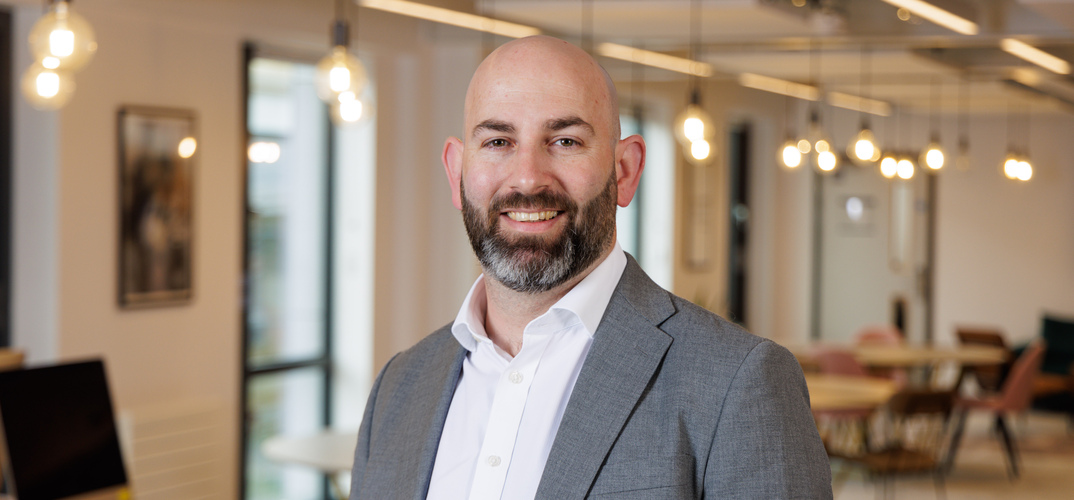
Biological threats - from pandemics to engineered pathogens - remain among the most complex security risks of our time. As military tensions surge across the Middle East, the case for strengthening the UK’s biodefence capabilities has never been clearer, says Professor Dan McCluskey, Dean of the School of Physics, Engineering and Computer Science at the University of Hertfordshire.
Public debate on national security typically centres on conventional defence - troop numbers, weapons systems and nuclear capability. But the current crisis demonstrates that modern conflict is multidimensional. Alongside missile and drone warfare, nations now face heightened risks around cyber‑attacks, disruption to critical infrastructure, and the possibility - whether deliberate or accidental - of biological incidents.
With Iran launching retaliatory missiles and drones at Israel and Gulf states, civilian airports, hotels and critical infrastructure have already been hit, and global energy markets have been destabilised. The closure of airspace, attacks on US and Israeli positions, and warnings about the Strait of Hormuz have all shown how quickly one regional event can escalate into a global crisis. It underscores an urgent truth: countries must be prepared for multiple, overlapping threats - including biological ones.
Why biodetection now matters even more
Recent global tensions demonstrate how fragile international systems can be. Covid‑19 officially claimed more than seven million lives, and the economic shockwaves persist. Unlike conventional attacks, a biological agent - whether naturally emerging, deliberately released or accidentally dispersed in a conflict zone - can cross borders in hours.
Yet detection technologies capable of identifying airborne biological agents in real time remain underdeveloped. During the pandemic, PCR and lateral flow tests were crucial, but they were reactive tools. What we lacked - and still lack - are environmental surveillance systems that detect pathogens before widespread infection occurs.
The current instability in the Middle East adds further risk. Missile strikes on civilian infrastructure can disperse particulate matter, damage laboratories, or create chaotic conditions where biological hazards might go unnoticed. With Iran’s retaliatory attacks reaching major hubs like Dubai International Airport and civilian hotels, the potential for secondary biological risks - through disruption, contamination, or infrastructure failure - cannot be overlooked.
Universities can fill this dangerous capability gap
Higher education institutions are uniquely placed to drive innovation in biodetection. At the University of Hertfordshire, we lead a £13.5 million Biodetection Technologies Hub with partners including Cranfield, Leeds and Manchester University. Our 45‑year collaboration with the Ministry of Defence has produced advanced bioaerosol detection systems - precisely the kind of technology needed in volatile global conditions.
Our work is already having real‑world impact. Technologies initially designed for defence have helped agricultural industries detect wheat pathogens that threaten up to 20% of yields annually. These systems can identify viruses, bacteria, and micro‑organisms in real time, enabling early intervention and reducing reliance on chemical treatments.
The applications extend to hospitals, food production, transportation hubs, and any environment where early detection of airborne threats can prevent catastrophic spread - including during geopolitical crises where normal systems are disrupted.
Dual‑use technologies build societal resilience
Many transformative technologies - GPS, the internet - began in military contexts before reshaping civilian life. Biodetection technologies may follow the same path. In an era where a regional conflict can ripple into a global oil shock within hours, as seen with the sharp rise in prices following Iran’s retaliatory strikes, investing in resilient systems is essential.
The UK needs universities at the centre of biodefence strategy
Universities combine interdisciplinary expertise with the freedom to pursue long‑term research unconstrained by commercial pressures. This makes them essential partners in national security.
At Herts, our researchers recently demonstrated the ability to identify foot‑and‑mouth disease in livestock two days before symptoms appear - an example of how university‑led innovations can protect national infrastructure and economic stability.
As the crisis in Iran shows, geopolitical instability can escalate rapidly, with consequences spreading far beyond the battlefield - to energy security, transport, global supply chains, and public safety. Biological threats could easily layer onto these pressures.
A call to action
Preparing for future biological threats - natural, accidental, or deliberate - requires investment in academic research, early‑stage innovation, interdisciplinary collaboration, and real‑world deployment.
With global tensions rising, including unprecedented military escalation and economic disruption linked to Iran, the UK cannot afford to wait. The time to invest in detection, prevention, and resilience is now.
About the author
Professor Dan McCluskey is a Professor of Aerosol Biodetection Technology and leading UK expert in biodetection and environmental monitoring technologies. The Dean of the School of Physics, Engineering and Computer Science at the University of Hertfordshire, and President of the UK and Ireland Aerosol Society, his research focuses on real‑time bioaerosol detection, sensor innovation, and advanced instrumentation designed to identify biological threats quickly and accurately.
He plays a central role in the university’s £13.5 million Biodetection Technologies Hub, working with national partners to develop next‑generation systems that can detect pathogens in the air before they spread. With more than four decades of institutional collaboration with the Ministry of Defence behind this work, Professor McCluskey has helped advance technologies with applications across defence, public health, agriculture and national resilience. He is widely regarded as a key voice on the future of biological surveillance and the vital role academia plays in strengthening the UK’s preparedness for emerging biological threats.
Find out more the University of Hertfordshire's biodetection research.