
How to see ‘memorable’ planetary alignment this weekend
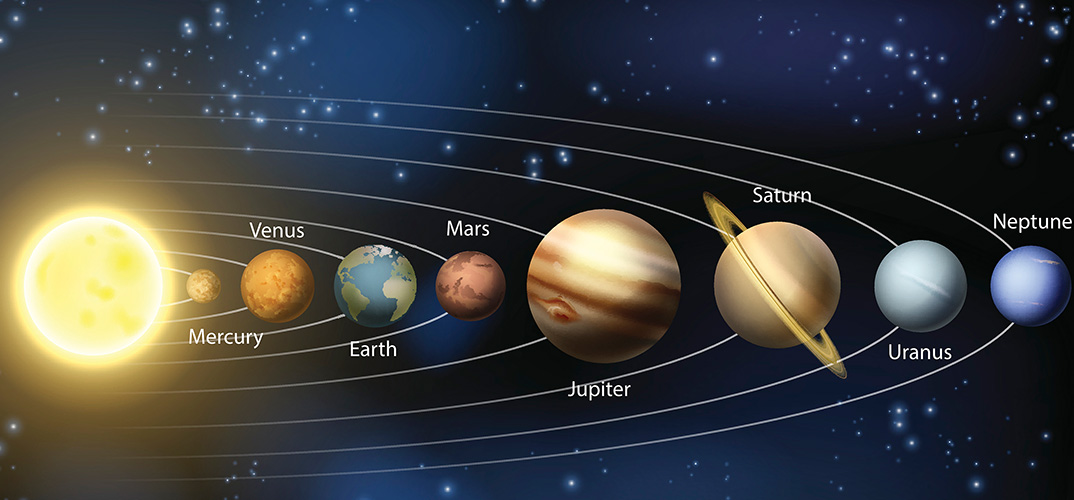
Mercury, Venus, Jupiter, Saturn, Uranus and Neptune will line up after sunset on the evening of 28 February, offering space enthusiasts in the UK and many other parts of the Northern Hemisphere a chance see these worlds all at once.
Dr William Alston, an astronomer and Senior Lecturer at the University of Hertfordshire’s Centre for Astrophysics Research (CAR), said: “A planetary parade is when several of the planets in our Solar System appear close together in the sky from Earth’s perspective.
“This happens because the planets orbit the Sun in nearly the same flat plane, known as the ecliptic. This means they follow roughly the same path across the sky as the Sun when visible.
“Every now and then, the relative positions of Earth and the other planets are such that multiple worlds can appear in the evening sky at once, forming what looks like a parade moving across the sky.”
Dr Alston says the best way to witness the planetary parade is to look toward the western horizon about 30-60 minutes after sunset on the evening.
He said: “Venus and Mercury will be low down on the horizon. Saturn and Neptune will be slightly higher than these, whereas Uranus will be higher still. Jupiter will be close to the Moon, which is expected to be at 90% illumination. Remember to trace the path the Sun took across the sky that day, as that is the path you will find these objects along.
“Venus, Jupiter, Saturn, and Mercury should be visible with the naked eye, though Mercury will be low and can be tricky because it’s close to the Sun’s glow.
“Uranus is very faint and usually needs good binoculars or a small telescope to see. Neptune is fainter still and will require a telescope.”
Planetary parades involving several worlds are not everyday events. While it is common for two or three bright planets to appear in the sky together each year, events where four or five planets are visible at the same time occur every couple of years. Six or seven planets may only be visible once every decade.
Dr Alston said: “Readers might remember the seven-planet parade from February 2025. The short recurrence time is because the outer planets orbit the Earth at a much slower rate.”
Dr Alston says anywhere with a clear view of the western horizon and low light pollution will improve chances of seeing the parade.
He said: “Good options include rural countryside areas with open skies, nature reserves and parks away from bright streetlights, and elevated spots with unobstructed horizons.
“Because some of the planets, especially Mercury and Saturn, remain low after sunset, a flat, wide view of the western sky is ideal.
“The 28 February planetary parade offers a rare chance to see multiple Solar System worlds at once with your own eyes. It’s a chance for people of all ages to connect with our cosmic neighbourhood without needing specialist equipment - just clear skies, patience, and perhaps a pair of binoculars.
“Seeing planets spanning from the inner Solar System, such as Mercury and Venus, out to the distant ice giants, such as Uranus and Neptune, in one sky window highlights the scale and structure of our Solar System in a direct and memorable way.
“It’s also an excellent moment for outreach and education: families, schools and astronomy clubs can use the event to talk about planet orbits, telescopes, and how our view of the sky changes throughout the year.”
Learn more about the Centre for Astrophysics Research.