
Herts researchers develop real time AI falls detection system to protect vulnerable people
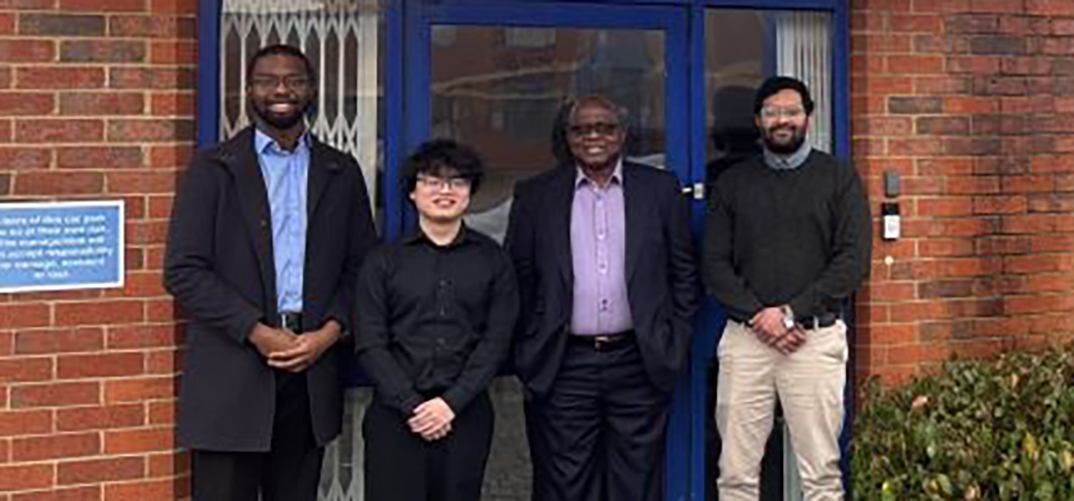
Researchers at the University of Hertfordshire have developed a new artificial intelligence system that can detect when vulnerable people fall.
The model achieved an accuracy of up to 98% under controlled conditions, with a sensitivity of around 96% (indicating how effectively true falls were detected) and a specificity of approximately 98% (indicating how effectively the system avoided false alarms, that is, correctly identified non-fall events).
The technology uses machine learning to monitor older adults and identify movements that may indicate a collapse, allowing carers and medical staff to respond immediately, potentially saving lives and excessive medical costs due to late responses on falls.
The system was developed as part of a Knowledge Transfer Partnership (KTP) project between Herts and Delight Supported Living (DSL) - a domiciliary care provider and staffing agency in the health and social care sector based in Hitchin.
Falls are one of the leading causes of injury among older people, particularly in care home settings. It is the most common cause of death from injury in the over 65 age group, costing the NHS more than £2.3 billion per year.
By 2039, the number of people aged 75 and over is expected to nearly double, rising from five million to almost 10 million, according to the Office for National Statistics.
Project supervisor Dr Na Helian, Associate Professor in Research at the University of Hertfordshire’s School of Physics, Engineering and Computer Science, said:
“The UK’s ageing population continues to grow and so the use of assistive technology in the social care sector will become increasingly important in helping to reduce pressure on the NHS and safeguard the quality of life of older and vulnerable people.
“The aim of our collaborative project was to develop an AI-powered system capable of rapidly identifying when vulnerable individuals are experiencing a fall at home.”
The research team used recent advances in artificial intelligence and computer vision to improve how falls are detected in video footage.
This involved development of a web-based monitoring interface with machine learning capability, which sends alerts when falls are detected via email and/or text, containing a short five-second clip of the fall trigger.
Movements are recorded via cameras placed in the house with consent from clients and the researchers are currently testing the viability of sensors and wearables as part of the next steps to enable real-time falls detection.
Their system was trained using a type of deep-learning model known as a 3D Convolutional Neural Network, which analyses both body position and movement over time.
Unlike earlier approaches that examine individual images, the new system processes full sequences of video frames.
This allows it to track changes in movement more accurately.
In testing, the model achieved an overall accuracy of 97.55%, alongside a sensitivity of 96.09% and specificity of 97.76% in detecting fall events.
The researchers say the technology could be used in assisted-living facilities and hospitals to provide earlier warnings and faster support for vulnerable residents.
They say it could also be deployed in homes of at-risk patients, aligning with the NHS ‘Hospital at Home’ strategy, which provides care that would traditionally take place at hospital, in the comfort of the patient’s own home.
Dr Helian said:
“There is a clear financial and social care imperative to identify the factors that increase the risk of a fall for vulnerable people at home and put in measures that would prevent the need for admission to hospital.”
Say Meng Toh, former KTP Associate at the University of Hertfordshire and now a Software Engineer at DSL, is continuing to develop the scope of the technology to include other factors such as thermal monitoring, heart rate and facial indicators.
He said:
“At its core, the project is about improving quality of life. By enabling faster responses to falls, we aim to give residents and their families greater peace of mind while supporting care staff in their day-to-day work. In doing so, it has the potential to help ease pressure on the NHS.”
As a next step, DSL and the University’s academic team are working on a new project exploring how machine learning can be used to schedule care-at-home visits and locum healthcare staff more efficiently.
Tony Pasipamire, Director at DSL, said:
“This technology has the potential to be genuinely life‑saving. Real time falls detection means incidents can be responded to far more quickly, reducing the risk of serious injury and long‑term harm.
“Beyond immediate alerts, the data can also be used for trend analysis, helping experts and healthcare professionals identify underlying causes and put preventative measures in place. For example, a sudden and unusual rise in body temperature or heart rates can be detected through our thermal technologies and sensors and shared with clinicians, allowing them to act earlier and make faster, more informed decisions.”
Learn more about our Knowledge Transfer Partnerships.