
Herts academic leads pioneering project preserving iconic TV studios in virtual reality
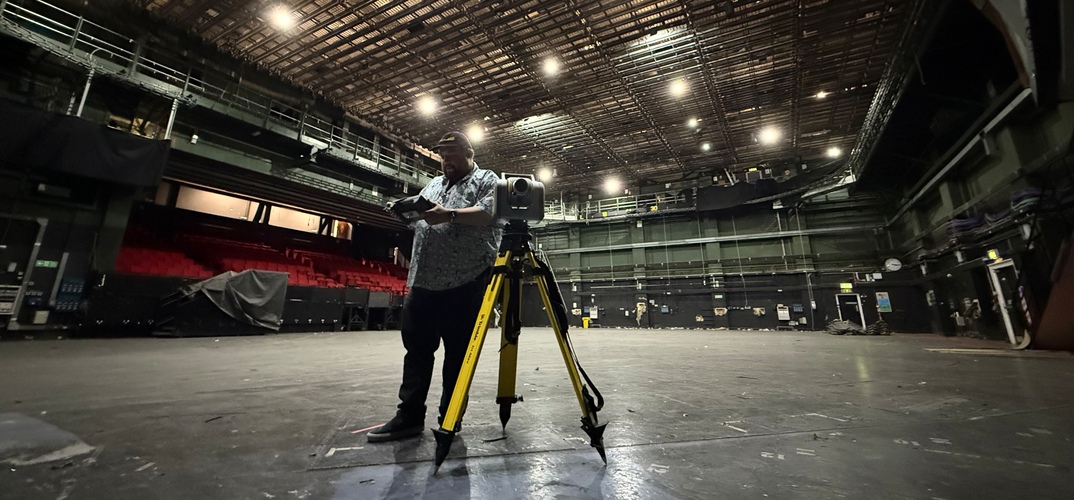
Pic caption: Howard Berry with the LiDAR Scanner on Stage D at the former BBC Elstree Centre
A University of Hertfordshire academic has helped preserve a significant chapter of British television history through a pioneering virtual reality project that allows visitors to explore the former BBC Elstree Centre before its demolition.
Howard Berry, Reader in Film Heritage Practice and founder of The Elstree Project - an ongoing oral history and heritage initiative - led the creation of an immersive digital tour of the historic studio complex in Borehamwood, where programmes including The Muppet Show, Top of the Pops, Grange Hill, 'Allo 'Allo! and Holby City were produced.
The project, which has recently been featured by BBC News, captured the data before the buildings were demolished as part of a major redevelopment of the site.
Drawing together expertise from across the University of Hertfordshire, colleagues from Creative Arts and Engineering collaborated to create a permanent digital record of the studios using 360-degree photography, LiDAR scanning and other forms of advanced spatial capture technology. The project was supported through an Arts and Humanities Research Council (AHRC) Impact Acceleration Account award.
More than 400 panoramic images were captured, allowing visitors to navigate through former studio spaces, dressing rooms, galleries, production offices and technical facilities, preserving them for future generations of researchers, students and television enthusiasts.
Howard said the project began with a simple but important question: how could these historic spaces be safeguarded once the buildings themselves were gone?
"Before the former BBC Elstree Centre disappeared, we wanted to create a permanent record of the site, not simply as photographs, but as spaces that future researchers, audiences and generations could continue to explore," he explained
"This was a genuinely collaborative piece of research that brought together expertise from across the University. By combining emerging technologies with film and television heritage research, we've been able to preserve an important part of Britain's creative history in a completely new way."
For Howard, whose research focuses on the history of Elstree and Borehamwood's world-famous film and television studios, the work represents an important milestone in the preservation of screen heritage.
"Although the buildings themselves have now gone, a record of them remains. That's incredibly important, given the role these studios played in entertaining millions of people around the world and shaping British television production."
The virtual tour enables visitors to experience spaces rarely seen by the public and offers a lasting glimpse into a studio complex that forms an important part of the UK's creative industries heritage.
Dr Stephen Partridge, Dean of the School of Creative Arts at the University of Hertfordshire, said:
"This project demonstrates the value of combining academic research with emerging technologies to preserve important cultural heritage. Howard's work has created a lasting record of a significant chapter in the UK's television history, while showcasing the interdisciplinary expertise that exists across our University. It is particularly exciting to see the project continuing to evolve through our wider research collaborations and reaching new audiences through national media coverage."
Explore the virtual tour via The Elstree Project website or find out more about studying at the University of Hertfordshire.