
UK needs to start breeding drought-tolerant wheat to protect food against climate change, scientists warn
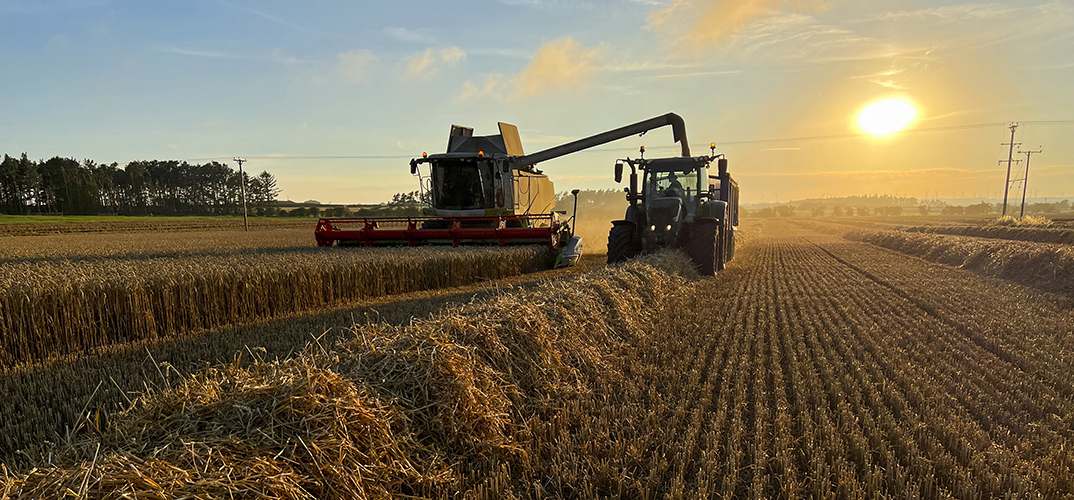
Wheat is the nation’s most important arable crop, providing around 20% of the calories consumed in the UK.
While yields, which mainly rely on rainfall, have remained relatively stable over the past three decades, increasingly frequent extremes of wet and dry weather pose a threat to the future security of the crop.
Unlike many cereals, which can be bred elsewhere in Europe, wheat grown for UK farms must be bred domestically to suit local conditions - a process that can take up to a decade.
Researchers say this means plant breeders need to act now to prepare for drier summers.
The warning draws on research from Egypt - one of the world’s largest wheat importers - where an international team of agricultural scientists, including experts from the University of Hertfordshire, modelled how targeted irrigation strategies and crop selection could boost yields and improve water efficiency in a climate-stressed environment.
The study, published in the journal Agricultural Water Management, tested three wheat cultivars (Sakha94, Shandweel1, and Sids1) - cultivated varieties that have been produced by selective breeding - using different irrigation methods.
Combining field data with modelling, the team found more frequent watering improved yields by up to 22%.
Two of the three cultivars (Shandweel1 and Sids1) performed better under water-limited conditions, achieving 15-20% higher water-use efficiency.
The research also showed that modest rises in CO₂ (420-440 ppm) and temperature (+1°C to +2°C) boosted wheat yield and increased water efficiency by about 10% to 25%.
But hotter conditions above +3°C significantly reduced benefits, especially for heat-sensitive cultivars (such as Sakha94).
Researchers say these findings have direct relevance to the UK, where droughts are becoming more common and irrigation of cereal crops may be required in the coming years.
Last year, the UK recorded its third-lowest arable harvest since 1984, with wheat harvest reporting a 20% decline from 2023, according to the UK’s Department for Environment, Food & Rural Affairs (Defra).
Bruce Fitt, Emeritus Professor of plant pathology at the University of Hertfordshire’s School of Health, Medicine and Life Sciences, said: “This year, significant yield losses are already expected in drier regions across England due to water stress, potentially increasing reliance on food imports.
“With more Mediterranean-style summers forecast, there is an urgent need to develop drought-tolerant wheat and adopt precision irrigation, which will be vital for safeguarding the UK’s food security and climate change adaptation.”
First author Dr Maha Elsayed, formerly a Post Doctoral Research Fellow in the School of Health, Life and Medical Sciences at the University of Hertfordshire, who is now an agricultural specialist at the Agricultural Research Center in Egypt,said: “Our research shows that farmers and breeders must act now to secure future wheat harvests. The key is matching the right cultivar to the right irrigation strategy. In Egypt, frequent irrigation boosts yields, while in water-limited conditions, other varieties thrive by making better use of scarce water. For both Egypt and the UK, the message is clear: climate-smart cultivars and smarter irrigation can keep wheat production resilient while conserving precious resources.
“Climate change is no longer a distant threat - it is already shaping our food systems. Our results show that rising heat and water shortages could severely cut wheat yields unless we act. Strategic irrigation, combined with the right cultivars, can balance yield and water savings. If we start planning today, we can turn risk into resilience and ensure that wheat remains a reliable source of food in both Egypt and the UK.”
Dr Elsayed said the next step is to bring in more models, more climate scenarios, and more factors like soil health and pest risks.
She said: “By combining field data, advanced simulations, and even satellite monitoring, we aim to deliver powerful decision-support tools for farmers and policymakers. The goal is to develop wheat systems that can withstand water scarcity, rising temperatures, and the uncertainties of the future.”
This work was supported by a Newton Fund Impact Scheme (grant ID number 623765768), under the Newton-Mosharafa Fund in partnership with Egypt. The grant is funded by the UK Department for Business, Energy and Industrial Strategy and co-funder Egyptian Science, Technology and Innovation Funding Authority (grant number 42687), and delivered by the British Council. For further information, please visit Newton Fund. The International Science Partnership Fund has also supported this research.