
Pioneering programme prepares 500 Hertfordshire Nursing Students for realities of death and dying
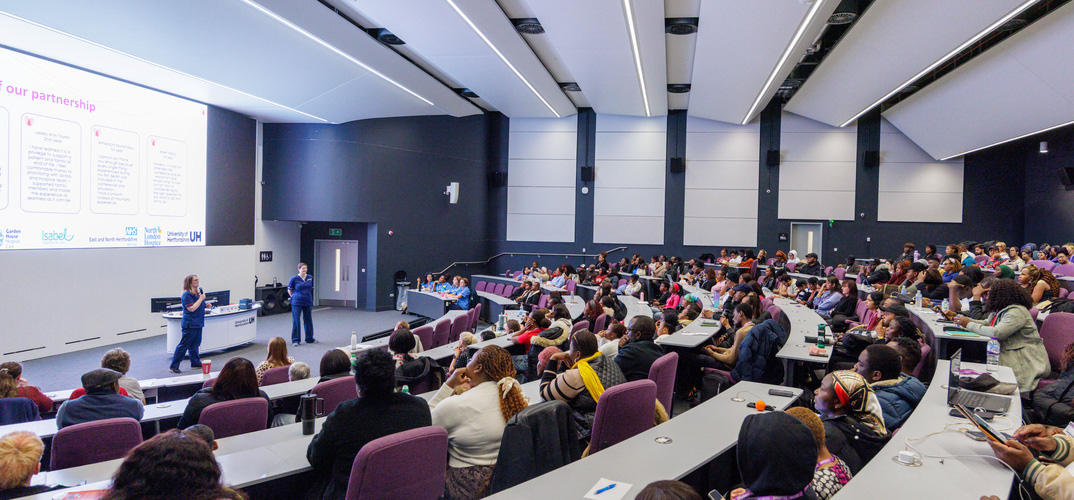
The Compassionate Herts conference, on Friday 7 November, welcomed over 500 first-year nursing students ahead of their initial NHS placements. This large-scale educational event brought together nursing academics, local hospices, NHS palliative care specialists and families with lived experience of loss - including by suicide. The programme offered students a holistic and compassionate insight into end-of-life care, helping to prepare them emotionally and professionally for the realities of clinical practice.
Herts’ pioneering approach - running for a third consecutive year - was developed after NHS and student feedback, and national research indicated a lack of adequate education on death and dying for nursing students. The conference has been designed to build confidence in providing end-of-life care, while tackling identified educational deficits in areas including communication with families, knowledge and emotional preparedness for caring for dying patients.
Karen Cairnduff, Principal Lecturer in Simulation and Clinical Skills and Simulation Lead at the University of Hertfordshire, said:
“Bereavement is often a neglected area in nursing education, leaving students unprepared and emotionally vulnerable. Our pioneering approach with Compassionate Herts aims to change that. These powerful sessions are led by hospice professionals, NHS palliative care staff and people who have experienced profound loss.
"The aim is to give our student nurses a holistic insight into end-of-life scenarios that they may encounter during placements and help them feel better prepared to be with dying patients and their families. By increasing their confidence to talk about death and dying, and awareness about how to manage their emotional response, our student nurses will be able to contribute to the care people need at the end-of-life from the first day of their placement.”
Students across all field of nursing – adult, child, learning disability and mental health - heard from experts about what dying looks like, communication skills, suicide and dementia, as well as hearing powerful personal accounts that illustrated how to provide care in a sensitive way.
Dr Charmagne Barnes, Pro Vice Chancellor (Education and Student Experience) said:
“This university is all about providing a modern, dynamic and enterprising learning environment. A vital part of that is preparing our students for the workplace. This innovative approach to teaching about such a significant aspect of nursing reflects our emphasis on producing compassionate, confident learners with the support of a range of outside partners to bring the real world closer to students. This allows them to make that transition into clinical practice more quickly and effectively.”
One mentor included third year adult nursing student Annie Sage (28), from Hatfield. She said:
“I have returned to help mentor others because if you are a nursing undergraduate, you are inevitably going to encounter death and dying, it cannot be a taboo subject for us.
“I attended our first conference and it inspired me to seek a job at a local hospice. I now work at Isabel Hospice in Welwyn alongside my studies. It has taught me that although palliative/end of life care is a sad time in any family's life, there are ways to make that time into moments that the patient and their family can treasure forever.
“Herts introduced me to the podcast Widowed AF, which I’ve listened to ever since, because it shines a light on how to support the families who lose their loved ones. They need our care too. We don’t often get to hear what happens for them after their loved one dies. It has helped me to project a calm, empathetic energy to help support how people are feeling in these end-of-life scenarios."
A wide network of University of Hertfordshire partners supported Compassionate Herts, including East and North Hertfordshire NHS Trust, local hospices - Keech, Isabel, Garden House, St Francis, North London, and Rennie Grove Peace - alongside Noah’s Ark Children’s Hospice, Cruse Bereavement Support, the Ollie Foundation, the Widowed AF podcast, and families with lived experience.
Sonia Catchpole, Education Lead Palliative and End of Life Care, East and North Hertfordshire Teaching NHS Trust said:
“We know from research that at any one time at least 30% of an acute hospital’s inpatient population will be in the last year of their lives, therefore it is crucial to start from the outset to prepare student nurses to meet and care for these patients. This care includes compassion, empathy and a recognition of the need for human connection between the student, patient and those important to that patient. It also requires the student to start developing self-awareness and an ability to self-reflect on their own feelings and responses when meeting and caring for those in the last year of life.
“We also know that over 90% of complaints that come into any acute hospital will feature concerns around communication. The work with the University and Trust allows time and space to start to explore what communication is, the impact our communication can have on a person and situation and how we can effectively communicate.”
Karen Cairnduff added:
“We have been approached by national bodies and other universities about this new way of looking at how we prepare nurses for their first contact with death, dying and bereavement. We hope that the work all our partners in Herts are doing now will go on to benefit future generations of trainee nurses and patients across the country.”
Find out more about the University of Hertfordshire Nursing courses.