
Herts astrophysicist on how to see the biggest and brightest supermoon of 2025
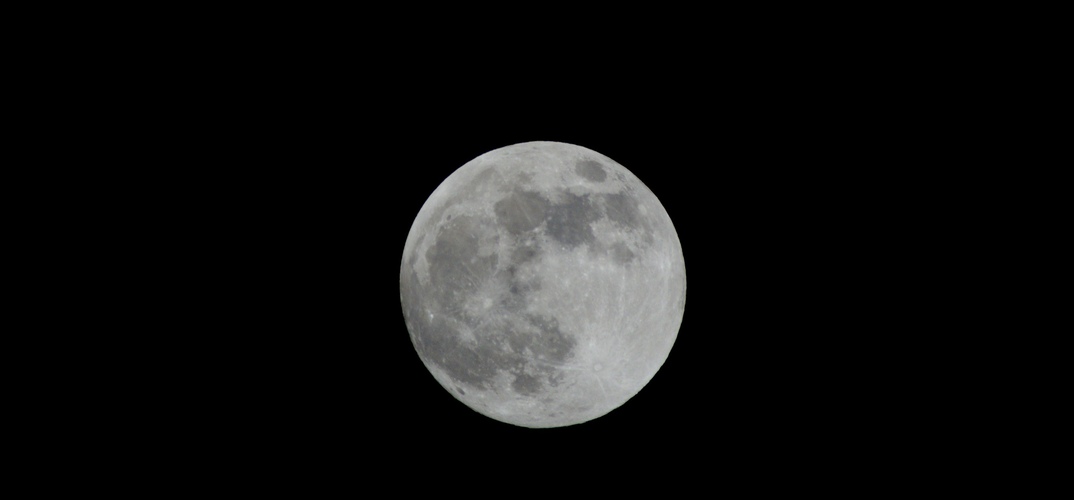
Known as the Beaver Moon, this month’s full moon marks the second of three supermoons in 2025.
At its peak, the Earth’s natural satellite will appear up to 14% larger and 30% brighter than usual, offering a celestial show visible soon after sunset and growing more radiant through the night.
Dr William Alston, a senior lecturer at the University of Hertfordshire’s Centre of Astrophysics, said: “A supermoon occurs when the Moon is both full and at (or near) its closest point to Earth in its orbit, known as perigee. When the Moon is at or near perigee, it can be up to 14% larger on the sky and up to 30% brighter than a typical full moon.”
The term supermoon was first introduced in 1979 by astrologer Richard Nolle to describe full moons that appear noticeably larger and brighter in the night sky.
Dr Alston added: "Supermoons typically occur in a series of two to four consecutive full moons because the timing of the Moon's perigee aligns with the full moon phase for several months in a row.
“The 2025 November full moon will look especially large and colourful for several reasons. When the Moon is near the horizon, our brains compare it to nearby objects such as trees and buildings, making it appear larger - an effect known as the “moon illusion”. There is currently no consensus as to why our brains do this.
“Secondly, light from the Moon also passes through more of Earth’s atmosphere when low in the sky, scattering blue light and creating warm orange and red tones, a process called Rayleigh scattering. Finally, because the Moon is at its perigee - about 363,000 kilometres from Earth - it will be physically closer, appearing larger brighter.”
He said full moon in November is often referred to as Beaver Moon because some say the name comes from the heavy activity of beavers building their winter dams.
Dr Alston added: “The Beaver Moon will be visible to everyone across the UK on 5 November, weather permitting, of course! It will rise in the east around 3:55pm UK time, which is also around the time of sunset and remain visible through most of the night.
“The next and final supermoon of the year will take place on 6 December.”
Study astrophysics at the University of Hertfordshire.