
Herts astrophysicist explains how to see the Perseid meteor shower
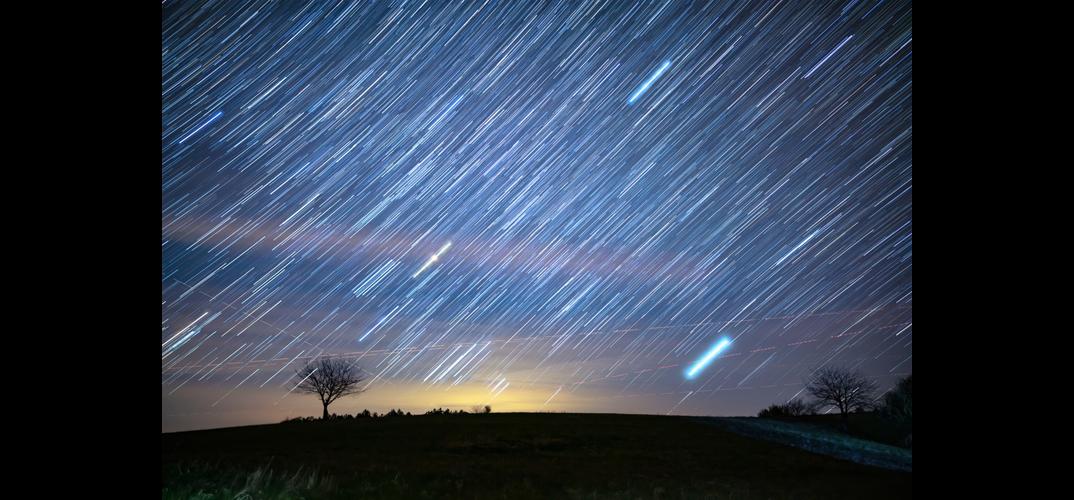
The Perseid meteor shower has been active since 17 July and will continue until 24 August.
This annual spectacle is caused by tiny fragments shed by Comet Swift–Tuttle, which takes 133 years to complete a single orbit around the Sun.
Dr Darshan Kakkad, Senior Lecturer at the University of Hertfordshire’s Department of Physics, Astronomy and Mathematics and Centre for Astrophysics Research, said: “Due to friction from the air particles in the atmosphere, the debris heats up and produces a streak of light, which we see as a meteor shower or also called ‘shooting stars’.
“Meteor showers often get named after the constellation where they appear to originate from.
“As the name suggests, Perseids gets its name so because the showers appear to originate from the constellation Perseus.
“They can be seen across the entire sky, but they are most radiant in the direction of the Perseus constellation.”
Although peaking on the night of August 12, Dr Kakkad said the meteor shower will remain active until late August.
He said: “The best time to see the Perseids is between midnight and dawn.
“These meteors should be visible with the naked eye - you may need to give your eyes some time to adjust to the dark so that you can see some of the fainter meteors.
“You can look out for Perseids from wherever you are, but the best chance for spotting them is in a location with low light pollution from cities.”
He said city lights as well as moonlight can make it hard to spot the shooting stars so observers should avoid well-lit and built-up areas and try to find unobstructed views.
Dr Kakkad added: “Meteor showers are rare phenomena that connect all the humans to space. It’s always exciting to see shooting stars, and even better when you get to see many of them in a span of a few minutes.
“Unlike events like eclipses, you do not need specialised equipment to see them. And you can make an enjoyable summer evening or night out of it.”
Learn more about our astronomy courses on our website, which can now be applied for through Clearing online or call the Clearing hotline: 0330 404 0058.